
Author: Ash Blackwater

  • Alien: Romulus and the Horror of Accidental Leadership

    Alien: Romulus and the Horror of Accidental Leadership

    The thing about the Alien franchise is that it keeps reminding us of the same workplace lesson: you are never as far away from a facehugger as you think you are. You can be minding your own business, fixing a leaky pipe, and suddenly you’ve got HR’s nightmare octopus trying to forcibly promote you into a parent. Alien: Romulus doubles down on this idea. Instead of seasoned veterans like Ripley or Marines who at least pretend to know what they’re doing, we get young, mostly unprepared characters who find themselves in a leadership vacuum. It’s not a story about heroes rising to the occasion—it’s about what happens when authority collapses and people who barely know how to pay rent have to improvise strategy while monsters are literally chewing through the walls.

    And that’s where the leadership lesson lives. Because most of us, at some point, get shoved into the “Congratulations, you’re in charge now” moment without training, guidance, or even a clean job description. It doesn’t feel like a promotion; it feels like something clawing its way out of your ribcage.

    Imagine you’re suddenly asked to run a restaurant, but nobody gave you keys, half the staff doesn’t speak the same language, the fryer’s on fire, and the health inspector is already seated in the corner, writing down notes like “severe violation: cook being eaten alive by kitchen monster.” That’s Alien: Romulus in leadership form—crisis with no map, no mentor, and no time to Google “how to manage people.”

    Hersey and Blanchard’s Situational Leadership theory becomes uncomfortably relevant here. The model argues that leaders need to flex their style depending on the competence and commitment of their followers. If someone has no skill but lots of enthusiasm, you direct. If they have skill but no confidence, you support. Easy to say in a classroom. Harder when the follower in question is holding a flamethrower backwards and screaming about acid blood. Romulus shows how clumsy this gets when young people are thrust into command roles—they don’t have the flexibility because they don’t even know the base settings yet.

    Then there’s authentic leadership, as described by Bill George. Authentic leaders win trust by being consistent, transparent, and rooted in values. The problem is, if you’re nineteen years old and have never even managed a car payment, you don’t have a leadership philosophy yet. Some of the Romulus crew try to fake it—raising their voice, giving orders, posturing like someone who knows how to run a horror movie. And the movie punishes them for it, because authenticity can’t be faked. You can trick your friends into thinking you’re cool, but you can’t trick a xenomorph into believing you’re in charge.

    And if we’re talking about punishment, Barbara Kellerman’s work on negative leadership fits right in. She breaks bad leaders into categories: incompetent, rigid, callous, corrupt, insular, and evil. Romulus gives us a buffet of those. You see incompetence in people who freeze under pressure, rigidity in those who can’t adapt when the plan falls apart, and callousness when survival turns into betrayal. And the result is predictable: higher casualty rate than a team-building ropes course supervised by velociraptors.

    Here’s the uncomfortable real-world echo: Alien: Romulus feels familiar because many of us have lived some version of it. Maybe not the acid-blood monsters, but the promotion you weren’t ready for, the absent boss who left you holding the bag, the chaotic project where everyone’s improvising until it collapses. The film makes it literal, but the truth is that leadership vacuums don’t stay empty. Someone always steps up. Sometimes they grow into the role. Sometimes they get eaten.

    Surviving your first leadership role won’t burn holes through the floor plating, but the scars last just the same. The question isn’t whether you’ll be terrified or unprepared—that part is guaranteed. The real question is whether you’ll figure out how to flex, to be authentic, and to avoid turning into the kind of rigid disaster that costs lives. In space, no one can hear you scream. But in the office, everyone can hear you panic. And it smells just as bad.


    References

    Northouse, P. G. (2021). Leadership: Theory and Practice. Sage.
    Hersey, P., & Blanchard, K. H. (1969). Life cycle theory of leadership. Training and Development Journal.
    George, B. (2003). Authentic Leadership. Jossey-Bass.
    Kellerman, B. (2004). Bad Leadership: What It Is, How It Happens, Why It Matters. Harvard Business School Press.

  • Leadership Lessons From The Toxic Avenger (2025): The Grossest Training Video Ever Made

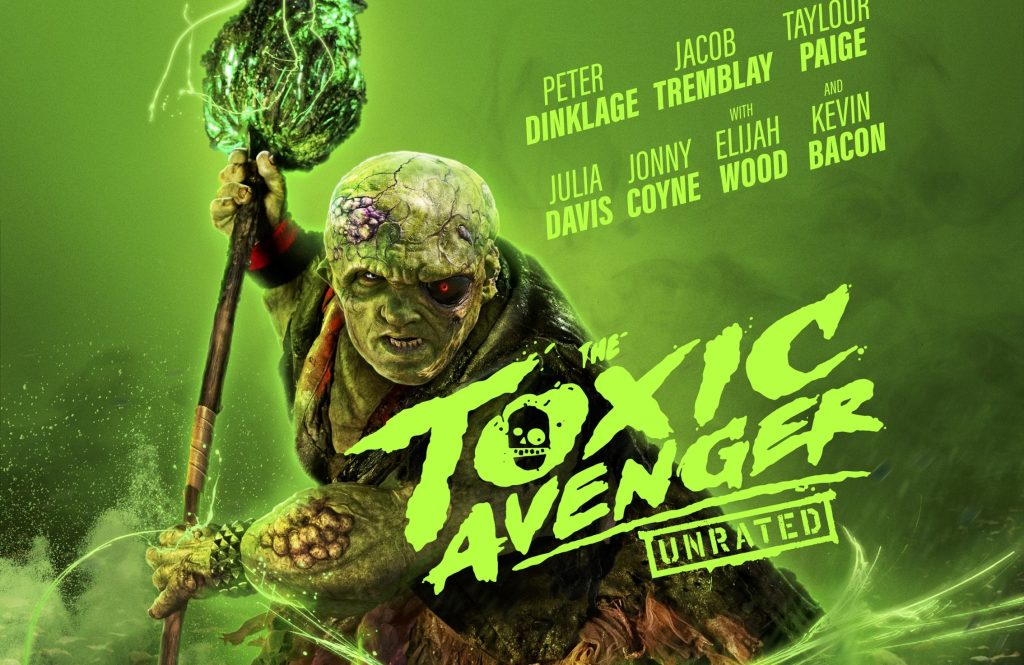
    Leadership Lessons From The Toxic Avenger (2025): The Grossest Training Video Ever Made

    The new Toxic Avenger is gross, hilarious, and surprisingly sharp. It’s the kind of movie that sprays you in the face with radioactive sludge, then slips a genuine insight into your open mouth before you realize what’s happening. Beneath the gore and fart jokes is a strange but undeniable lesson in leadership, the sort of thing that sneaks up on you while you’re trying not to gag. It makes sense, really—leadership often comes out of the most uncomfortable circumstances. Few people ask to be in charge. Sometimes you just fall into the vat.

    Our unlikely hero is Winston Gooze, a janitor stuck at the bottom of the ladder, ignored by his employers, crushed under the weight of medical bills, and dismissed by nearly everyone around him. His life is a quiet humiliation until one day, fate dunks him headfirst into toxic waste. When he emerges, he’s mutated beyond recognition, but more importantly, he’s transformed into someone who refuses to be stepped on again. That’s the thing about leadership—it doesn’t always sprout from ambition. More often, it comes from necessity, when the alternative is to remain voiceless while everything collapses. James MacGregor Burns built the foundation of transformational leadership theory on this idea: leaders and followers rise together in moments of crisis, elevating each other to a higher level of motivation and morality. Winston doesn’t want power, but suddenly the people around him need someone who can stand up to forces too big for them. Leadership in that moment isn’t a choice; it’s survival.

    The villains in this story are bigger than a single person. Sure, Bob Garbinger is a cackling pharmaceutical CEO who checks every box on the “corporate monster” list, but the real enemy is the system he represents. This is leadership as resistance, where the role isn’t to fine-tune what exists but to smash it and rebuild something better. That aligns with Robert Greenleaf’s Servant Leadership, which puts the focus not on authority but on serving the most vulnerable. Winston’s mutated strength doesn’t make him a leader; his willingness to wield it for others does. Servant leadership isn’t soft. It looks soft right up until it swings a mop through the chest of systemic exploitation. It’s the same principle every decent Game Master eventually learns at the table: you don’t step in to hog the spotlight. You step in when one player’s antics are drowning everyone else, because your responsibility is to keep the game fun for the whole group. Winston’s grotesque vigilante justice is the same move, except with higher stakes and way more exploding heads.

    Winston’s fight isn’t driven solely by rage against corporate cruelty. At the core of his transformation is Wade, his stepson. That personal connection grounds his choices and gives his violence a direction. This is where Bill George’s Authentic Leadership comes into play: true leaders act out of self-awareness and purpose, not just raw instinct. Winston knows who he’s fighting for, and that clarity shapes his every grotesque decision. In leadership, authenticity doesn’t always look polished. Sometimes it looks angry, messy, and inconvenient. But people rally to it because it’s real. That’s the same shift every new supervisor goes through when they stop imitating their last boss and start trusting their own instincts. It’s the same shift GMs make when they finally drop the Matt Mercer impersonation and start leaning into their own strange rhythm. People respond to honesty, even when it comes wrapped in boils.

    The film itself plays out like an ode to Situational Leadership. There’s no clean progression, no consistent tone, no adherence to the rules of superhero storytelling. One moment it’s gore, the next it’s satire, the next it’s slapstick. Winston doesn’t lead with a five-year plan; he leads by improvising in chaos. Paul Hersey and Ken Blanchard argued that leaders have to adjust their style based on the situation and the readiness of their followers. That’s exactly what’s happening here. Winston doesn’t get to stick to one mode of leadership. He mutates with the circumstances, whether that means bashing through enemies or offering a moment of protection to Wade. Anyone who’s ever tried to run a D&D campaign where the players ignore your plot hooks, bribe the villain instead of fighting him, and then insist on adopting the dragon knows this feeling. Sometimes leadership is just keeping the story moving when everything goes sideways.

    By the end, Winston becomes more than just a mutated janitor with a vendetta. He turns into a symbol, whether he likes it or not. People rally around him not because he’s perfect, but because he embodies what they’ve been too powerless to say out loud. That’s culture-building leadership, where a person stops being just an individual and starts representing a larger identity. Organizations do this all the time, spinning origin myths and rallying stories to keep people connected. Tabletop groups do it too. Every party has a “remember when” story—the botched heist, the critical fail that almost wiped the team, the one perfect joke that still gets repeated years later. Those stories weld people together, even if the moment itself was a disaster. Winston becomes that story for the people around him, a reminder that resistance is possible even when the odds are grotesquely stacked.

    What makes The Toxic Avenger stick isn’t that it offers a neat leadership model wrapped up with a bow. It’s that it acknowledges leadership doesn’t come from clean, comfortable places. It comes from desperation, from injustice, from pain. The leaders who matter most are rarely the ones who set out to be in charge. They’re the ones who decided they couldn’t keep going the way things were. Winston Gooze becomes a leader not because he wanted glory, but because he couldn’t bear to see his stepson’s future swallowed by corporate rot. And in that messy, chaotic decision, he finds a kind of power no boardroom seminar could manufacture.

    So maybe leadership isn’t about polished presentations or carefully curated strategies. Maybe it’s about what you do when you’ve been shoved into the sludge. The question isn’t whether you come out clean—nobody does. The question is whether you come out willing to fight for the people who need you most.

  • Cecil Stedman: The Adaptive Bureaucrat Nobody Wants to Be (But Somebody Has To)

    When I was writing about Omni-Man, I kept circling back to Cecil Stedman, the director of the Global Defense Agency. If Omni-Man is the worst-case scenario of charisma without ethics—the guy who can make mass murder sound like a pep talk—then Cecil is the polar opposite. He doesn’t inspire anyone. Nobody’s getting a Cecil tattoo. He looks perpetually hungover, like a guidance counselor who gave up on wearing ties sometime in the early 90s. But when the world is coming apart, he’s the one you actually want making the calls.

    Because Cecil isn’t about vision or inspiration. He’s about survival. He embodies what Ronald Heifetz and Marty Linsky call adaptive leadership—stepping into situations where there is no playbook, no technical fix, no “right answer” that saves the day. Omni-Man flexes, and cities crumble. Cecil grimaces, makes a decision that guarantees everyone will hate him, and then pours another drink. That’s actually the more realistic version of leadership.

    You can see it in how he operates: sending rookies into fights he knows they’ll lose, lying to Mark about how bad things really are until he absolutely has to tell him, constantly calculating which disaster leaves fewer bodies on the floor. He doesn’t pretend there’s a win waiting at the end. He just picks the path where the damage is survivable. That’s the entire premise of adaptive leadership—there’s no fixing the storm, only steering through it.

    This is why I can’t shake Cecil as the real counterpoint to Omni-Man. Charisma makes you believe in someone before you know what they stand for. Cecil makes you distrust him immediately, and yet, through sheer blunt honesty, he earns something more durable than admiration: grudging trust. He never tells you it’ll be fine. He tells you it’s going to be terrible, but here’s how we’ll get through it anyway. That’s a very different kind of authority than Omni-Man wielding his mustache like a badge of destiny.

    It also makes Cecil a pretty good metaphor for what happens once you’ve been leading people long enough to lose your illusions. Anyone who’s ever managed a warehouse crew, or run a hospital shift, or tried to GM a tabletop campaign knows what this feels like. You start bright-eyed, promising people big visions and meaningful work. Then reality sets in. The order backlog is impossible, the patients keep piling in, the party has just set fire to the only inn in town because someone thought a bar brawl would be “character-driven roleplay.” Suddenly, you’re not the inspirational Omni-Man figure anymore. You’re Cecil, making exhausted calculations about which choice leaves the fewest scars.

    That’s the unglamorous reality of adaptive leadership. Heifetz and Linsky talk about it as “living in the disequilibrium.” You can’t let things get so calm that people won’t adapt, but you also can’t let them get so chaotic that people panic or break. It’s this awful tightrope of tension management. Cecil lives on that rope. He knows if he underplays a threat, people die. If he overplays it, people revolt. So he does what real leaders do: he accepts that everyone will be angry with him, and then he does it anyway.

    Of course, there’s a cost. Cecil always looks one bad day away from collapsing into his whiskey glass. Adaptive leadership isn’t the kind of thing that makes you a beloved icon. It burns you out, leaves you scarred, and makes your victories invisible. No one celebrates the catastrophe you prevented. They only complain about the compromises you made. That’s why so many real-life leaders retreat into the comfort of technical fixes—new checklists, new policies—because at least those come with the illusion of control.

    But when you’re really in it—when you’re leading people through situations with no clean answers—charisma won’t save you. Vision won’t save you. The only thing that keeps people moving is knowing you’re willing to stand there with them in the middle of the wreckage, taking the heat and making the call. That’s Cecil. He doesn’t inspire. He endures. And in the long run, that’s what makes him the most honest kind of leader.

    Omni-Man showed us the dangers of charisma unmoored from ethics. Cecil shows us the price of leadership rooted in pragmatism. Between the two, Cecil’s the one you can actually trust to keep the world spinning, even if you hate him for how he does it. And if you’ve ever found yourself in a role where every option looked terrible but someone had to choose, congratulations: you’ve already had your own Cecil moment. You probably didn’t look good doing it. You definitely didn’t get applause. But you kept things alive long enough to fight another day. And that, grim as it sounds, is leadership.


    References

    • Heifetz, R. A., & Linsky, M. (2002). Leadership on the Line: Staying Alive Through the Dangers of Leading. Harvard Business Review Press.
    • Northouse, P. G. (2021). Leadership: Theory and Practice (8th ed.). Sage Publications.

  • 28 Years Later: Leadership Lessons From a World That Just Won’t Stay Fixed

    28 Years Later: Leadership Lessons From a World That Just Won’t Stay Fixed

    I didn’t expect to walk out of 28 Years Later grinning like I’d just seen the year’s best comedy, but here we are. The movie is bleak and brutal in all the ways you’d expect from a sequel to 28 Days and 28 Weeks Later, yet every so often it throws you a lifeline: a Swedish soldier cracking deadpan jokes, or the sudden introduction of the Jimmies—the tracksuit-clad hooligans led by Jimmy himself, who was introduced in the opening scene and then gone for basically the entire film until the Jimmies dropkicked their way into the finale like they’d been promised a spin-off and were fully prepared to beat the producer with folding chair until they got one. It’s a weird, awesome blend of relentless despair and absurd comedy, the kind of tonal whiplash that makes the whole thing feel like a fever dream.

    That’s the heart of Ronald Heifetz and Marty Linsky’s theory of adaptive leadership. Their big idea is that the hardest problems we face aren’t “technical”—the kind you solve with a known fix, like calling IT when your monitor won’t turn on. The hardest problems are adaptive, where the rules themselves have changed and no one has the answer. When rage zombies overrun London, it doesn’t matter how much you know about first aid protocols or where to find bottled water. You’re making judgment calls in the fog,. trying to figure out the difference between survival skills and suicide notes dressed up as wisdom. 

    What the movie shows us—and what Heifetz & Linsky emphasize—is that leadership in these moments isn’t about heroically swooping in with the solution. It’s about holding people together long enough that solutions can emerge. That’s why the Swedish guy’s humor works as more than comic relief. He’s practicing a form of situational leadership (Hersey & Blanchard, 1969): shifting his approach based on the immediate needs of the group. Sometimes he’s lightening the mood, sometimes it’s played as dead serious. Either way, he’s paying attention to what the team needs in that exact moment.

    It’s easy to dismiss comic relief as just nonsense, but think about your own life. In the middle of a tense family dinner, there’s always that one relative who cracks a joke about the mashed potatoes being weaponized. In a D&D session, it’s the bard who pipes up with a one-liner when the dragon’s about to eat the cleric. At work, it’s the person who points out that the coffee is strong enough to strip paint. You roll your eyes, but everyone relaxes just enough to keep going. That’s adaptive. Humor buys the group another five minutes of cooperation before somebody snaps.

    And then there’s Jimmy. He starts by losing everything—family, friends, any shot at normal—and then ghosts the movie for what feels like forever. Just when you’ve forgotten him, he blasts into the last scene with the narrative subtlety of a golf club through a plate-glass window. It’s ridiculous and perfect. Because how many times in your own life have you seen the “forgotten” person, the one everyone assumed was out of the picture, suddenly reappear like they were hiding in the ceiling tiles, ready to drop down and steal the spotlight? The Jimmies represent the survivalist version of what a lot of groups become after too much upheaval: a stitched-together tribe of rituals, slang, and inside jokes that don’t make sense to outsiders but function as glue for insiders. They swagger like they’re in control, but under the surface, you can tell they’re improvising as much as anyone else.

    This is the piece leaders often miss. We love the myth of the solitary figure who knew the path all along. In reality, most progress comes from people stumbling forward, testing half-baked ideas, and then acting like it was intentional afterward. As Peter Northouse puts it in Leadership: Theory and Practice, adaptive leaders tolerate ambiguity and resist the urge to slap a quick fix on what’s really a systemic wound (Northouse, 2021). That’s as true for a ragtag survivor gang as it is for a PTA board that just realized their big fundraiser is scheduled for the same weekend as homecoming.

    I think back to my own experiences in warehouses and delivery networks. There were plenty of times when the corporate “solution” was nothing more than a PowerPoint full of buzzwords. But at the ground level, the only reason things kept moving was because frontline teams invented their own processes—borrowing equipment, making ad hoc spreadsheets, redesigning workflows with sticky notes and duct tape. From the outside, it looked chaotic. From the inside, it was the only way to survive. That’s adaptive leadership.

    Another thread the movie pulls on is resilience. When characters keep going after loss, or keep fighting when it’s clear they’re outmatched, that’s resilience theory in action (Luthans, 2002). You see the same thing in a burned-out sports team that still shows up to practice, or in a group of friends who keep making movie night happen even after everyone’s schedules have collapsed into chaos. The Jimmies aren’t admirable because they’re powerful; they’re admirable because they’ve found a way to keep showing up—even if it means vanishing for two hours and then reappearing like they just respawned from a glitch in the Matrix.

    And let’s not overlook psychological safety. Amy Edmondson (1999) describes it as the freedom to speak up, take risks, and fail without fear of punishment. In 28 Years Later, every group that survives does so because they’ve built just enough trust to admit fear and share ideas without instantly fracturing. That’s why you’ll never see a solo hero in this franchise succeed for long. The moment someone tries to go lone wolf, they’re either eaten, abandoned, or left clutching their ideals while the world moves on. Survival is a group project. The same is true whether you’re planning a heist, running a campaign, or trying to survive a school group project where half the team ghosts after the first meeting.

    So what does this mean if you’re not dodging infected hordes? It means that if you’re waiting for perfect information before you act, you’ll get eaten. The people who make it through adaptive challenges—whether it’s a viral outbreak, a corporate restructure, or your trivia team trying to win without a single person who knows geography and realizing too late that confidence does not, in fact, equal knowledge about state capitols—are the ones willing to experiment, pivot, and sometimes fail loudly in front of others. You don’t survive by clinging to the manual; you survive by writing the manual as you go, then tearing it up when the situation changes.

    That’s the lesson I didn’t expect from a movie where people’s faces explode in fountains of rage-blood: leadership isn’t about having the cure. It’s about helping people stumble forward together, half-blind and bleeding, like we’re all extras in someone else’s zombie movie. 


    References:

    • Heifetz, R. A., & Linsky, M. (2002). Leadership on the Line: Staying Alive Through the Dangers of Leading. Harvard Business Review Press.
    • Hersey, P., & Blanchard, K. H. (1969). Life cycle theory of leadership. Training and Development Journal.
    • Edmondson, A. (1999). Psychological safety and learning behavior in work teams. Administrative Science Quarterly, 44(2), 350–383.
    • Luthans, F. (2002). Positive organizational behavior: Developing and managing psychological strengths. Academy of Management Executive, 16(1), 57–72.
    • Northouse, P. G. (2021). Leadership: Theory and Practice (9th ed.). Sage.
  • Omni-Man and the Perils of Charisma Without Ethics

    Omni-Man and the Perils of Charisma Without Ethics

    What Invincible Teaches Us About Leadership (and Screwing It Up)

    Note: This essay contains spoilers for Season 1 of Invincible. Consider this your official warning before we apply Bernard Bass’s 1990 leadership framework to a cartoon man punching his own son through several office buildings.

    My stepson introduced me to Invincible, and watching episodes has kind of become a family ritual. If you’ve never seen it,  let me catch you up real quick. Superman, but with a mustache, shows up, builds a life, raises a son, and then one day casually murders half his coworkers in the most gruesome way possible. That’s not a spoiler; it’s Season 1, Episode 1. Omni-Man is the dad every suburban HOA thinks they want – handsome, confident, the type of guy who would fix your gutters while explaining why you should stop voting for tax increases. Except he’s also a colonizer sent to conquer Earth, and the whole “family man” thing is just long-term undercover work. Which makes him the perfect case study for what happens when charisma shows up without any ethical leadership attached. 

    Here’s the thing. Bernard Bass (1990) wrote about transformational leadership as if it were the gold standard of “good” leadership. He broke it down into four parts: inspirational motivation (painting a vision), idealized influence (being a role model), individualized consideration (actually giving a shit about people as individuals), and intellectual stimulation (getting people to think differently). Done right, it turns a group of employees – or superheroes – into a force that believes in something bigger than themselves. Done wrong, it turns them into cannon fodder for someone else’s personal crusade. Omni-Man is a textbook transformational leader. Right up until you notice he’s transforming people into stains on the pavement. 

    Think about how Omni-Man treats his son, Mark, in Season 1. Early on, he’s the encouraging father, telling Mark that becoming a superhero will be hard but meaningful. He trains him, mentors him, and models what it means to “do the right thing.” That’s the framework of transformational leadership right there. Mark looks up to him, imitates him, believes in him. The problem is that every bit of that framework is fake. It’s not built for Mark’s growth. It’s built to condition Mark to accept the Viltrumite worldview – strength over compassion, empire over community. That’s the difference between ethics and manipulation. And the second Mark resists, Omni-Man drops the act like a toddler dropping an iPad. 

    This is where charisma gets dangerous. Charisma makes you believe in the person before you’ve had time to check if their vision actually includes you.  It’s the shiny lure that makes people swallow the hook. Bass (1990) himself warned that charisma is morally neutral. It can inspire great social movements or genocidal nightmares. Northouse (2022) makes the same point. Charisma works, but it doesn’t come with built-in ethical guidelines. That’s why charismatic leaders can either mobilize people to march for civil rights or convince them to drink poison in a jungle compound. The mustache doesn’t make the man. Ethics do. 

    One of the most chilling moments in Season 1 is Omni-Man explaining to Mark why humanity is beneath them. He doesn’t just say “I’m stronger, so I should rule.” He says it with that calm, steady, paternal tone. The same tone he used when teaching Mark how to throw a baseball. That’s what makes it horrifying. The very cadence that once inspired trust is now being used to justify mass murder. That’s charisma without ethics. When the same voice that once motivated you suddenly tells you your life is worthless, and part of you still wants to believe it. 

    And let’s not pretend this is confined to alien overloads on animated TV. Every workplace has seen the Omni-Man archetype in khakis. The VP who tells stories about “vision” and “disruption” but quietly measures worth in profit margins and how fast they can chew through new hires before running out of warm bodies. The manager who says “we’re all family here” right before giving a bunch of people the axe. The coach who insists that losing builds character but only spends time with the players who pad his win record. They’re charismatic. They’re inspiring. And then you find out that their charisma was just the camouflage for their actual agenda.

    The counterexample in Invincible is Cecil, who is the opposite of inspiring. He’s gruff, morally compromised, and perpetually five minutes away from a stroke. But he at least embodies adaptive leadership (Heifetz & Linsky, 2002). He tells people the truth: every option is bad, some less bad than others. He doesn’t try to dazzle you into following. He tries to survive alongside you. Cecil may not make anyone want to tattoo his face on their bicep, but he does something Omni-Man never could. He builds trust out of transparency. People will follow you through hell if they believe you’re burning, too. 

    Omni-Man, by contrast, builds nothing but fragile compliance. The Guardians of the Globe trusted him because of his charisma and record, not because he ever invited them into his vision. And when he killed them, no one even saw it coming, because no one had ever been close enough to see him for what he actually was. That’s the cautionary tale Bass (1990) would underline, circle, and use two exclamation points. Transformational leadership without ethics corrodes culture from the inside out. It doesn’t just betray trust. It makes people question whether trust is even possible. 

    For a second, let’s pull this down to earth, because no, most of us aren’t secretly grooming our children to help us conquer the planet. But the planet shows up smaller and quieter in everyday leadership. You hire into a job because the manager seems inspiring, because they talk about growth and opportunity. Six months later, you realize the “growth” was a euphemism for doing two jobs at once, and the “opportunity” was the opportunity to burn out. Or you sit down at the D&D table where the GM promises a player-driven story, only to find every choice redirected because they actually wrote a novel instead of a campaign. That’s Omni-Man with dice instead of fists. The betrayal doesn’t sting because of the outcome. It stings because you believed them when they said your choices mattered. 

    Cue the infomercial voiceover, “There’s got to be a better way. Now there is!” Ethical Leadership. Brown and Treviño (2006) describe it as modeling normatively appropriate conduct, communicating it clearly, and reinforcing it consistently. It sounds dry, but in practice, it means one simple thing. Your charisma isn’t yours. It belongs to the people who trust you, and they’re letting you borrow it as long as you use it responsibly. If you betray that trust, there’s no speech or mustache impressive enough to bring it back. Ethical leadership is what separates a transformational leader from a manipulator. 

    Amy Edmondson’s (1999) research on psychological safety drives this home. Teams thrive when people feel safe to speak, fail, and learn without fear of humiliation or punishment. Omni-Man doesn’t just fail at creating psychological safety. He annihilates it with prejudice. The moment Mark pushes back, Omni-Man doesn’t create space for dialogue. He beats his son half to death to enforce compliance. Replace “fists” with “shaming in meetings” or “retaliating against dissenters,” and suddenly, you’ve got a case study in bad management instead of supervillainy. Different scale, same outcome. Silence, fear, and eventual collapse. 

    The lesson isn’t “charisma bad.” Charisma matters. Confidence matters. Vision matters. But charisma is like fire. It’s useful when it’s contained, but can be catastrophic when left unsupervised. Transformational leadership only works when charisma is tethered to ethics, when the vision is genuinely shared, and when the people in your orbit aren’t just NPCs in your story. Omni-Man had the fire but none of the responsibility. That’s why his legacy isn’t leadership. It’s trauma. 

    And yes, I’m aware I just spent 1,300 words applying Bernard Bass’s 1990 framework for transformational leadership to a cartoon man in spandex who uses a subway train as a teaching aid. But that’s the point. Leadership theory isn’t supposed to live in textbooks. It’s supposed to help us see what’s happening around us. Invincible just happens to be a gorier, louder mirror of something we already recognize. Charismatic leaders can give us the razzle-dazzle with their vision right up until we realize that vision never included us. 

    So here’s your homework. Think about the most charismatic leader you’ve ever worked for. Now ask, did their vision make room for you? Or was it just camouflage for their actual mission? If it’s the second, congratulations – you’ve already met your own Omni-Man. And unlike in Invincible, you don’t need to punch them through a mountain. You just need to stop mistaking charisma for leadership. 

    References

    • Bass, B. M. (1990). From transactional to transformational leadership: Learning to share the vision. Organizational Dynamics, 18(3), 19–31.
    • Northouse, P. G. (2022). Leadership: Theory and practice (9th ed.). Sage.
    • Heifetz, R. A., & Linsky, M. (2002). Leadership on the Line: Staying Alive Through the Dangers of Leading. Harvard Business Review Press.
    • Brown, M. E., & Treviño, L. K. (2006). Ethical leadership: A review and future directions. The Leadership Quarterly, 17(6), 595–616.
    • Edmondson, A. C. (1999). Psychological safety and learning behavior in work teams. Administrative Science Quarterly, 44(2), 350–383.
  • The Rules Changed, But We Just Forgot to Tell You

    The Rules Changed, But We Just Forgot to Tell You

    Nothing makes people question your leadership faster than realizing the finish line they’ve been running toward just got picked up and moved. This is the organizational version of telling a kid they can have dessert if they finish their vegetables, then halfway through the broccoli deciding they also need to clean the garage and mow the lawn first. The dessert was never the point. The goal was to keep them occupied until you could figure out how to get out of your own chores.

    In corporate life, this usually shows up when leadership makes a promise they didn’t fully think through. The intent might have even been noble at first — “Hey, we’ll make sure everyone gets a fair shot at promotion.” But when the sign-up sheet fills faster than expected and the people who actually have to conduct those evaluations start sweating about their workload, suddenly there’s a brand-new hoop to jump through. A leadership assessment. A timed test. An extra round of manager sign-off. And here’s the kicker: fail that extra hoop and you don’t just miss your shot — you don’t even get told what you did wrong, so you can fix it next time.

    From the outside, this reads less like “streamlining the process” and more like “we realized how much work this would be for us, so we invented a filter to thin the herd.” There’s no transparency, no feedback, and no sense that the people in charge remember they promised you something in the first place. Which brings us to the real damage: it’s not the inconvenience that kills morale. It’s the unspoken message that your leadership’s word is provisional. Conditional. Entirely dependent on whether it still suits them to keep it.

    If you’ve ever run a game of D&D, you know exactly how this plays out. You tell your group that if they defeat the Big Bad Evil Guy, they’ll hit Level 10. This is the campaign’s driving goal. Every plan, every detour, every questionable alliance with shady NPCs is about gearing up for that final fight. Then, right before the big showdown, you say, “Actually, before you can fight him, you’ll need to pass this riddle challenge. Fail, and you can’t try again until next year. Oh, and I won’t tell you what answers you got wrong.” At best, the players feel blindsided. At worst, they start suspecting you never really wanted them to succeed in the first place. And once players stop trusting their GM, the game stops being fun. They’ll still show up — sunk-cost fallacy is a hell of a drug — but the spark’s gone.

    And here’s where leadership theory has been screaming warnings for decades. In transformational leadership, one of the core jobs of a leader is to inspire people toward a shared vision through consistency, trust, and integrity (Bass, 1990). If the vision changes, you bring your team along for the why, the how, and the what’s-next. But if you just quietly rewrite the playbook mid-season without telling anyone, you’ve broken what Rousseau (1995) calls the psychological contract — that unspoken agreement between leader and team about what each side owes the other. Once that’s broken, even the most committed, high-performing people start conserving their energy. Not out of spite, but out of survival. They’ve learned the rules can change without warning, so why go all-in?

    There’s a way to fix this without torching morale, but it requires humility and a little bit of courage. If you truly can’t honor the original path you laid out — whether because of volume, budget, or your own failure to anticipate demand — transparency is your only way out. Spell out what’s changing, why it’s changing, and how people can still succeed under the new system. Give feedback, even if it’s just “You scored lower on decision-making under time pressure — here’s where to practice.” If you have to thin the candidate pool, do it in a way that still respects the original promise, even if it means spreading things out over a longer timeline. Otherwise, you’re just selecting for the people most willing to tolerate frustration, which is not the same as selecting for the people most capable of leading.

    The rules can change — life’s unpredictable, and leadership is about adapting. But if you want your people to keep showing up with full effort, the one rule that can’t change is this: when you say something matters, it has to keep mattering, even when it’s inconvenient for you.

    References:

    Bass, B. M. (1990). From transactional to transformational leadership: Learning to share the vision. Organizational Dynamics, 18(3), 19–31.

    Rousseau, D. M. (1995). Psychological contracts in organizations: Understanding written and unwritten agreements. Sage Publications.

  • The Feedback That Was Actually a Trap: Weaponized Coaching and the Illusion of Development

    The Feedback That Was Actually a Trap: Weaponized Coaching and the Illusion of Development

    There’s a moment in bad D&D campaigns when the GM grins too much. You know the look. The party just triggered something, maybe opened a door they weren’t supposed to, or used a clever workaround to bypass some elaborate puzzle, and the GM, instead of rolling with it, tilts their head and says, “Interesting.” That’s the moment you realize you’ve made a mistake. Not in the game. In trusting the GM. Because that smile? That’s the “this is going in the kill box” smile. And the only reason your character’s still breathing is because the plot isn’t done punishing you yet.

    That’s what fake coaching feels like in the workplace.

    It starts off warm. Encouraging. Your boss says they’re “invested in your development” and want to “help you grow.” It’s like they just pulled you aside in the tavern and offered you a side quest. You feel chosen. Important. Maybe this is it—your chance to level up, to finally get out of the hell that is middle-tier oblivion where your talents are wasted and your coffee goes cold before you remember where you left it. But instead of getting a magic item, you get assigned a “stretch project” with no guidance, no resources, and no context. And somewhere around hour fourteen of trying to decode the office spreadsheet equivalent of ancient dwarven runes, you realize: this wasn’t a gift. This was a test. And you are not supposed to pass it.

    This is what I call development theater—the illusion of mentorship with none of the substance. It’s the kind of thing that looks amazing in a quarterly report. “We’re committed to employee growth,” they’ll say, while quietly tossing people into career quicksand and blaming them for not building a ladder. And the worst part? You can’t even prove it. Because technically, they did coach you. They gave you feedback. They offered you opportunity. They gave you rope—just enough to hang yourself artistically, in the break room, next to a printout of last year’s mission statement.

    The TTRPG version of this is the GM who swears they’re “collaborative,” then turns every piece of your backstory into a trap. You tell them your character once abandoned a sibling in a burning village? Great. Now the final boss is the sibling, and no, you don’t get a redemption arc, you get stabbed with a flaming pitchfork while the GM does a bad voice and says, “This is what you deserve.” You thought you were building a narrative. Turns out, you were providing raw materials for a vengeance fantasy they’ve been workshopping since their sophomore year creative writing class.

    But let’s go back to the office. Because this isn’t just bad management—it’s a strategy. It’s called plausible deniability leadership. It’s what happens when someone wants you gone, but doesn’t want to look like the bad guy. So instead, they offer you “growth.” They suggest “areas for improvement.” They ask you to “stretch beyond your comfort zone,” while quietly collecting screenshots and calendar invites like evidence for a crime they’re planning to report after the fact. You’re not being coached. You’re being turned into a cautionary tale.

    And you start to notice it, too late. You start wondering why your emails are getting ignored. Why projects get reassigned without explanation. Why every compliment you get sounds like it came from an AI that only read the first paragraph of your résumé. You start to feel like you’re being haunted by a ghost version of your reputation. Like someone filed a secret report that says you’re “difficult to work with,” and now everyone’s treating you like a cursed item—technically useful, but risky to equip.

    Leadership theory actually has a name for the good version of this: Individualized Consideration, one of the pillars of Transformational Leadership (Bass & Riggio, 2006). That’s when leaders offer feedback and development tailored to each person’s goals, strengths, and needs. But there’s a dark mirror to this: Pseudo-Transformational Leadership (Bass & Steidlmeier, 1999), where the tools of mentorship get twisted into performance theater. It’s the difference between helping someone grow and using the language of growth to justify pushing them out. The difference between a GM saying, “Let’s explore your character’s fears,” and a GM saying, “Hey, I noticed your character’s afraid of drowning, so I made all the dungeons water now.”

    And no, it’s not just one bad boss or one bad GM. This happens in systems where psychological safety—the foundation of trust and learning on any team—is treated like a luxury add-on (Edmondson, 1999). The moment people start to feel like feedback is a setup, they stop trying. They shut down. They play it safe. They stop asking questions, stop offering ideas, stop rolling with disadvantage unless absolutely necessary. And then leadership turns around and says, “Why don’t we have more innovation around here?”

    Here’s the wild part: most of the time, the people doing this think they’re being kind. They think that by softening the truth, or sugarcoating the failure, they’re protecting you. They don’t realize that fake feedback is worse than silence. That pretending to help while secretly preparing your exit is like handing someone a parachute made of spaghetti. You’re not saving anyone. You’re just putting on a show before the impact.

    So here’s how we do it better.

    If you’re in charge of people—at a table, on a loading dock, in a customer service team in a crumbling office park built entirely out of sadness and reused drywall—then ask yourself: Is this feedback meant to help this person? Or is it meant to protect me from looking like the bad guy later? Because that’s the line. That’s the moment when you decide whether you’re going to lead with integrity or script a fake redemption arc just to cover your own plot holes.

    Be honest. Be clear. If someone’s not meeting expectations, tell them—with support, with context, with a plan. Don’t dress it up in “opportunities for growth” if what you really mean is “we’re already interviewing your replacement.” If you’re a GM and a player is being disruptive or needs to shift how they engage at the table, don’t write it into the story like some kind of Saw-style morality lesson. Talk to them. You are allowed to be direct. You are allowed to be kind without being vague. You are allowed to be uncomfortable if it means being real.

    Because people know. They always know. The party knows when the GM has it out for them. Employees know when they’ve been moved to the short bench. And when trust breaks—when the coaching turns out to be a trap, when the feedback was just foreshadowing—it doesn’t just ruin one person’s experience. It poisons the whole table. It tells everyone else that growth is conditional. That failure is fatal. That support is a trick.

    And once people believe that, you don’t get innovation. You don’t get loyalty. You get silence.

    You get a campaign where nobody tries anything bold. A job where nobody brings up new ideas. A team that’s still technically alive, but spiritually checked out, like NPCs waiting for the next cutscene.

    So if you’re going to be a leader, be one. Don’t hand people a torch just to light their fuse. Don’t offer them a side quest when you’ve already decided how the story ends. And don’t call it feedback if it’s really just foreshadowing.

    We already know the trap is coming. The only question is whether you’ll pretend it was part of our development plan all along.


    Citations:

    Bass, B. M., & Steidlmeier, P. (1999). Ethics, character, and authentic transformational leadership behavior. The Leadership Quarterly, 10(2), 181–217.

    Bass, B. M., & Riggio, R. E. (2006). Transformational Leadership (2nd ed.). Psychology Press.

    Edmondson, A. (1999). Psychological Safety and Learning Behavior in Work Teams. Administrative Science Quarterly, 44(2), 350–383.

  • You Don’t Need to Know Everything—Just Stop Faking It

    There’s a particular kind of boss that’s worse than just a micromanager. It’s the kind who micromanages badly—hovering over tasks they don’t actually understand, second-guessing decisions with no context, inserting themselves into workflows like a toddler grabbing the steering wheel from the backseat. At least a competent micromanager might know what they’re interrupting. But this flavor of leader doesn’t know the work, won’t admit it, and compensates by managing through vague questions, performative stress, and ominous calendar invites titled “Touch Base.” If you’ve never had a boss like that, congratulations on your peaceful life. The rest of us are still flinching every time someone asks if we “have a minute.”

    I’ve worked under those managers, and—cards on the table—I’ve been one, too. Not in the mustache-twirling villain sense, but in the more common and less cinematic way: I got put in charge of something I didn’t totally understand, so I backed off too far because I didn’t want to come across like a dumbass. That’s the inverse version of the same mistake. Instead of meddling, I ghosted. I figured giving people space was the respectful thing to do, when what they actually needed was presence. Not command. Not control. Just the sense that I was there, paying attention, invested, and ready to help.

    Running a team without understanding their work is like Game Mastering a system you’ve never read. You might be able to fake it for a session or two. Maybe you’ve got the vibe down—narrating like Matt Mercer on half-speed, throwing in enough “roll for initiative” moments to keep everyone entertained. But sooner or later, your players are going to do something mechanical. They’ll try to shove a goblin off a bridge, or cast a spell that interacts with a system you didn’t prep, or—God help you—start asking about grappling rules. And now you’re scrambling through the Player’s Handbook like it’s a cursed tome, bluffing your way through it while everyone quietly starts texting under the table. Because nothing kills trust like a GM who pretends to know things they clearly don’t.

    Leadership theory has a name for this balancing act: Situational Leadership. Hersey and Blanchard laid it out in the late ’60s, but the idea still hits. It says your leadership style should adapt based on how competent and confident your team is at a given task. Some people need direction. Others need support. Some just need you to get out of the way and let them work. But the only way to figure that out is to actually know where they’re at. And that requires something micromanagers and absentee leaders alike tend to skip: asking questions and listening to the answers.

    Most micromanagers don’t think they’re micromanaging. They think they’re doing due diligence. Staying informed. “Driving results.” But what they’re actually doing is disrupting Self-Determination Theory—a cornerstone of motivation research that says people thrive when they feel autonomous, competent, and connected. Micromanaging undercuts autonomy. But if you also don’t know the work, it undercuts competence too—yours and theirs. You’re not just in the way; you’re actively creating friction, the same way a GM does when they override the bard’s plan just because they didn’t understand how Bardic Inspiration stacks.

    And on the flip side, disappearing because you don’t understand the work doesn’t help either. That just makes people feel unsupported, especially when things start going sideways. It’s the equivalent of a GM saying, “Well, that’s what your character would do,” and then zoning out on their phone while the players roleplay around them. Sure, you’re not interrupting, but you’re also not engaged. You’ve become the leadership version of ambient tavern music.

    So how do you do it better?

    You get curious. You name what you don’t know. You ask your team what they need from you today, not just what they needed when the project started. You ask, “What am I doing that’s helpful?” and brace yourself for the silence that might follow. You sit with it. Then you try again.

    You stop treating questions like traps and start using them like torches. You stop assuming that being “the boss” means you have to be the expert. And you realize that your credibility doesn’t come from having all the answers—it comes from helping the people who do their best work.

    If you’re running a campaign and you don’t know every mechanic, that’s fine. But don’t fake it. Bring in a co-GM, hand off to someone more familiar with the system, or prep more next time. In the moment, the best thing you can do is own it. Say, “I don’t actually know how this rule works—can you walk me through it?” And suddenly, you’ve transformed from an authority figure faking competence into a leader modeling collaboration.

    When you’re a leader and you don’t know the work, your job isn’t to disappear. And it’s not to overcorrect by smothering your team with bad advice. Your job is to learn just enough to be useful, to ask the right questions, and to create an environment where people feel like they can do their thing without you pretending to be the expert on everything. Because when people know you’ve got their back—not their keyboard—that’s when trust actually starts to build.

    And the next time you do have to give direction, it won’t sound like interference. It’ll sound like support.


    Citations:

    Deci, E.L., & Ryan, R.M. (2000). The “what” and “why” of goal pursuits: Human needs and the self-determination of behavior. Psychological Inquiry, 11(4), 227–268.

    Hersey, P., & Blanchard, K.H. (1969). Life cycle theory of leadership. Training & Development Journal, 23(5), 26–34.

  • Congratulations, You’re Now the Camp Cook: Quiet Cutting and Passive-Aggressive GMing

    Congratulations, You’re Now the Camp Cook: Quiet Cutting and Passive-Aggressive GMing

    Why subtle sabotage isn’t leadership—at the table or in the office.

    The first time I heard the term “quiet cutting,” I assumed it was slang for trying to open a bag of chips at a funeral. But no—it’s the latest euphemism for a corporate maneuver where companies avoid the legal, financial, or emotional mess of layoffs by reassigning employees to different roles, usually ones they didn’t ask for, often ones that feel like a punishment. The employee is still on the payroll, technically, but the new job is so mismatched, irrelevant, or isolating that the underlying message is clear: we’d prefer you find your own way out.

    For those of us who’ve spent any time leading tabletop roleplaying games like Dungeons & Dragons, it’s hard not to hear that and think of a very specific moment at the game table. A moment when a player becomes such a problem—or maybe just such a nuisance—that instead of having an honest conversation, the Game Master starts passively undermining their character. Not openly. Not with any discussion. Just a steady campaign of quiet obstruction. Their magic “doesn’t work.” Their dice rolls fail in suspicious clusters. The world itself seems to bend around them in increasingly hostile and uncooperative ways.

    If that sounds familiar, that’s because the same dysfunction infects both spaces. Quiet cutting in the workplace and passive-aggressive GMing at the table are two heads on the same passive, responsibility-dodging hydra. In both cases, the person in charge wants someone gone—but not enough to confront them. Instead, they engineer an exit by slowly removing power, relevance, and dignity, then shrugging and acting like it was inevitable.

    Let’s talk about why that isn’t just bad management or bad game mastering. It’s bad leadership. And if your goal is to become a better GM, a stronger team leader, then this particular pitfall is worth studying.

    Quiet Cutting 101: When HR Becomes a Boss Fight

    In corporate speak, quiet cutting is framed as “realignment” or “talent optimization.” The company assigns you a new title, a different department, maybe a reduced schedule—and counts on you to quit so they don’t have to pay severance or take a reputational hit. You’re told it’s not a demotion, but you no longer have direct reports. You’re told it’s not punishment, but you’ve been relocated to a dead-end project with no future. It’s not technically unemployment, but it is emotionally exhausting, and most people burn out long before their final paycheck.

    Companies that use this tactic often justify it under the guise of strategic planning. But underneath that thin corporate gloss is a fear of direct leadership. Firing someone means confronting performance, having tough conversations, and documenting decisions. Quiet cutting offers the illusion of conflict avoidance—but all it really does is bury the conflict underground where it festers.

    It’s worth noting that this isn’t a fringe practice. The Wall Street Journal and Forbes have both reported on its rise, especially as companies look for budget cuts without taking public heat. And it mirrors a well-documented leadership pattern known as passive management-by-exception, a transactional model where the leader only intervenes when something goes wrong, usually in the form of punishment or silent correction.¹

    If you’ve ever been on the receiving end of it, you know how demoralizing it feels. If you’ve used it, you may have told yourself you were just “dealing with a difficult person.” But in reality, you were reshaping their world to push them out without having the courage to say so.

    The GM’s Version: Nerfing the Character Until the Player Leaves

    Now let’s move to the tabletop. A Game Master doesn’t have the option of moving a player to a new department. The party is the party. There’s no off-screen filing cabinet for problem characters. So when a GM grows tired of a player—maybe they argue too much, derail the plot, or just make the game less fun—they may quietly start closing doors.

    Instead of telling the player what’s wrong, the GM tightens the narrative screws. Their special skills mysteriously stop working. NPCs stop responding to them. The gods they worship suddenly go silent. Or the GM introduces a recurring mechanic explicitly designed to punish one player’s playstyle—say, a magical field that somehow only seems to affect the chaotic neutral bard.

    In some cases, this is subtle and accidental. The GM is frustrated but unsure how to confront it, so they let the story do the dirty work. In other cases, it’s completely intentional. I’ve even heard of GMs who build entire arcs around divine retribution for a player’s misbehavior—not as story, but as out-of-game correction disguised as lore. And again, this isn’t always wrong. Sometimes an in-world punishment is the appropriate consequence for a player who’s gone rogue, especially if it’s discussed and agreed upon as a way to preserve the game.

    But the difference lies in how it’s done and why. If you’re using narrative constraints to facilitate a shared storytelling moment with a player who understands the stakes, that’s excellent GMing. If you’re using them to exile a player from the story without having to look them in the eye and say “this isn’t working,” then you’re not leading. You’re ghosting them through game mechanics.

    And let’s be clear: your players can feel it. Just like an employee knows when their new “special projects role” is a padded cell with a whiteboard, a player knows when their rogue has become invisible—not in the good way.

    What Ethical and Transformational Leadership Have to Say

    Ethical leadership, as defined by Brown and Treviño (2006), involves fairness, transparency, and moral guidance.² It’s not just about being nice—it’s about being principled, especially when it’s hard. That means talking to people about what’s wrong. It means giving feedback that’s honest, specific, and actionable. It means recognizing when a relationship—whether at the table or in the office—has veered off course and trying to correct it together.

    Transformational leadership goes a step further. It asks you to engage people’s potential.³ To see their capacity for growth, not just their current flaws. In a campaign, that might mean helping a player find a new way to contribute, instead of punishing their current choices. In the workplace, it might mean coaching instead of cutting—unless you’ve truly reached the end of the road, in which case it means saying so directly.

    This is exactly the kind of material I cover in my RPG leadership workshop, where we examine how the dynamics at a gaming table mirror the power structures of a real team. GMs and managers face the same central challenge: how do you guide a diverse, unpredictable group toward a shared goal without falling into manipulation or avoidance? How do you inspire performance without relying on control? And when things go wrong—as they always do—how do you lead with integrity?

    These aren’t just game design questions. They’re leadership questions. And they’re the foundation of both my upcoming RPG leadership book and the DM coaching sessions I offer for aspiring or struggling GMs.

    The Fix: Lead Like You’re Being Watched by a Paladin

    The solution is simple, but not easy: have the conversation. If someone’s behavior—at the table or on the clock—is disruptive, say so. If a player’s character doesn’t work with the party, talk to them about adjustments. If an employee is underperforming or creating conflict, address it directly. Don’t use silence as a substitute for action. Don’t let the system do your dirty work.

    Because whether you’re running a corporate team or a Friday night campaign, the people who follow you deserve clarity. They deserve honesty. And if you can’t give them that, you’re not leading. You’re just rearranging chairs while the ship drifts off course.

    So the next time you’re tempted to nerf someone into oblivion or quietly shuffle them out of view, ask yourself: am I avoiding a confrontation, or am I avoiding growth? Because in leadership—as in gaming—what you don’t say often speaks louder than what you do.


    Sources
    ¹ Bass, B. M., & Avolio, B. J. (1994). Improving organizational effectiveness through transformational leadership. Sage.
    ² Brown, M. E., & Treviño, L. K. (2006). Ethical leadership: A review and future directions. The Leadership Quarterly, 17(6), 595–616. https://doi.org/10.1016/j.leaqua.2006.10.004
    ³ Northouse, P. G. (2021). Leadership: Theory and practice (9th ed.). Sage.

  • You Can’t Lead by Sucking the Joy Out of the Room: A TTRPG Guide to Negative Leadership

    You Can’t Lead by Sucking the Joy Out of the Room: A TTRPG Guide to Negative Leadership

    There’s a particular kind of emotional exhaustion that settles in when your Game Master thinks being in charge means being right all the time. It starts slow–your character’s little backstory never gets acknowledged, your clever ideas get waved off with a smirk and a house rule, and pretty soon you’re just rolling dice and getting your turn over with as little friction as possible. You used to be excited to play. Now you’re mostly just tracking hit points and trying to survive the session. It’s not that you don’t like the game. It’s that the person running it has made the table feel like a minefield. 

    I’ve had day jobs that feel exactly like that. 

    What I call Negative Leadership shows up in real life the same way it shows up in bad tabletop campaigns. It’s not always loud or theatrical. It’s a mindset. A controlling, defensive, brittle approach to being in charge. It’s the manager who talks like a GM who’s memorized every line of the module but hasn’t noticed that half the players are disengaged. They think “leadership” means quoting the rulebook and punishing deviation. They treat innovation like it’s cheating and feedback like it’s a charisma check they can refuse. 

    I’ve worked across a bunch of different environments–logistics, operations, customer service–and while the industries changed, the vibe of a bad manager never did. You try to bring something to the table, and they act like you’re violating canon. I once stayed late to help a new hire finish up a shipment–just helping out. Next day, I get pulled aside for “disrupting the process.” In another job, a manager pinned dollar bills to his office wall from bets he won against his own staff, like we were all stuck in some sad, corporate version of Tomb of Horrors. Nobody said anything, but we all saw the message: this place runs on ego checks. 

    What makes it harder is that most of these leaders don’t see themselves as the problem. They think they’re enforcing standards. That they’re the only thing holding back the chaos. But treating your team like a bunch of unruly NPCs doesn’t build order–it builds resentment. Calling someone “not great with people” doesn’t begin to cover it. It’s more like they see empathy as a homebrew mechanic they don’t trust. 

    Frederick Herzberg’s Motivation-Hygiene Theory puts a fine point on it: the stuff that demotivates people isn’t the same stuff that inspires them. You can have health benefits, free snacks, and an end-of-week XP bonus, but if your boss treats you like a barely tolerated raccoon who wandered into the breakroom–something to be monitored and controlled–you’re not going to stay motivated. You’ll stick around, maybe, but your heart won’t be in it. It’s like showing up to a dungeon crawl where the GM never lets you explore. You’re not playing–you’re just rolling to comply.

    And like any bad GM, the truly corrosive managers rarely blow up in obvious ways. It’s not all dramatic yelling or slamming doors. It’s a slow bleed: a joke that lands too hard, a change in protocol with no explanation, a public correction that wasn’t necessary. I once got called out for parking a training vehicle “the wrong way,” even though it was the safest available option. The response wasn’t, “Let’s talk through it.” It was, “Rules are rules.” No context, no conversation. Just pure authoritarian DM energy. 

    Douglas McGregor’s Theory X and Theory Y explains this kind of behavior. Theory X leaders believe that people are fundamentally lazy and need to be coerced into productivity. So they act like GMs who run every session like a power fantasy–one where players can’t be trusted to make good decisions, so every path is railroaded and every choice is an illusion. And when the team stops engaging, these managers see it as proof. “See? They only work when I’m watching.” Yes, because you’ve made watching feel like surveillance, not support. 

    The wild part is, I came into all those jobs wanting to contribute. I had ideas. I saw things that could be improved. I wanted to play the game well, not break it. But when your every move gets treated like a challenge to the GM’s authority, you eventually just stop rolling. Not because you don’t care, but because the consequences for trying feel too steep. 

    The worst leadership I’ve experienced didn’t look dramatic. It looked polite. Measured. Controlled. And deeply suffocating. You could ask questions, sure–but only once. And only if they were easy. The mood in the room said: Don’t make waves. It’s the difference between a campaign where the players feel powerful and one where they feel watched. Some leaders don’t know the difference. 

    What makes it worse is that these kinds of leaders often believe they’re respected. What they’re actually seeing is compliance dressed up as loyalty. It’s players nodding at the table because they’ve learned what happens if they don’t. Google’s Project Aristotle found that the most successful teams aren’t built on competence alone. They’re built on psychological safety–on people knowing they can speak up without getting wrecked by an attack of opportunity. Negative Leadership squashes that before the first session’s even over. 

    So what’s the fix? It’s not handing over the GM screen to chaos. It’s leading like someone who actually wants the party to succeed. Bernard Bass called this transformational leadership: building people up, not boxing them in. Sharing the story. Listening to the table. Trusting your team to be more than background flavor. 

    And here’s the kicker–any of us can drift into Negative Leadership if we’re not careful. All it takes is a little pressure, a little stress, and a little too much certainty. Suddenly, you’re making decisions to protect your own authority instead of supporting the people at the table. You’re no longer the GM guiding the story–you’re the final boss in someone else’s burnout narrative. 

    Leadership isn’t about being the smartest person in the room or holding the most lore. It’s about making the session better because you were there. If people feel freer, braver, and more creative when you’re gone, you’re not leading–you’re just running a game they can’t wait to finish. 

    And no one brags about surviving that campaign.