Category: Coaching & Cycling

  • You don’t Have to Be the Fastest Rider to Lead the Group

    You don’t Have to Be the Fastest Rider to Lead the Group

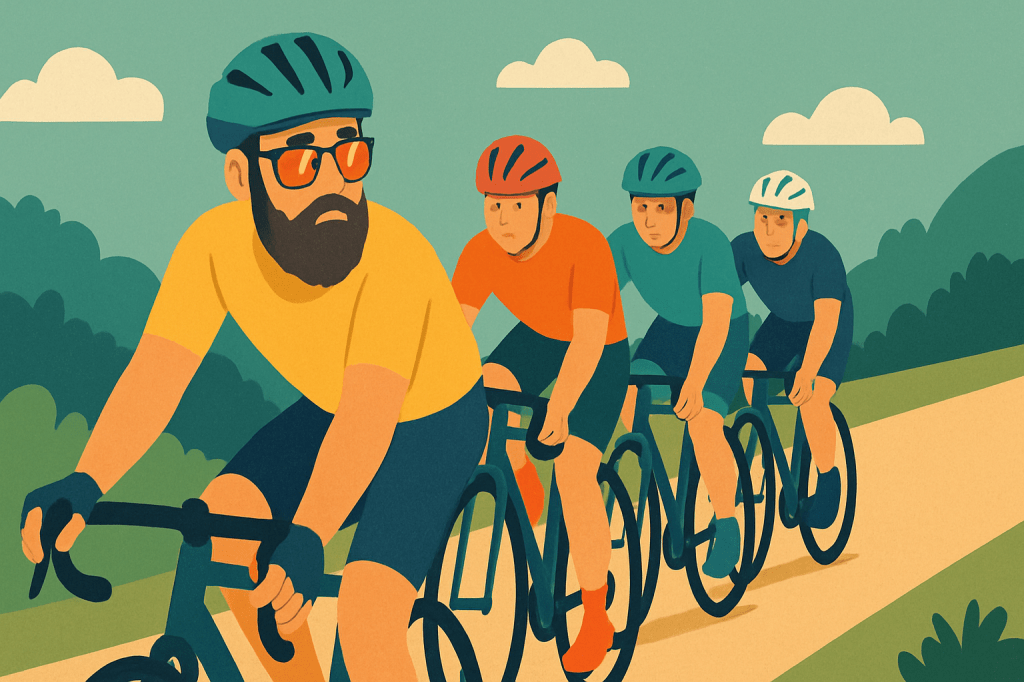
    When people picture a group ride, they usually imagine the leader pulling at the front. Setting the pace. Cutting the wind. Hammering away while everyone else hangs on for dear life. 

    But the longer you ride, and the longer you lead, you realize that’s not always where the real leadership is happening. 

    Some of the best ride leaders I’ve seen weren’t the fastest. They weren’t even at the front most of the time. They were mid-pack, floating. Or sweeping the back, making sure no one got dropped. Calling out potholes. Offering a spare tube. Saying, “You good?” when someone looked like they were about to blow.

    That’s leadership, too

    There’s a myth in both sport and work that the leader is supposed to be the strongest. The fastest. The most dominant force. And yeah, sure, sometimes the situation calls for someone to pull. But other times, leadership means watching the group and adjusting. Slowing down when someone’s hurting. Speaking up when someone’s too gassed to advocate for themselves. Setting a tone that says, “We’re doing this together.”

    I’ve ridden with people who could crush me without breaking a sweat, but they couldn’t lead a group to save their lives. No awareness. No communication. Just tunnel vision and watts. And I’ve led rides where I was out of shape, fighting just to stay on, but still managed to guide the group because I knew what people needed

    It’s not about being in front.
    It’s about being in tune.

    If you coach athletes, train workers, GM players, or even just try to keep your family calendar from collapsing under its own weight, you’ve felt this. Leadership isn’t about outperforming everyone. It’s about knowing when to push, when to wait, and when to say, “Let’s stop for a second and make sure we’re all still here.” 

    The best ride leaders know this.
    The best coaches live it.
    And the best leaders don’t always look like leaders from the outside. 

    But ask anyone who was on that ride, who didn’t get dropped, who found their rhythm, who felt like they belonged, and they’ll tell you who was really in charge.
  • Rebuilding Sucks, But So Did Being Out of Shape

    Rebuilding Sucks, But So Did Being Out of Shape

    There’s no poetic way to say this. Coming back to the bike after a long time off sucks. 

    It sucks when your lungs start burning during a warm-up.
    It sucks when you used to crush climbs and now you’re watching your heart rate spike just trying to hold an endurance pace. 
    It sucks when your body feels like a stranger. 

    For a long time, I told myself I was just busy. I had work, school, family. I was getting things done. But the truth is, I’d burned out. Hard. And once I stopped riding, it was easy to stay stopped. The idea of coming back felt overwhelming. I wasn’t just worried about losing fitness. I was worried about what it would feel like to face that loss head-on

    I’ve always had a tendency to go all-in on things. It’s part of who I am. Focused to the point of obsession, until the fuel runs out. Then I crash. I’ve never had a diagnosis, but if you drew a Venn diagram of ADHD, burnout cycles, and perfectionist tendencies, I’d be standing right in the middle waving. 

    So when I finally decided to get back on the trainer and rebuild, I thought I knew what to expect. Soreness, sure. Loss of power, fine. But I wasn’t prepared for the identity crisis. 

    I couldn’t even think of myself as the same rider anymore. That guy? He was long gone. That guy had an FTP that didn’t want to make him cry. That guy did events. That guy had a training calendar full of colors. This new guy? He was struggling to get through a Zone 2 ride without negotiating with his legs like they were on a union strike. 

    You don’t just return to cycling after time off. You reframe yourself. You rebuild a relationship with a sport that used to define you. And sometimes, that means giving up the fantasy of being “back to normal” and deciding what your new normal is going to look like.

    I had to stop thinking in terms of comparison.
    No more “I used to…”
    No more chasing ghosts on the leaderboard. 
    No more measuring today against the version of me who didn’t have a kid, a degree, and a whole catalog of professional baggage. 

    Now, I ride to feel strong again. Not fast. Not competitive. Just strong. Grounded. Connected to myself. 

    It’s not heroic. It’s not inspirational. It’s just honest.

    And honestly? Rebuilding sucks. 
    But being out of shape sucked more. 

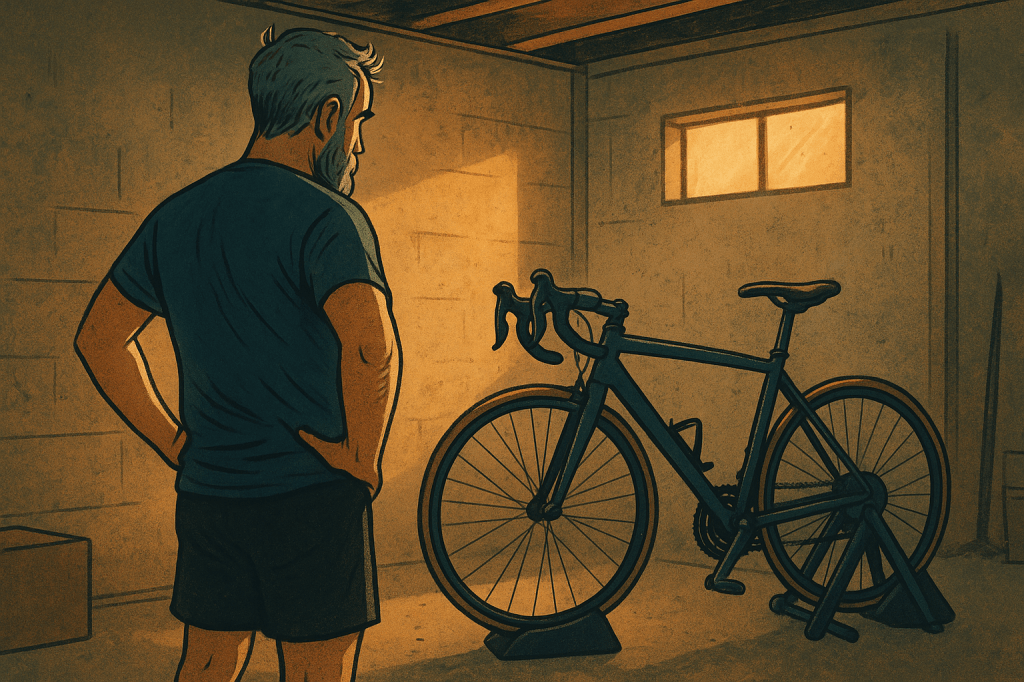
    So if you’re staring at your bike right now, trying to psyche yourself up for a comeback, do it. But don’t expect to become your old self again. 

    You’re building someone new.

    And that version of you?
    They might not ride the same. 

    But they’ll ride for better reasons.