Category: Leadership in Media

  • Alien: Romulus and the Horror of Accidental Leadership

    Alien: Romulus and the Horror of Accidental Leadership

    The thing about the Alien franchise is that it keeps reminding us of the same workplace lesson: you are never as far away from a facehugger as you think you are. You can be minding your own business, fixing a leaky pipe, and suddenly you’ve got HR’s nightmare octopus trying to forcibly promote you into a parent. Alien: Romulus doubles down on this idea. Instead of seasoned veterans like Ripley or Marines who at least pretend to know what they’re doing, we get young, mostly unprepared characters who find themselves in a leadership vacuum. It’s not a story about heroes rising to the occasion—it’s about what happens when authority collapses and people who barely know how to pay rent have to improvise strategy while monsters are literally chewing through the walls.

    And that’s where the leadership lesson lives. Because most of us, at some point, get shoved into the “Congratulations, you’re in charge now” moment without training, guidance, or even a clean job description. It doesn’t feel like a promotion; it feels like something clawing its way out of your ribcage.

    Imagine you’re suddenly asked to run a restaurant, but nobody gave you keys, half the staff doesn’t speak the same language, the fryer’s on fire, and the health inspector is already seated in the corner, writing down notes like “severe violation: cook being eaten alive by kitchen monster.” That’s Alien: Romulus in leadership form—crisis with no map, no mentor, and no time to Google “how to manage people.”

    Hersey and Blanchard’s Situational Leadership theory becomes uncomfortably relevant here. The model argues that leaders need to flex their style depending on the competence and commitment of their followers. If someone has no skill but lots of enthusiasm, you direct. If they have skill but no confidence, you support. Easy to say in a classroom. Harder when the follower in question is holding a flamethrower backwards and screaming about acid blood. Romulus shows how clumsy this gets when young people are thrust into command roles—they don’t have the flexibility because they don’t even know the base settings yet.

    Then there’s authentic leadership, as described by Bill George. Authentic leaders win trust by being consistent, transparent, and rooted in values. The problem is, if you’re nineteen years old and have never even managed a car payment, you don’t have a leadership philosophy yet. Some of the Romulus crew try to fake it—raising their voice, giving orders, posturing like someone who knows how to run a horror movie. And the movie punishes them for it, because authenticity can’t be faked. You can trick your friends into thinking you’re cool, but you can’t trick a xenomorph into believing you’re in charge.

    And if we’re talking about punishment, Barbara Kellerman’s work on negative leadership fits right in. She breaks bad leaders into categories: incompetent, rigid, callous, corrupt, insular, and evil. Romulus gives us a buffet of those. You see incompetence in people who freeze under pressure, rigidity in those who can’t adapt when the plan falls apart, and callousness when survival turns into betrayal. And the result is predictable: higher casualty rate than a team-building ropes course supervised by velociraptors.

    Here’s the uncomfortable real-world echo: Alien: Romulus feels familiar because many of us have lived some version of it. Maybe not the acid-blood monsters, but the promotion you weren’t ready for, the absent boss who left you holding the bag, the chaotic project where everyone’s improvising until it collapses. The film makes it literal, but the truth is that leadership vacuums don’t stay empty. Someone always steps up. Sometimes they grow into the role. Sometimes they get eaten.

    Surviving your first leadership role won’t burn holes through the floor plating, but the scars last just the same. The question isn’t whether you’ll be terrified or unprepared—that part is guaranteed. The real question is whether you’ll figure out how to flex, to be authentic, and to avoid turning into the kind of rigid disaster that costs lives. In space, no one can hear you scream. But in the office, everyone can hear you panic. And it smells just as bad.


    References

    Northouse, P. G. (2021). Leadership: Theory and Practice. Sage.
    Hersey, P., & Blanchard, K. H. (1969). Life cycle theory of leadership. Training and Development Journal.
    George, B. (2003). Authentic Leadership. Jossey-Bass.
    Kellerman, B. (2004). Bad Leadership: What It Is, How It Happens, Why It Matters. Harvard Business School Press.

  • Leadership Lessons From The Toxic Avenger (2025): The Grossest Training Video Ever Made

    Leadership Lessons From The Toxic Avenger (2025): The Grossest Training Video Ever Made

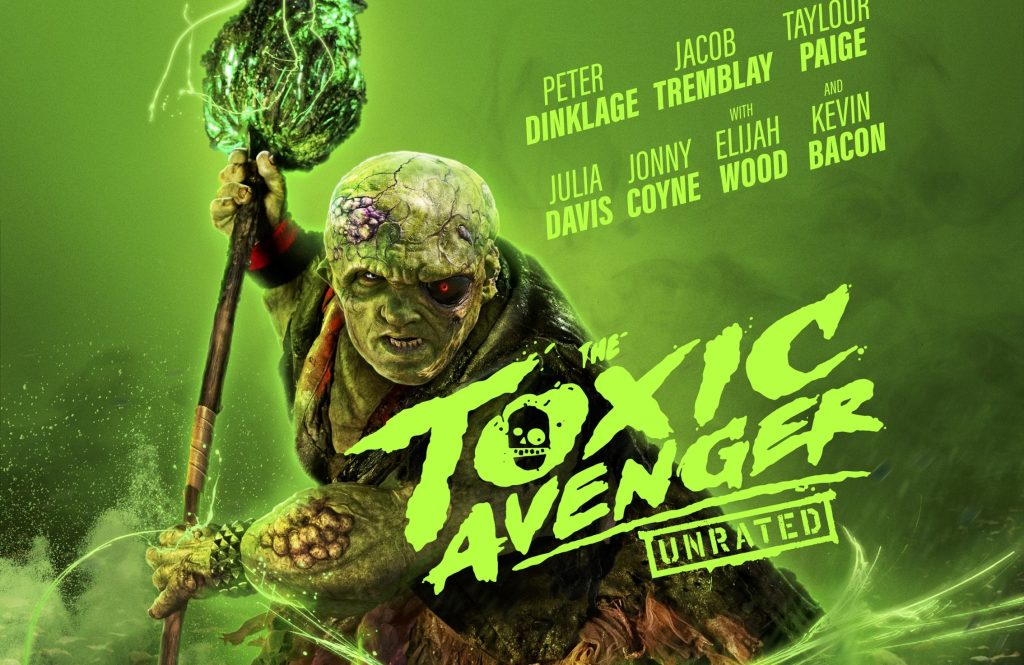
    The new Toxic Avenger is gross, hilarious, and surprisingly sharp. It’s the kind of movie that sprays you in the face with radioactive sludge, then slips a genuine insight into your open mouth before you realize what’s happening. Beneath the gore and fart jokes is a strange but undeniable lesson in leadership, the sort of thing that sneaks up on you while you’re trying not to gag. It makes sense, really—leadership often comes out of the most uncomfortable circumstances. Few people ask to be in charge. Sometimes you just fall into the vat.

    Our unlikely hero is Winston Gooze, a janitor stuck at the bottom of the ladder, ignored by his employers, crushed under the weight of medical bills, and dismissed by nearly everyone around him. His life is a quiet humiliation until one day, fate dunks him headfirst into toxic waste. When he emerges, he’s mutated beyond recognition, but more importantly, he’s transformed into someone who refuses to be stepped on again. That’s the thing about leadership—it doesn’t always sprout from ambition. More often, it comes from necessity, when the alternative is to remain voiceless while everything collapses. James MacGregor Burns built the foundation of transformational leadership theory on this idea: leaders and followers rise together in moments of crisis, elevating each other to a higher level of motivation and morality. Winston doesn’t want power, but suddenly the people around him need someone who can stand up to forces too big for them. Leadership in that moment isn’t a choice; it’s survival.

    The villains in this story are bigger than a single person. Sure, Bob Garbinger is a cackling pharmaceutical CEO who checks every box on the “corporate monster” list, but the real enemy is the system he represents. This is leadership as resistance, where the role isn’t to fine-tune what exists but to smash it and rebuild something better. That aligns with Robert Greenleaf’s Servant Leadership, which puts the focus not on authority but on serving the most vulnerable. Winston’s mutated strength doesn’t make him a leader; his willingness to wield it for others does. Servant leadership isn’t soft. It looks soft right up until it swings a mop through the chest of systemic exploitation. It’s the same principle every decent Game Master eventually learns at the table: you don’t step in to hog the spotlight. You step in when one player’s antics are drowning everyone else, because your responsibility is to keep the game fun for the whole group. Winston’s grotesque vigilante justice is the same move, except with higher stakes and way more exploding heads.

    Winston’s fight isn’t driven solely by rage against corporate cruelty. At the core of his transformation is Wade, his stepson. That personal connection grounds his choices and gives his violence a direction. This is where Bill George’s Authentic Leadership comes into play: true leaders act out of self-awareness and purpose, not just raw instinct. Winston knows who he’s fighting for, and that clarity shapes his every grotesque decision. In leadership, authenticity doesn’t always look polished. Sometimes it looks angry, messy, and inconvenient. But people rally to it because it’s real. That’s the same shift every new supervisor goes through when they stop imitating their last boss and start trusting their own instincts. It’s the same shift GMs make when they finally drop the Matt Mercer impersonation and start leaning into their own strange rhythm. People respond to honesty, even when it comes wrapped in boils.

    The film itself plays out like an ode to Situational Leadership. There’s no clean progression, no consistent tone, no adherence to the rules of superhero storytelling. One moment it’s gore, the next it’s satire, the next it’s slapstick. Winston doesn’t lead with a five-year plan; he leads by improvising in chaos. Paul Hersey and Ken Blanchard argued that leaders have to adjust their style based on the situation and the readiness of their followers. That’s exactly what’s happening here. Winston doesn’t get to stick to one mode of leadership. He mutates with the circumstances, whether that means bashing through enemies or offering a moment of protection to Wade. Anyone who’s ever tried to run a D&D campaign where the players ignore your plot hooks, bribe the villain instead of fighting him, and then insist on adopting the dragon knows this feeling. Sometimes leadership is just keeping the story moving when everything goes sideways.

    By the end, Winston becomes more than just a mutated janitor with a vendetta. He turns into a symbol, whether he likes it or not. People rally around him not because he’s perfect, but because he embodies what they’ve been too powerless to say out loud. That’s culture-building leadership, where a person stops being just an individual and starts representing a larger identity. Organizations do this all the time, spinning origin myths and rallying stories to keep people connected. Tabletop groups do it too. Every party has a “remember when” story—the botched heist, the critical fail that almost wiped the team, the one perfect joke that still gets repeated years later. Those stories weld people together, even if the moment itself was a disaster. Winston becomes that story for the people around him, a reminder that resistance is possible even when the odds are grotesquely stacked.

    What makes The Toxic Avenger stick isn’t that it offers a neat leadership model wrapped up with a bow. It’s that it acknowledges leadership doesn’t come from clean, comfortable places. It comes from desperation, from injustice, from pain. The leaders who matter most are rarely the ones who set out to be in charge. They’re the ones who decided they couldn’t keep going the way things were. Winston Gooze becomes a leader not because he wanted glory, but because he couldn’t bear to see his stepson’s future swallowed by corporate rot. And in that messy, chaotic decision, he finds a kind of power no boardroom seminar could manufacture.

    So maybe leadership isn’t about polished presentations or carefully curated strategies. Maybe it’s about what you do when you’ve been shoved into the sludge. The question isn’t whether you come out clean—nobody does. The question is whether you come out willing to fight for the people who need you most.

  • Cecil Stedman: The Adaptive Bureaucrat Nobody Wants to Be (But Somebody Has To)

    When I was writing about Omni-Man, I kept circling back to Cecil Stedman, the director of the Global Defense Agency. If Omni-Man is the worst-case scenario of charisma without ethics—the guy who can make mass murder sound like a pep talk—then Cecil is the polar opposite. He doesn’t inspire anyone. Nobody’s getting a Cecil tattoo. He looks perpetually hungover, like a guidance counselor who gave up on wearing ties sometime in the early 90s. But when the world is coming apart, he’s the one you actually want making the calls.

    Because Cecil isn’t about vision or inspiration. He’s about survival. He embodies what Ronald Heifetz and Marty Linsky call adaptive leadership—stepping into situations where there is no playbook, no technical fix, no “right answer” that saves the day. Omni-Man flexes, and cities crumble. Cecil grimaces, makes a decision that guarantees everyone will hate him, and then pours another drink. That’s actually the more realistic version of leadership.

    You can see it in how he operates: sending rookies into fights he knows they’ll lose, lying to Mark about how bad things really are until he absolutely has to tell him, constantly calculating which disaster leaves fewer bodies on the floor. He doesn’t pretend there’s a win waiting at the end. He just picks the path where the damage is survivable. That’s the entire premise of adaptive leadership—there’s no fixing the storm, only steering through it.

    This is why I can’t shake Cecil as the real counterpoint to Omni-Man. Charisma makes you believe in someone before you know what they stand for. Cecil makes you distrust him immediately, and yet, through sheer blunt honesty, he earns something more durable than admiration: grudging trust. He never tells you it’ll be fine. He tells you it’s going to be terrible, but here’s how we’ll get through it anyway. That’s a very different kind of authority than Omni-Man wielding his mustache like a badge of destiny.

    It also makes Cecil a pretty good metaphor for what happens once you’ve been leading people long enough to lose your illusions. Anyone who’s ever managed a warehouse crew, or run a hospital shift, or tried to GM a tabletop campaign knows what this feels like. You start bright-eyed, promising people big visions and meaningful work. Then reality sets in. The order backlog is impossible, the patients keep piling in, the party has just set fire to the only inn in town because someone thought a bar brawl would be “character-driven roleplay.” Suddenly, you’re not the inspirational Omni-Man figure anymore. You’re Cecil, making exhausted calculations about which choice leaves the fewest scars.

    That’s the unglamorous reality of adaptive leadership. Heifetz and Linsky talk about it as “living in the disequilibrium.” You can’t let things get so calm that people won’t adapt, but you also can’t let them get so chaotic that people panic or break. It’s this awful tightrope of tension management. Cecil lives on that rope. He knows if he underplays a threat, people die. If he overplays it, people revolt. So he does what real leaders do: he accepts that everyone will be angry with him, and then he does it anyway.

    Of course, there’s a cost. Cecil always looks one bad day away from collapsing into his whiskey glass. Adaptive leadership isn’t the kind of thing that makes you a beloved icon. It burns you out, leaves you scarred, and makes your victories invisible. No one celebrates the catastrophe you prevented. They only complain about the compromises you made. That’s why so many real-life leaders retreat into the comfort of technical fixes—new checklists, new policies—because at least those come with the illusion of control.

    But when you’re really in it—when you’re leading people through situations with no clean answers—charisma won’t save you. Vision won’t save you. The only thing that keeps people moving is knowing you’re willing to stand there with them in the middle of the wreckage, taking the heat and making the call. That’s Cecil. He doesn’t inspire. He endures. And in the long run, that’s what makes him the most honest kind of leader.

    Omni-Man showed us the dangers of charisma unmoored from ethics. Cecil shows us the price of leadership rooted in pragmatism. Between the two, Cecil’s the one you can actually trust to keep the world spinning, even if you hate him for how he does it. And if you’ve ever found yourself in a role where every option looked terrible but someone had to choose, congratulations: you’ve already had your own Cecil moment. You probably didn’t look good doing it. You definitely didn’t get applause. But you kept things alive long enough to fight another day. And that, grim as it sounds, is leadership.


    References

    • Heifetz, R. A., & Linsky, M. (2002). Leadership on the Line: Staying Alive Through the Dangers of Leading. Harvard Business Review Press.
    • Northouse, P. G. (2021). Leadership: Theory and Practice (8th ed.). Sage Publications.

  • 28 Years Later: Leadership Lessons From a World That Just Won’t Stay Fixed

    28 Years Later: Leadership Lessons From a World That Just Won’t Stay Fixed

    I didn’t expect to walk out of 28 Years Later grinning like I’d just seen the year’s best comedy, but here we are. The movie is bleak and brutal in all the ways you’d expect from a sequel to 28 Days and 28 Weeks Later, yet every so often it throws you a lifeline: a Swedish soldier cracking deadpan jokes, or the sudden introduction of the Jimmies—the tracksuit-clad hooligans led by Jimmy himself, who was introduced in the opening scene and then gone for basically the entire film until the Jimmies dropkicked their way into the finale like they’d been promised a spin-off and were fully prepared to beat the producer with folding chair until they got one. It’s a weird, awesome blend of relentless despair and absurd comedy, the kind of tonal whiplash that makes the whole thing feel like a fever dream.

    That’s the heart of Ronald Heifetz and Marty Linsky’s theory of adaptive leadership. Their big idea is that the hardest problems we face aren’t “technical”—the kind you solve with a known fix, like calling IT when your monitor won’t turn on. The hardest problems are adaptive, where the rules themselves have changed and no one has the answer. When rage zombies overrun London, it doesn’t matter how much you know about first aid protocols or where to find bottled water. You’re making judgment calls in the fog,. trying to figure out the difference between survival skills and suicide notes dressed up as wisdom. 

    What the movie shows us—and what Heifetz & Linsky emphasize—is that leadership in these moments isn’t about heroically swooping in with the solution. It’s about holding people together long enough that solutions can emerge. That’s why the Swedish guy’s humor works as more than comic relief. He’s practicing a form of situational leadership (Hersey & Blanchard, 1969): shifting his approach based on the immediate needs of the group. Sometimes he’s lightening the mood, sometimes it’s played as dead serious. Either way, he’s paying attention to what the team needs in that exact moment.

    It’s easy to dismiss comic relief as just nonsense, but think about your own life. In the middle of a tense family dinner, there’s always that one relative who cracks a joke about the mashed potatoes being weaponized. In a D&D session, it’s the bard who pipes up with a one-liner when the dragon’s about to eat the cleric. At work, it’s the person who points out that the coffee is strong enough to strip paint. You roll your eyes, but everyone relaxes just enough to keep going. That’s adaptive. Humor buys the group another five minutes of cooperation before somebody snaps.

    And then there’s Jimmy. He starts by losing everything—family, friends, any shot at normal—and then ghosts the movie for what feels like forever. Just when you’ve forgotten him, he blasts into the last scene with the narrative subtlety of a golf club through a plate-glass window. It’s ridiculous and perfect. Because how many times in your own life have you seen the “forgotten” person, the one everyone assumed was out of the picture, suddenly reappear like they were hiding in the ceiling tiles, ready to drop down and steal the spotlight? The Jimmies represent the survivalist version of what a lot of groups become after too much upheaval: a stitched-together tribe of rituals, slang, and inside jokes that don’t make sense to outsiders but function as glue for insiders. They swagger like they’re in control, but under the surface, you can tell they’re improvising as much as anyone else.

    This is the piece leaders often miss. We love the myth of the solitary figure who knew the path all along. In reality, most progress comes from people stumbling forward, testing half-baked ideas, and then acting like it was intentional afterward. As Peter Northouse puts it in Leadership: Theory and Practice, adaptive leaders tolerate ambiguity and resist the urge to slap a quick fix on what’s really a systemic wound (Northouse, 2021). That’s as true for a ragtag survivor gang as it is for a PTA board that just realized their big fundraiser is scheduled for the same weekend as homecoming.

    I think back to my own experiences in warehouses and delivery networks. There were plenty of times when the corporate “solution” was nothing more than a PowerPoint full of buzzwords. But at the ground level, the only reason things kept moving was because frontline teams invented their own processes—borrowing equipment, making ad hoc spreadsheets, redesigning workflows with sticky notes and duct tape. From the outside, it looked chaotic. From the inside, it was the only way to survive. That’s adaptive leadership.

    Another thread the movie pulls on is resilience. When characters keep going after loss, or keep fighting when it’s clear they’re outmatched, that’s resilience theory in action (Luthans, 2002). You see the same thing in a burned-out sports team that still shows up to practice, or in a group of friends who keep making movie night happen even after everyone’s schedules have collapsed into chaos. The Jimmies aren’t admirable because they’re powerful; they’re admirable because they’ve found a way to keep showing up—even if it means vanishing for two hours and then reappearing like they just respawned from a glitch in the Matrix.

    And let’s not overlook psychological safety. Amy Edmondson (1999) describes it as the freedom to speak up, take risks, and fail without fear of punishment. In 28 Years Later, every group that survives does so because they’ve built just enough trust to admit fear and share ideas without instantly fracturing. That’s why you’ll never see a solo hero in this franchise succeed for long. The moment someone tries to go lone wolf, they’re either eaten, abandoned, or left clutching their ideals while the world moves on. Survival is a group project. The same is true whether you’re planning a heist, running a campaign, or trying to survive a school group project where half the team ghosts after the first meeting.

    So what does this mean if you’re not dodging infected hordes? It means that if you’re waiting for perfect information before you act, you’ll get eaten. The people who make it through adaptive challenges—whether it’s a viral outbreak, a corporate restructure, or your trivia team trying to win without a single person who knows geography and realizing too late that confidence does not, in fact, equal knowledge about state capitols—are the ones willing to experiment, pivot, and sometimes fail loudly in front of others. You don’t survive by clinging to the manual; you survive by writing the manual as you go, then tearing it up when the situation changes.

    That’s the lesson I didn’t expect from a movie where people’s faces explode in fountains of rage-blood: leadership isn’t about having the cure. It’s about helping people stumble forward together, half-blind and bleeding, like we’re all extras in someone else’s zombie movie. 


    References:

    • Heifetz, R. A., & Linsky, M. (2002). Leadership on the Line: Staying Alive Through the Dangers of Leading. Harvard Business Review Press.
    • Hersey, P., & Blanchard, K. H. (1969). Life cycle theory of leadership. Training and Development Journal.
    • Edmondson, A. (1999). Psychological safety and learning behavior in work teams. Administrative Science Quarterly, 44(2), 350–383.

    • Luthans, F. (2002). Positive organizational behavior: Developing and managing psychological strengths. Academy of Management Executive, 16(1), 57–72.
    • Northouse, P. G. (2021). Leadership: Theory and Practice (9th ed.). Sage.
  • Omni-Man and the Perils of Charisma Without Ethics

    Omni-Man and the Perils of Charisma Without Ethics

    What Invincible Teaches Us About Leadership (and Screwing It Up)

    Note: This essay contains spoilers for Season 1 of Invincible. Consider this your official warning before we apply Bernard Bass’s 1990 leadership framework to a cartoon man punching his own son through several office buildings.

    My stepson introduced me to Invincible, and watching episodes has kind of become a family ritual. If you’ve never seen it,  let me catch you up real quick. Superman, but with a mustache, shows up, builds a life, raises a son, and then one day casually murders half his coworkers in the most gruesome way possible. That’s not a spoiler; it’s Season 1, Episode 1. Omni-Man is the dad every suburban HOA thinks they want – handsome, confident, the type of guy who would fix your gutters while explaining why you should stop voting for tax increases. Except he’s also a colonizer sent to conquer Earth, and the whole “family man” thing is just long-term undercover work. Which makes him the perfect case study for what happens when charisma shows up without any ethical leadership attached. 

    Here’s the thing. Bernard Bass (1990) wrote about transformational leadership as if it were the gold standard of “good” leadership. He broke it down into four parts: inspirational motivation (painting a vision), idealized influence (being a role model), individualized consideration (actually giving a shit about people as individuals), and intellectual stimulation (getting people to think differently). Done right, it turns a group of employees – or superheroes – into a force that believes in something bigger than themselves. Done wrong, it turns them into cannon fodder for someone else’s personal crusade. Omni-Man is a textbook transformational leader. Right up until you notice he’s transforming people into stains on the pavement. 

    Think about how Omni-Man treats his son, Mark, in Season 1. Early on, he’s the encouraging father, telling Mark that becoming a superhero will be hard but meaningful. He trains him, mentors him, and models what it means to “do the right thing.” That’s the framework of transformational leadership right there. Mark looks up to him, imitates him, believes in him. The problem is that every bit of that framework is fake. It’s not built for Mark’s growth. It’s built to condition Mark to accept the Viltrumite worldview – strength over compassion, empire over community. That’s the difference between ethics and manipulation. And the second Mark resists, Omni-Man drops the act like a toddler dropping an iPad. 

    This is where charisma gets dangerous. Charisma makes you believe in the person before you’ve had time to check if their vision actually includes you.  It’s the shiny lure that makes people swallow the hook. Bass (1990) himself warned that charisma is morally neutral. It can inspire great social movements or genocidal nightmares. Northouse (2022) makes the same point. Charisma works, but it doesn’t come with built-in ethical guidelines. That’s why charismatic leaders can either mobilize people to march for civil rights or convince them to drink poison in a jungle compound. The mustache doesn’t make the man. Ethics do. 

    One of the most chilling moments in Season 1 is Omni-Man explaining to Mark why humanity is beneath them. He doesn’t just say “I’m stronger, so I should rule.” He says it with that calm, steady, paternal tone. The same tone he used when teaching Mark how to throw a baseball. That’s what makes it horrifying. The very cadence that once inspired trust is now being used to justify mass murder. That’s charisma without ethics. When the same voice that once motivated you suddenly tells you your life is worthless, and part of you still wants to believe it. 

    And let’s not pretend this is confined to alien overloads on animated TV. Every workplace has seen the Omni-Man archetype in khakis. The VP who tells stories about “vision” and “disruption” but quietly measures worth in profit margins and how fast they can chew through new hires before running out of warm bodies. The manager who says “we’re all family here” right before giving a bunch of people the axe. The coach who insists that losing builds character but only spends time with the players who pad his win record. They’re charismatic. They’re inspiring. And then you find out that their charisma was just the camouflage for their actual agenda.

    The counterexample in Invincible is Cecil, who is the opposite of inspiring. He’s gruff, morally compromised, and perpetually five minutes away from a stroke. But he at least embodies adaptive leadership (Heifetz & Linsky, 2002). He tells people the truth: every option is bad, some less bad than others. He doesn’t try to dazzle you into following. He tries to survive alongside you. Cecil may not make anyone want to tattoo his face on their bicep, but he does something Omni-Man never could. He builds trust out of transparency. People will follow you through hell if they believe you’re burning, too. 

    Omni-Man, by contrast, builds nothing but fragile compliance. The Guardians of the Globe trusted him because of his charisma and record, not because he ever invited them into his vision. And when he killed them, no one even saw it coming, because no one had ever been close enough to see him for what he actually was. That’s the cautionary tale Bass (1990) would underline, circle, and use two exclamation points. Transformational leadership without ethics corrodes culture from the inside out. It doesn’t just betray trust. It makes people question whether trust is even possible. 

    For a second, let’s pull this down to earth, because no, most of us aren’t secretly grooming our children to help us conquer the planet. But the planet shows up smaller and quieter in everyday leadership. You hire into a job because the manager seems inspiring, because they talk about growth and opportunity. Six months later, you realize the “growth” was a euphemism for doing two jobs at once, and the “opportunity” was the opportunity to burn out. Or you sit down at the D&D table where the GM promises a player-driven story, only to find every choice redirected because they actually wrote a novel instead of a campaign. That’s Omni-Man with dice instead of fists. The betrayal doesn’t sting because of the outcome. It stings because you believed them when they said your choices mattered. 

    Cue the infomercial voiceover, “There’s got to be a better way. Now there is!” Ethical Leadership. Brown and Treviño (2006) describe it as modeling normatively appropriate conduct, communicating it clearly, and reinforcing it consistently. It sounds dry, but in practice, it means one simple thing. Your charisma isn’t yours. It belongs to the people who trust you, and they’re letting you borrow it as long as you use it responsibly. If you betray that trust, there’s no speech or mustache impressive enough to bring it back. Ethical leadership is what separates a transformational leader from a manipulator. 

    Amy Edmondson’s (1999) research on psychological safety drives this home. Teams thrive when people feel safe to speak, fail, and learn without fear of humiliation or punishment. Omni-Man doesn’t just fail at creating psychological safety. He annihilates it with prejudice. The moment Mark pushes back, Omni-Man doesn’t create space for dialogue. He beats his son half to death to enforce compliance. Replace “fists” with “shaming in meetings” or “retaliating against dissenters,” and suddenly, you’ve got a case study in bad management instead of supervillainy. Different scale, same outcome. Silence, fear, and eventual collapse. 

    The lesson isn’t “charisma bad.” Charisma matters. Confidence matters. Vision matters. But charisma is like fire. It’s useful when it’s contained, but can be catastrophic when left unsupervised. Transformational leadership only works when charisma is tethered to ethics, when the vision is genuinely shared, and when the people in your orbit aren’t just NPCs in your story. Omni-Man had the fire but none of the responsibility. That’s why his legacy isn’t leadership. It’s trauma. 

    And yes, I’m aware I just spent 1,300 words applying Bernard Bass’s 1990 framework for transformational leadership to a cartoon man in spandex who uses a subway train as a teaching aid. But that’s the point. Leadership theory isn’t supposed to live in textbooks. It’s supposed to help us see what’s happening around us. Invincible just happens to be a gorier, louder mirror of something we already recognize. Charismatic leaders can give us the razzle-dazzle with their vision right up until we realize that vision never included us. 

    So here’s your homework. Think about the most charismatic leader you’ve ever worked for. Now ask, did their vision make room for you? Or was it just camouflage for their actual mission? If it’s the second, congratulations – you’ve already met your own Omni-Man. And unlike in Invincible, you don’t need to punch them through a mountain. You just need to stop mistaking charisma for leadership. 

    References

    • Bass, B. M. (1990). From transactional to transformational leadership: Learning to share the vision. Organizational Dynamics, 18(3), 19–31.
    • Northouse, P. G. (2022). Leadership: Theory and practice (9th ed.). Sage.
    • Heifetz, R. A., & Linsky, M. (2002). Leadership on the Line: Staying Alive Through the Dangers of Leading. Harvard Business Review Press.
    • Brown, M. E., & Treviño, L. K. (2006). Ethical leadership: A review and future directions. The Leadership Quarterly, 17(6), 595–616.
    • Edmondson, A. C. (1999). Psychological safety and learning behavior in work teams. Administrative Science Quarterly, 44(2), 350–383.