Category: Uncategorized

  • Congratulations, You’re Now the Camp Cook: Quiet Cutting and Passive-Aggressive GMing

    Congratulations, You’re Now the Camp Cook: Quiet Cutting and Passive-Aggressive GMing

    Why subtle sabotage isn’t leadership—at the table or in the office.

    The first time I heard the term “quiet cutting,” I assumed it was slang for trying to open a bag of chips at a funeral. But no—it’s the latest euphemism for a corporate maneuver where companies avoid the legal, financial, or emotional mess of layoffs by reassigning employees to different roles, usually ones they didn’t ask for, often ones that feel like a punishment. The employee is still on the payroll, technically, but the new job is so mismatched, irrelevant, or isolating that the underlying message is clear: we’d prefer you find your own way out.

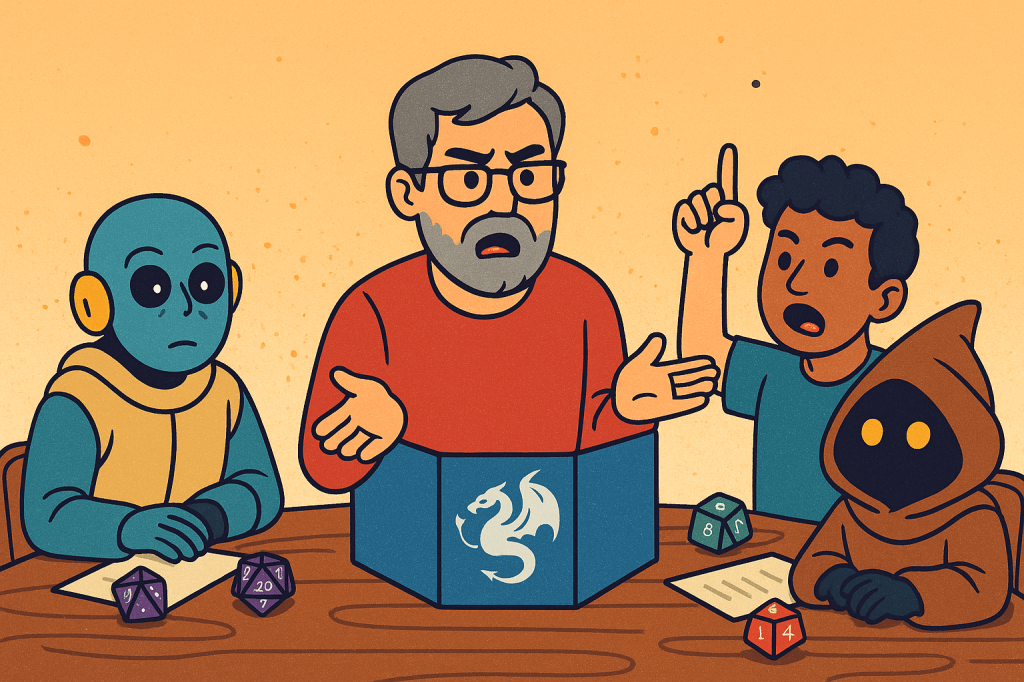
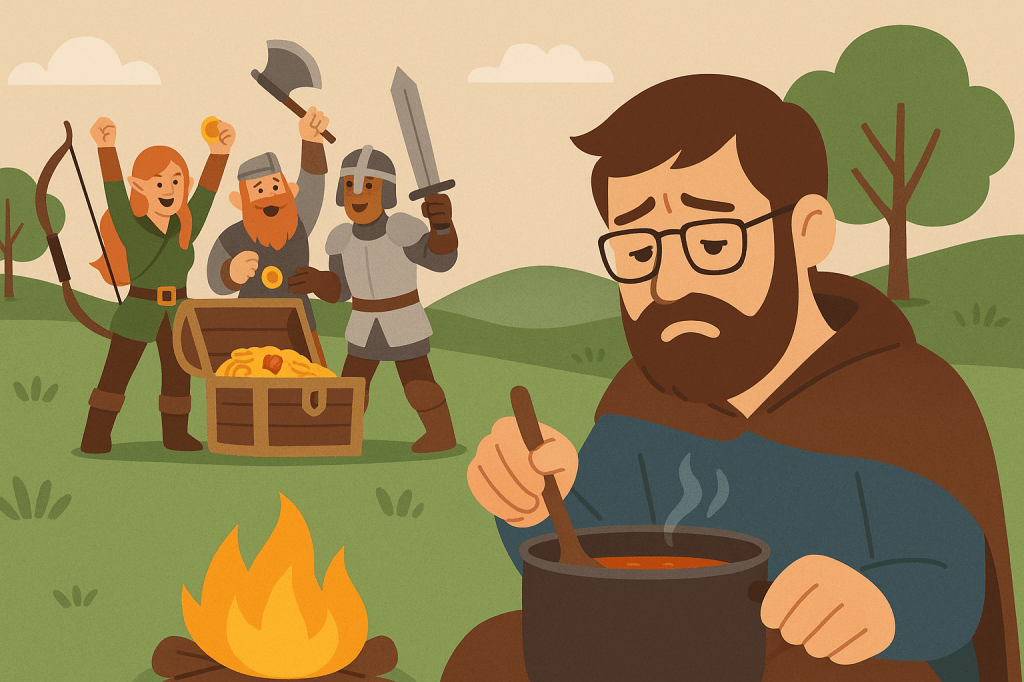
    For those of us who’ve spent any time leading tabletop roleplaying games like Dungeons & Dragons, it’s hard not to hear that and think of a very specific moment at the game table. A moment when a player becomes such a problem—or maybe just such a nuisance—that instead of having an honest conversation, the Game Master starts passively undermining their character. Not openly. Not with any discussion. Just a steady campaign of quiet obstruction. Their magic “doesn’t work.” Their dice rolls fail in suspicious clusters. The world itself seems to bend around them in increasingly hostile and uncooperative ways.

    If that sounds familiar, that’s because the same dysfunction infects both spaces. Quiet cutting in the workplace and passive-aggressive GMing at the table are two heads on the same passive, responsibility-dodging hydra. In both cases, the person in charge wants someone gone—but not enough to confront them. Instead, they engineer an exit by slowly removing power, relevance, and dignity, then shrugging and acting like it was inevitable.

    Let’s talk about why that isn’t just bad management or bad game mastering. It’s bad leadership. And if your goal is to become a better GM, a stronger team leader, then this particular pitfall is worth studying.

    Quiet Cutting 101: When HR Becomes a Boss Fight

    In corporate speak, quiet cutting is framed as “realignment” or “talent optimization.” The company assigns you a new title, a different department, maybe a reduced schedule—and counts on you to quit so they don’t have to pay severance or take a reputational hit. You’re told it’s not a demotion, but you no longer have direct reports. You’re told it’s not punishment, but you’ve been relocated to a dead-end project with no future. It’s not technically unemployment, but it is emotionally exhausting, and most people burn out long before their final paycheck.

    Companies that use this tactic often justify it under the guise of strategic planning. But underneath that thin corporate gloss is a fear of direct leadership. Firing someone means confronting performance, having tough conversations, and documenting decisions. Quiet cutting offers the illusion of conflict avoidance—but all it really does is bury the conflict underground where it festers.

    It’s worth noting that this isn’t a fringe practice. The Wall Street Journal and Forbes have both reported on its rise, especially as companies look for budget cuts without taking public heat. And it mirrors a well-documented leadership pattern known as passive management-by-exception, a transactional model where the leader only intervenes when something goes wrong, usually in the form of punishment or silent correction.¹

    If you’ve ever been on the receiving end of it, you know how demoralizing it feels. If you’ve used it, you may have told yourself you were just “dealing with a difficult person.” But in reality, you were reshaping their world to push them out without having the courage to say so.

    The GM’s Version: Nerfing the Character Until the Player Leaves

    Now let’s move to the tabletop. A Game Master doesn’t have the option of moving a player to a new department. The party is the party. There’s no off-screen filing cabinet for problem characters. So when a GM grows tired of a player—maybe they argue too much, derail the plot, or just make the game less fun—they may quietly start closing doors.

    Instead of telling the player what’s wrong, the GM tightens the narrative screws. Their special skills mysteriously stop working. NPCs stop responding to them. The gods they worship suddenly go silent. Or the GM introduces a recurring mechanic explicitly designed to punish one player’s playstyle—say, a magical field that somehow only seems to affect the chaotic neutral bard.

    In some cases, this is subtle and accidental. The GM is frustrated but unsure how to confront it, so they let the story do the dirty work. In other cases, it’s completely intentional. I’ve even heard of GMs who build entire arcs around divine retribution for a player’s misbehavior—not as story, but as out-of-game correction disguised as lore. And again, this isn’t always wrong. Sometimes an in-world punishment is the appropriate consequence for a player who’s gone rogue, especially if it’s discussed and agreed upon as a way to preserve the game.

    But the difference lies in how it’s done and why. If you’re using narrative constraints to facilitate a shared storytelling moment with a player who understands the stakes, that’s excellent GMing. If you’re using them to exile a player from the story without having to look them in the eye and say “this isn’t working,” then you’re not leading. You’re ghosting them through game mechanics.

    And let’s be clear: your players can feel it. Just like an employee knows when their new “special projects role” is a padded cell with a whiteboard, a player knows when their rogue has become invisible—not in the good way.

    What Ethical and Transformational Leadership Have to Say

    Ethical leadership, as defined by Brown and Treviño (2006), involves fairness, transparency, and moral guidance.² It’s not just about being nice—it’s about being principled, especially when it’s hard. That means talking to people about what’s wrong. It means giving feedback that’s honest, specific, and actionable. It means recognizing when a relationship—whether at the table or in the office—has veered off course and trying to correct it together.

    Transformational leadership goes a step further. It asks you to engage people’s potential.³ To see their capacity for growth, not just their current flaws. In a campaign, that might mean helping a player find a new way to contribute, instead of punishing their current choices. In the workplace, it might mean coaching instead of cutting—unless you’ve truly reached the end of the road, in which case it means saying so directly.

    This is exactly the kind of material I cover in my RPG leadership workshop, where we examine how the dynamics at a gaming table mirror the power structures of a real team. GMs and managers face the same central challenge: how do you guide a diverse, unpredictable group toward a shared goal without falling into manipulation or avoidance? How do you inspire performance without relying on control? And when things go wrong—as they always do—how do you lead with integrity?

    These aren’t just game design questions. They’re leadership questions. And they’re the foundation of both my upcoming RPG leadership book and the DM coaching sessions I offer for aspiring or struggling GMs.

    The Fix: Lead Like You’re Being Watched by a Paladin

    The solution is simple, but not easy: have the conversation. If someone’s behavior—at the table or on the clock—is disruptive, say so. If a player’s character doesn’t work with the party, talk to them about adjustments. If an employee is underperforming or creating conflict, address it directly. Don’t use silence as a substitute for action. Don’t let the system do your dirty work.

    Because whether you’re running a corporate team or a Friday night campaign, the people who follow you deserve clarity. They deserve honesty. And if you can’t give them that, you’re not leading. You’re just rearranging chairs while the ship drifts off course.

    So the next time you’re tempted to nerf someone into oblivion or quietly shuffle them out of view, ask yourself: am I avoiding a confrontation, or am I avoiding growth? Because in leadership—as in gaming—what you don’t say often speaks louder than what you do.


    Sources
    ¹ Bass, B. M., & Avolio, B. J. (1994). Improving organizational effectiveness through transformational leadership. Sage.
    ² Brown, M. E., & Treviño, L. K. (2006). Ethical leadership: A review and future directions. The Leadership Quarterly, 17(6), 595–616. https://doi.org/10.1016/j.leaqua.2006.10.004
    ³ Northouse, P. G. (2021). Leadership: Theory and practice (9th ed.). Sage.

  • “One Hop at a Time” Is a Leadership Strategy, Not Just a Survival Tactic

    “One Hop at a Time” Is a Leadership Strategy, Not Just a Survival Tactic

    As I’m working on a research project right now, I’m revisiting The Leadership Challenge by Kouzes and Posner, which is considered one of the staples in leadership literature. You know the type–corporate workshop bait, stuffed with stories meant to inspire you to “ignite the leader within.” And sure, some of it hits. A few of the ideas even spark something. But I also find myself grinding my teeth through some of the examples, especially the ones that seem to equate good leadership with getting your people to work late for free. 

    There’s a story in the book that really stood out, though, in a good way. It’s about a guy who climbed Mount Rainier as an amputee. Someone asked how he did it, and he said, “One hop at a time.” That’s it. That’s the whole strategy. One hop, then another, until he was on top of the mountain. 

    Now I’ve never climbed a mountain–unless you’re talking about the kind made out of failed delivery metrics and climbs on a mountain bike trail that turn your quads into haunted meat–but the lesson rang true. Not because it was revolutionary, but because it confirmed something I already deeply knew from coaching, working and just generally trying to keep the wheels on the ground while moving forward. 

    There’s no magic—just movement.

    Every meaningful transformation comes from a thousand micro-decisions that add up over time. Or, as James Clear puts it, it’s about making tiny gains every day, compounding into something that looks impressive only once you zoom out far enough.

    As a cycling coach, one of the first things I learned was quadrant analysis. You basically take a piece of paper, draw a big plus sign splitting it into four sections. In one box you write where the athlete is now–their current fitness level, often including FTP (Functional Threshold Power), endurance capacity, maybe some recent performances. In another, you define the demands of the event they want to do–how long it is, what kind of terrain it’s on, what kind of energy system it’s going to tax. The third is the timeline–how much time do we have to prepare? And the fourth is the destination. What are their goals? Finishing on the podium? A personal record? What fitness level or skillset do they need to realistically develop to do it?

    That’s how you build the map. You don’t just hope for greatness. You break down the path between today and the event and you work backward from the finish line to structure the steps. Week by week. Ride by ride. It’s not flashy. It’s not magic. But it works.

    And I’ve found that model applies far beyond bikes

    Let’s say you’re managing a team of forklift drivers. Or DMing a group full of creative agents of chaos. Or trying to write a book while also raising a child, working full time, and keeping your sanity wired together with cold coffee and grim determination. The principle still holds. Big goals are built out of small, repeatable actions. You just need to know what to repeat. 

    The amputee climber didn’t conjure his way up the mountain. He didn’t pull out a TED Talk and inspire the snow into melting. He took one step, then another. He broke down the impossibility into micro-goals. From here to there. That’s it. 

    Same for the leader who wants to change a toxic work culture. You don’t fix the entire system in one keynote speech. But you might start by not rewarding the people who burn themselves out and punishing the ones who set healthy boundaries. You start by showing your team what matters through what you pay attention to. Then you do it again. Then you do it when nobody’s watching. Then you keep doing it even when you’re frustrated when it’s not moving fast enough. 

    The alternative is paralysis. 

    Too many people get stuck at the base of the mountain, looking at the summit the way a cat looks at a closed door–like something must be wrong with the universe if that’s where you’re supposed to go. I get it. I’ve stood there myself more times than I’d like to admit. Whether it was trying to build a business from scratch, dealing with toxic workplace nonsense, or trying to hold a half-shattered D&D group together after an emotional meltdown, it’s easy to feel like you’re supposed to fix everything or fix nothing. That’s the trap.

    So what does this mean for you as a leader, coach, or GM?

    It means you need to get comfortable with slow progress. You need to train yourself–and your team, or your players–to look for the landing spot for those hops. To recognize that mastery, growth, and even healing aren’t events. They’re practices. A good leader breaks down the mountain into legible steps. They don’t throw their team at the wall and see who sticks. 

    Here’s a quick framework you can actually use, whether you’re writing a campaign, leading a team, or building a new training plan:

    1. Define the summit – What’s the actual goal? Don’t say “be a better team.” Say “improve order accuracy by 20% in 90 days.” Or “get our bard to stop derailing every plotline with jokes about magical ass tattoos.”
    2. Evaluate your terrain – Where are we starting? What resources do we have? How much buy-in? What are the known obstacles?
    3. Estimate your hops – Break it down into manageable steps. Something you can do this week. Then next week. Then the one after that. Keep it visible.
    4. Adjust as needed – Don’t marry the plan. Marry the goal. Sometimes a hop turns out to be a skip or a backslide. That’s fine. Adjust. Keep moving. 

    Leadership isn’t about grandeur. It’s about momentum. And momentum comes from clarity and consistency. 

    And if you’re thinking, “Yeah, but my situation’s different,” you’re not wrong.

    Everyone thinks their mountain is the most unclimbable. Everyone thinks they’re the only one dealing with a team that’s checked out, a player who keeps trying to solo the boss fight, or a workplace that quietly celebrates burnout like it’s a personality trait. But the core strategy still applies. 

    You figure out what the next hop is. Then you take it. You stay honest about where you are, you respect the human limits involved, and you keep showing up. 

    That’s leadership. One hop at a time.

  • So I Tried Being a Good Leader and Now Everyone’s Mad at Me

    So I Tried Being a Good Leader and Now Everyone’s Mad at Me

    At some point in your leadership journey, you will try to make things better. And people will hate you for it. 

    I learned that the hard way. I had just put the finishing touches on a new training process that had been causing problems for months. Packages were going missing. Damaged items weren’t getting documented properly. Everyone was stressed, and no one could tell me where things were breaking down. So I sat down and did the work. Rewrote the steps and double-checked everything against the actual day-to-day flow. 

    It wasn’t perfect, but it was better. 

    Then I rolled it out and the backlash was immediate. 

    Suddenly I was “micromanaging.” People said I was “changing too much.”  One guy flat out told me I was making things harder on purpose. Never mind that we’d been talking about these exact issues in meetings for weeks. Never mind that I built the changes based on feedback they gave me. 

    They were mad. Because it was different. 

    That’s the thing no one tells you about trying to lead for real.

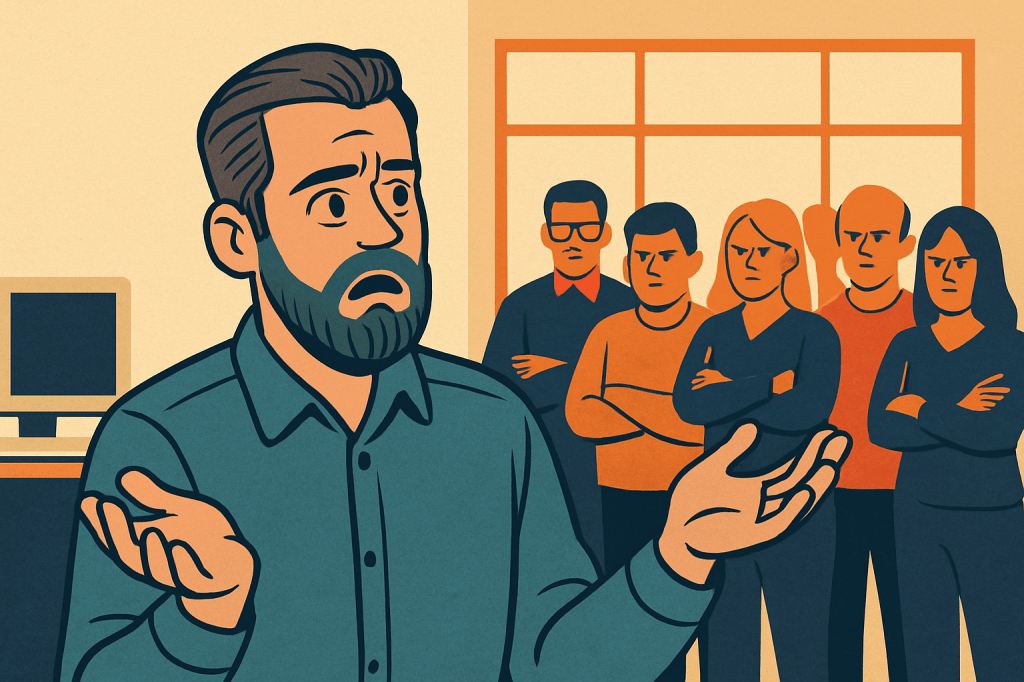
    When you challenge the way things have always been,  even with the best intentions, you don’t get applause. You get suspicion. Frustration. Eye rolls. People assume you have a hidden agenda, or that you’re trying to prove something, or that you’re just flexing. 

    I used to take it personally. 

    Now, I just see it as part of the job. 

    When you try to improve things, you’re sending a message, whether you mean to or not, that the old way wasn’t working. And if people built a sense of competence or pride around the old way? That feels like a threat.

    Even if you’re right.

    Especially if you’re right. 

    Good leadership will piss people off. Not because you’re cruel. Because you care enough to push through the part where everyone’s uncomfortable. You’re willing to stand in that storm, knowing the other side is a team that’s better prepared, more efficient, or less miserable. 

    But in the moment? It sucks. 

    You’ll be accused of things you didn’t do. You’ll be called controlling, arrogant, or out of touch. You’ll go home wondering if you screwed everything up. And then, slowly, the thing you changed will start to work. People will adapt. They’ll stop fighting it. They might even forget there was ever a time that it didn’t work that way. 

    And they won’t thank you.

    That’s fine. That’s not why you’re doing it. 

    So yeah, I tried being a good leader. I got yelled at. I got side-eyed. I got called things I won’t repeat here. 

    But the process worked. The problems got fixed. And eventually, the team stopped bleeding out time and energy on avoidable mistakes. 

    That’s leadership. It’s not pretty. But if you can handle the part where people get mad at you for caring, you might actually be onto something.

  • Coaching Isn’t Telling People What to Do. It’s Getting Them to Want to Do It.

    Coaching Isn’t Telling People What to Do. It’s Getting Them to Want to Do It.

    There’s a moment every coach hits, whether you’re working with a cyclist, a new trainee at the warehouse, or a kid learning to ride for the first time, where you realize that telling people what to do doesn’t actually work.

    You can write the perfect training play. You can explain the science. You can point to the numbers. But if they don’t want to do it, none of it matters. And if they do want to do it, half the time you could’ve said anything and they still would’ve figured it out. 

    Coaching isn’t about commands. It’s about buy-in. 

    I’ve seen it in cycling. I’ve worked with riders who had all the gear, all the tech, all the data, and none of the fire. They’d show up. They’d half-commit. They’d blame the plan, or the weather, or their FTP not climbing fast enough. And I’ve also coached riders who had old gear, chaotic schedules, and a million excuses not to try, but they wanted it. And they got better because they chose to. 

    I see the same thing at work.

    You can walk someone through the process a dozen times. You can demonstrate. Quiz them. Repeat yourself. But until they understand why it matters, and until they decide to care, you’re just noise in the background of their day. On the other hand, if you make them feel like their success is their own? Like they’re growing, not just following directions? They lean in. They start driving the process instead of being dragged by it. 

    Motivation doesn’t come from authority. It comes from belief.

    Belief in the task. Belief in the outcome. Belief in themselves

    That’s the difference between managing and coaching. 

    Managing is making sure boxes get checked. 

    Coaching is building the kind of mindset where people start looking for boxes you didn’t even ask about. 

    I’ve coached riders who hated intervals until they realized how strong it made them feel at the top of a climb. I’ve trained employees who didn’t care about safe loading procedures until it was tied to making sure they got home uninjured to their kids. You have to connect the task to something that matters. 

    Coaching isn’t “Do it because I said so.” 

    It’s “Do it because now you want to see how far you can go.”

    And sometimes that’s the most humbling part. Because when you coach well, they don’t need you forever. They get stronger. Smarter. More confident. And eventually, they start coaching someone else. 

    That’s not failure. That’s the goal.

  • The Rules Lawyer at Your Table Is Probably You at Work

    The Rules Lawyer at Your Table Is Probably You at Work

    There’s a particular kind of player that shows up at RPG tables. You know the one. They bring a color-coded character sheet, a stack of sourcebooks, and the burning need to explain why what you just did violates page 247, paragraph three. 

    We call them the Rules Lawyer. 

    And odds are, if you’ve ever led a team, you’ve probably been one. 

    Rules lawyers aren’t villains. They usually think they’re helping. Their logic is sound. The rules exist to create fairness, structure, and consistency. And they’re not wrong. The trouble starts when the rules become more important than the people following them. 

    I’ve seen it in games, and I’ve seen it on loading docks. 

    One of my early leadership gigs involved quality assurance and package flow at a major distribution center. The systems were built around procedures. You do things a certain way because someone ten years ago made a binder that says so. But the real world doesn’t care about binders. Trucks come early. Labels peel off. People get hurt. And somewhere between step four and five, the actual problem is already moving onto the next trailer. 

    At first, I tried to do everything “by the book.” I’d stop the line to double-check a damaged box procedure. I’d recite the process for how a missed package should be re-routed. I thought I was leading by example. 

    What I was really doing was slowing everything down. 

    It hit me during one shift where a new hire, a smart, capable guy, bypassed a clunky workaround to solve a problem faster. I corrected him in front of the team, because technically, he hadn’t followed the process. And I watched his shoulders drop. He did the job right. He got results. But I made him feel wrong because he didn’t follow the script. 

    And that’s when I realized something brutal.

    I was the Rules Lawyer. 

    Not at the table this time. On the floor. 

    It’s the same pattern I’ve seen in games. A player derails a fast-paced moment to argue that blaster rules don’t allow for dual-wielding with that specific character class. Not because they’re trying to wreck the session. They’re trying to keep it “correct.” But they miss the point of wha the group is trying to do. 

    Same with teams. 

    You can be technically right and still kill the momentum. You can follow the procedure and still alienate the person trying to help. You can enforce the rules and still miss the moment where leadership actually mattered. 

    So if you’ve ever rolled your eyes at the guy derailing a game over a line-of-sight rule, ask yourself:

    What workflow did you cling to last week that kept your team from solving a real problem faster?

    Rules exist for a reason. But leadership isn’t about enforcement. It’s about knowing when the moment calls for flexibility. Sometimes the best thing you can do for your team is close the binder, trust the human in front of you, and let the damn speeder chase happen.

  • Burnout Looks a Lot Like Ambition From the Outside

    Burnout Looks a Lot Like Ambition From the Outside

    There’s a scene in the show Black Books where a customer is knocking on the door of the bookshop and Bernard, the owner, panics. He says something like, “Oh god, what do they want?” and his assistant, Manny, says, “They want to buy a book.” Bernard, with dead eyes, responds, “But why me? Why do they come to me?”

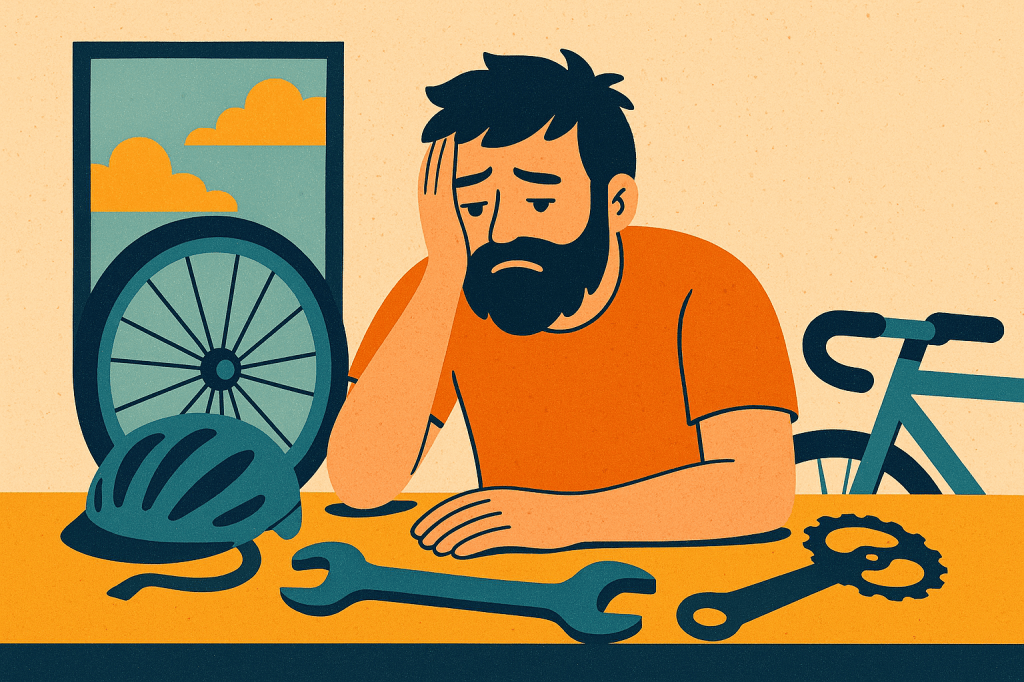
    That was me, running a bike shop.

    People would walk in, smiling, friendly, talking about the weather, and I would feel this simmering internal scream build in my chest because I knew they were about to ask me something I’d been asked five hundred times before. Something I had answered every summer for two decades, And I’d have to smile. And I’d have to sound helpful. And I’d have to be this guy who loved his job. 

    Because from the outside, I was living the dream.

    Own a bike shop, they said. Do what you love. Spend your days around bikes, talking about bikes, fixing bikes. Sounds incredible. 

    And it was incredible. For a while. Until it wasn’t. 

    Burnout doesn’t always look like collapse. Sometimes it looks like success. Sometimes it’s doing everything you set out to do and discovering that you hate every minute of it. Sometimes it’s being so tired and angry and broke that you start resenting the very people who are trying to keep your lights on. 

    I couldn’t show it. If I looked miserable, I might lose a customer. And if I lost too many customers, I couldn’t pay the bills, So I kept the act going. I was two people. The smiling mechanic with grease on his hands, and the guy silently asking, Why the hell are you coming to me? 

    The same thing happened in racing.

    I’m not built like a cyclist. I’m 6’5”, and even at my most fit, I was over 200 pounds. I looked like I should be guarding the paint in the NBA, not trying to climb up switchbacks with guys built like greyhounds. But I kept showing up. I kept grinding. I kept doing the training, even when the payoff was, at best, finishing mid-pack and feeling like I was going to throw up the rest of the weekend. 

    People thought it was impressive. Look at you, balancing work, racing, life. They saw ambition. What they didn’t see was the exhaustion. The resentment. The part of me that knew I wasn’t going to win but kept showing up anyway because I didn’t know how to stop without feeling like a failure. 

    Burnout and ambition wear the same clothes. They look like commitment. They look like hard work. But one of them fuels you and the other hollowed me out from the inside until I didn’t recognize the guy standing in my own shop. 

    Here’s the hard truth I learned too late: 

    No matter what you do, it eventually becomes your pain-in-the-ass job. 

    Even the things you love.

    Especially the things you love. 

    And the people who succeed? Half the time, they’re jus the ones who were too stubborn or too stupid to quit. I’ve been both. It works. Until it doesn’t. 

    If you’re out there grinding through your own “dream,” feeling miserable and confused about why it feels so wrong, maybe it’s not you. Maybe you’re just burned out and no one noticed because you still look productive. 

    I don’t have a perfect answer, but I do know this. If it feels like you’re drowning while everyone around you thinks you’re surfing, it’s okay to stop and ask whether the ocean you’re in still belongs to you.

  • What RPGs Taught Me About Managing Difficult People (That HR Never Will)

    What RPGs Taught Me About Managing Difficult People (That HR Never Will)

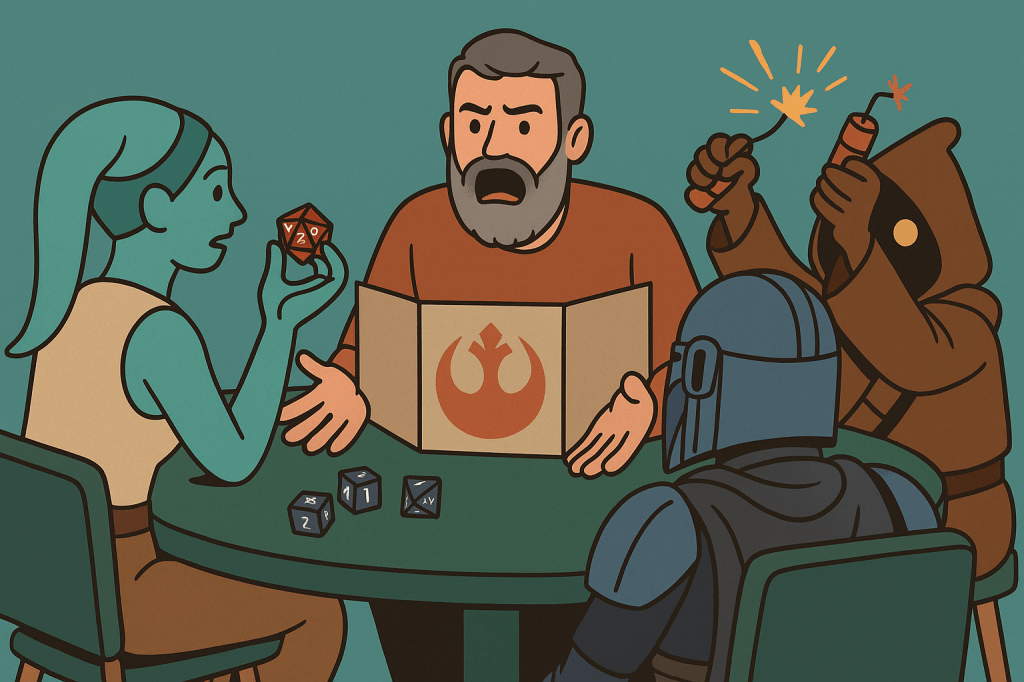
    Back when I used to run a Star Wars RPG campaign, we had a player whose character was a Jawa demolitionist. If you’ve never played with one of those, imagine a three-foot-tall raccoon with access to military-grade explosives and absolutely zero impulse control. 

    At first, it was hilarious. He’d drop a thermal detonator into an Imperial outpost ventilation shaft and walk away whistling. Chaotic? Yes. Effective? Surprisingly. Until it wasn’t. 

    One session, the group had finally managed to track down a high-ranking informant hiding out in a cantina. This was a culmination of weeks of game effort. Negotiation. Intel gathering. Actual diplomacy. The party was nervous but optimistic. They walked in ready to talk. 

    The Jawa rolled a perception check, decided he “didn’t like the bartender’s vibe” and threw a thermal detinator into the kitchen. 

    The session went to hell immediately. The informant was killed in the blast. The building collapsed. Half the party had to burn Destiny Points to avoid dying. And the rest of the session devolved into stunned silence and awkward laughter. The kind where people aren’t sure whether to stay in character or pack up and go home. 

    Afterward, I pulled the player aside. 

    I asked if he could tone it down a bit. Not stop being fun or unpredictable, but maybe dial back the random violence, just a notch. Maybe make sure the rest of the group gets to do something before everything explodes. 

    He didn’t take it well.

    He accused me of limiting his creativity and said I was punishing him for roleplaying. He told me that the rest of the group should adapt if they “weren’t on his level.” 

    And there it was. The moment every leader eventually faces. 

    The person who brings energy, ideas and unpredictability, but in a way that derails the team. The person who isn’t bad at what they do, but bad for the group doing it together

    I’ve worked with that Jawa before. Not just at the table, but on actual teams. The coworker who goes rogue on projects without telling anyone. The manger who launches half-baked initiatives and lets everyone else clean up the fallout. The “rock star” who gets praised for bold ideas while leaving collaboration in ruins. 

    Leading that kind of person is hard because they usually mean well. They think they’re helping. They think the group is holding them back. They think the rules are for less brilliant people. 

    And that’s what HR doesn’t tell you. 

    They’ll give you frameworks for communication. Feedback tools. Mediation strategies. But they rarely talk about what happens when someone just likes the chaos. When their motivation isn’t growth, it’s chaos. 

    Eventually, we wrote the Jawa out of the game. Not because he was evil, but because the rest of the group stopped having fun. The sessions became less about story and more about damage control. And that’s when I knew I’d made the right call. 

    Leadership isn’t about keeping everyone happy. It’s about protecting the space where the team can actually work.

    Sometimes, that means asking someone to step back. Sometimes it means rewriting the party dynamic. And sometimes, it means telling a three-foot-tall demolitionist to take his bombs and roll for retirement.

  • The Time I Tried to Motivate a Team With Logic (and Failed Miserably)

    The Time I Tried to Motivate a Team With Logic (and Failed Miserably)

    When I started working as a warehouse supervisor at Hewlett Packard Enterprise, I expected a leading tech company to have, you know, some actual tech. Instead, I found a warehouse where people were writing bin numbers on pads of paper like they were ordering from a diner menu in 1982. 

    Every item that came off a trailer was manually tracked. Unload, find an empty bin, write the bin number on a sheet, then eventually enter it in SAP. Shockingly, this resulted in a lot of errors. Even more shockingly, no one seemed particularly bothered by that. 

    So I did what every well-meaning, freshly hired supervisor does. I made a plan. 

    I wanted to implement barcode scanning in the receiving process. It wasn’t revolutionary. It was barely modern. But it made sense. It would streamline receiving, reduce mistakes and (here’s the part where I was incredibly naive) it was the right thing to do

    I assumed that if I laid out the logic clearly, people would jump on board. We’d save time We’d look good. We’d make fewer errors. Who wouldn’t want that?

    The answer, it turns out, was pretty much everyone who worked in that warehouse

    These were long-tenured employees. Some had been there since back when the company was still Cray Research. They knew the building better than I did. They knew the inventory better than I did. And to them, I was the outsider with no credibility, showing up to change a system they’d been using for decades. 

    I tried everything I thought would work. I made diagrams. I explained benefits. I walked through the new workflow step-by-step. I thought if I just kept pointing to the logic, they’d eventually see it. 

    They didn’t. 

    The resistance wasn’t loud. It was quiet. Passive. Stuff just didn’t get done. Training sessions got postponed. Test scans mysteriously failed. Feedback was always the same. “This just isn’t how we do things.”

    Meanwhile, my boss, who could suck the oxygen out of a room with a single email, offered no help at all. She’d disappear for days, give zero direction, then come back furious that I hadn’t done something the way she would have if she had ever bothered to say it out loud.

    One day, she told me to go talk to a warehouse worker out of quitting. I asked what tools I had to work with. Could I offer more money? Better hours? PTO? She looked at me like I’d asked for a unicorn. I guess I was supposed to go over there and appeal to his sense of loyalty or guilt him into staying. When I nervously laughed and said I wasn’t sure what she expected me to say, she lost it. She accused me of laughing at her. She said I was disrespectful. Humiliating stuff. The kind of stuff that sticks with you. 

    That job broke me down in ways I still don’t like admitting. I cried at work more than once. Not because I was weak. Because I was trying to lead in a system that didn’t want to be led, for a boss who couldn’t see the difference between motivation and manipulation. 

    But here’s the twist. I still got the barcode scanning implemented. 

    I had to build a team from scratch. We had to involve software developers, network engineers, and a couple of sympathetic managers who saw the writing on the wall. It took months. It was clunky at first, but eventually it worked. We created a web app that fed directly into SAP. Receiving got faster, accuracy improved, and mistakes dropped. I redesigned some of the workflows, too, using spaghetti diagrams to eliminate wasted motion.

    And the same people who fought me on the way in?  Some of them came around. Not all, but enough to keep things moving. 

    So no, logic didn’t motivate the team. Not at first. What eventually worked wasn’t a perfect argument. It was persistence. It was making the system work around them until it started working for them. And it was learning that leadership isn’t just about having the best idea. It’s about surviving the part where no one cares. 

    Sometimes you fail forward. Sometimes you just survive long enough for the system to catch up with your idea. 

    And sometimes you spend your lunch break crying in your car and then get back out and do it anyway.

  • Zone 2 Training and the Slow, Agonizing Beauty of Incremental Progress

    Zone 2 Training and the Slow, Agonizing Beauty of Incremental Progress

    There’s this moment about 25 minutes into a Zone 2 ride where your brain starts whispering, What are we even doing here? You’re not going hard enough to feel fast. You’re not going slow enough to feel like you’re recovering. You’re just…there. Spinning. Watching your power meter hover in a range that feels more like a suggestion than a workout. 

    And that’s where the real work begins. 

    As I’ve gotten a little older and shifted my focus away from racing, I got a little more honest about what my goals are. Not trying to win anything, I was training to keep myself strong, focused, and functional while juggling work, parenting, and grad school. Riding outside used to be like a form or therapy for me. Now? I need a plan. I need to fit it in between a Zoom meeting and my kid’s bedtime story. And I need it to work.

    Zone 2 fits, even if it doesn’t feel particularly inspiring in the moment. That’s sort of the point. 

    The problem is, incremental progress doesn’t make great social media content. No one’s posting sweaty selfies with the caption, “Held 185 watts for 65 minutes and didn’t feel like quitting once.” But if you’re training with your purpose, especially as someone whose FTP or iLevels are no longer the center of your identity, those kinds of wins actually matter more than PRs. 

    Zone 2 training is a long game. It’s a test of patience, ego management, and consistency. You don’t feel like a superhero when you’re doing it, but two months later, when your heart rate drops ten beats at the same effort, you realize something shifted. You got better. Quietly. Methodically. Without fanfare. 

    And here’s where that ties into leadership. 

    A lot of the work that actually makes you a better leader feels just as thankless. You read the books on communication. You rewrite your team’s onboarding plan. You sit through another one-on-one that feels like a therapy session held next to a forklift. None of that stuff gets you a standing ovation. But when you zoom out, it’s the stuff that keeps your team up when things start to get shaky. 

    Leaders who only invest big moments miss the point Progress lives in small reps. It shows up in how you listen, how you show up on a bad day, and how you choose to support someone even when they’re driving you up the wall. Leadership and Zone 2 both reward people who can keep going when there’s no immediate payoff. 

    I haven’t ridden outside in years. Not because I don’t want to, but because training indoors fits my life better. It’s consistent. It’s predictable. It’s efficient. And in this season of life, those things matter more than fresh air and KOMs. 

    So yeah, I’m a Level 2 cycling coach who trains on a smart trainer in my basement while listening to D&D podcasts and sipping electrolyte mix out of a Sponge Bob cup because my kid borrowed all the real bottles. Not exactly what I pictured when I got into this sport. But it works. 

    And in a weird way, that’s the beauty of it. When you let go of the flashy stuff and lean into the slow, intentional work, you start to notice the progress actually sticks. 

    Whether you’re leading, or just trying to be a little less of a mess than you were last week, the secret isn’t doing more. 
    It’s doing it on purpose.

  • Servant Leadership Isn’t About Being a Doormat, It’s About Being the Door

    Servant Leadership Isn’t About Being a Doormat, It’s About Being the Door

    Somewhere along the way, servant leadership picked up a reputation for being soft. Not thoughtful. Not strategic. Just soft. 

    People hear “servant” and picture someone running for coffee while everyone else gets to lead. Like the goal is to be so helpful that your own spine turns to Jello and your DMs become a dumping ground for everyone else’s problems. 

    That’s not servant leadership. It’s self-erasure with a to-do list. 

    When I was working on my Master’s, I ran into the same confusion. The term seemed cringe. It sounded like corporate double-speak for “do all of the emotional labor and never ask for a raise.” But then I read Leadership: Theory and Practice by Peter Northouse, and it started to make sense. The model isn’t about letting people walk all over you. It’s about helping them move forward without making yourself the center of every decision. 

    Servant leadership works because it’s built on actual accountability. You’re still responsible for the outcomes, you just don’t accomplish them by barking orders or hoarding control like a middle manager afraid of being replaced by someone with better time management and a decent pair of headphones. 

    Robert Greenleaf, who coined the term, said the real test of servant leadership is whether the people you’re leading grow. Not whether they hit their quarterly metrics or zero out their inbox. Whether they grow as people. That’s a hell of a bar, but it’s also the only one that matters if your leadership is supposed to mean anything after you’re gone. 

    When I owned a bike shop, I didn’t know Greenleaf from a bottom bracket. What I knew was that yelling never made a kid faster at fixing a flat, and micromanaging every tune-up left me too burnt out to deal with the stuff that actually mattered. So I taught. I handed people tools. I explained stuff once and then backed off. If they got it wrong, I coached. If they got it right, I said thank you and let them keep doing it. 

    I didn’t do that because I’m some visionary leader. I did it because it was the only way to make the chaos sustainable. It turns out that’s what servant leadership looks like in the wild. Not theory. Practice. 

    The same thing shows up behind the DM screen. You ever try to wedge your party through your genius three-act structure, only for them to adopt a stray grung, burn down your main plot hook, and spend an entire session trying to steal coins from innocent NPCs in a bar? That’s what happens when you treat leadership like control instead of support. 

    Good DMs build a world Great ones build a space where players feel like their decisions matter. They guide without choking the life out of the table. They create momentum, not mandates. 

    That’s servant leadership, too. 

    So no, it’s not about being a doormat, it’s about being the door. You dont get applause. You don’t get to be center stage. But you hold the frame. You let people move forward. And that matters. 

    If you’re leading because you want to be the smartest person in the room, servant leadership will frustrate the hell out of you. But if you’re in it to build people up and leave things better than you found them, then this is how you do it without turning yourself into a puddle of resentment and unpaid overtime. 

    And yeah, sometimes they forget to say thank you. Doors don’t get credit. 

    They just work.