
Tag: Adaptive Leadership

  • Cecil Stedman: The Adaptive Bureaucrat Nobody Wants to Be (But Somebody Has To)

    When I was writing about Omni-Man, I kept circling back to Cecil Stedman, the director of the Global Defense Agency. If Omni-Man is the worst-case scenario of charisma without ethics—the guy who can make mass murder sound like a pep talk—then Cecil is the polar opposite. He doesn’t inspire anyone. Nobody’s getting a Cecil tattoo. He looks perpetually hungover, like a guidance counselor who gave up on wearing ties sometime in the early 90s. But when the world is coming apart, he’s the one you actually want making the calls.

    Because Cecil isn’t about vision or inspiration. He’s about survival. He embodies what Ronald Heifetz and Marty Linsky call adaptive leadership—stepping into situations where there is no playbook, no technical fix, no “right answer” that saves the day. Omni-Man flexes, and cities crumble. Cecil grimaces, makes a decision that guarantees everyone will hate him, and then pours another drink. That’s actually the more realistic version of leadership.

    You can see it in how he operates: sending rookies into fights he knows they’ll lose, lying to Mark about how bad things really are until he absolutely has to tell him, constantly calculating which disaster leaves fewer bodies on the floor. He doesn’t pretend there’s a win waiting at the end. He just picks the path where the damage is survivable. That’s the entire premise of adaptive leadership—there’s no fixing the storm, only steering through it.

    This is why I can’t shake Cecil as the real counterpoint to Omni-Man. Charisma makes you believe in someone before you know what they stand for. Cecil makes you distrust him immediately, and yet, through sheer blunt honesty, he earns something more durable than admiration: grudging trust. He never tells you it’ll be fine. He tells you it’s going to be terrible, but here’s how we’ll get through it anyway. That’s a very different kind of authority than Omni-Man wielding his mustache like a badge of destiny.

    It also makes Cecil a pretty good metaphor for what happens once you’ve been leading people long enough to lose your illusions. Anyone who’s ever managed a warehouse crew, or run a hospital shift, or tried to GM a tabletop campaign knows what this feels like. You start bright-eyed, promising people big visions and meaningful work. Then reality sets in. The order backlog is impossible, the patients keep piling in, the party has just set fire to the only inn in town because someone thought a bar brawl would be “character-driven roleplay.” Suddenly, you’re not the inspirational Omni-Man figure anymore. You’re Cecil, making exhausted calculations about which choice leaves the fewest scars.

    That’s the unglamorous reality of adaptive leadership. Heifetz and Linsky talk about it as “living in the disequilibrium.” You can’t let things get so calm that people won’t adapt, but you also can’t let them get so chaotic that people panic or break. It’s this awful tightrope of tension management. Cecil lives on that rope. He knows if he underplays a threat, people die. If he overplays it, people revolt. So he does what real leaders do: he accepts that everyone will be angry with him, and then he does it anyway.

    Of course, there’s a cost. Cecil always looks one bad day away from collapsing into his whiskey glass. Adaptive leadership isn’t the kind of thing that makes you a beloved icon. It burns you out, leaves you scarred, and makes your victories invisible. No one celebrates the catastrophe you prevented. They only complain about the compromises you made. That’s why so many real-life leaders retreat into the comfort of technical fixes—new checklists, new policies—because at least those come with the illusion of control.

    But when you’re really in it—when you’re leading people through situations with no clean answers—charisma won’t save you. Vision won’t save you. The only thing that keeps people moving is knowing you’re willing to stand there with them in the middle of the wreckage, taking the heat and making the call. That’s Cecil. He doesn’t inspire. He endures. And in the long run, that’s what makes him the most honest kind of leader.

    Omni-Man showed us the dangers of charisma unmoored from ethics. Cecil shows us the price of leadership rooted in pragmatism. Between the two, Cecil’s the one you can actually trust to keep the world spinning, even if you hate him for how he does it. And if you’ve ever found yourself in a role where every option looked terrible but someone had to choose, congratulations: you’ve already had your own Cecil moment. You probably didn’t look good doing it. You definitely didn’t get applause. But you kept things alive long enough to fight another day. And that, grim as it sounds, is leadership.


    References

    • Heifetz, R. A., & Linsky, M. (2002). Leadership on the Line: Staying Alive Through the Dangers of Leading. Harvard Business Review Press.
    • Northouse, P. G. (2021). Leadership: Theory and Practice (8th ed.). Sage Publications.
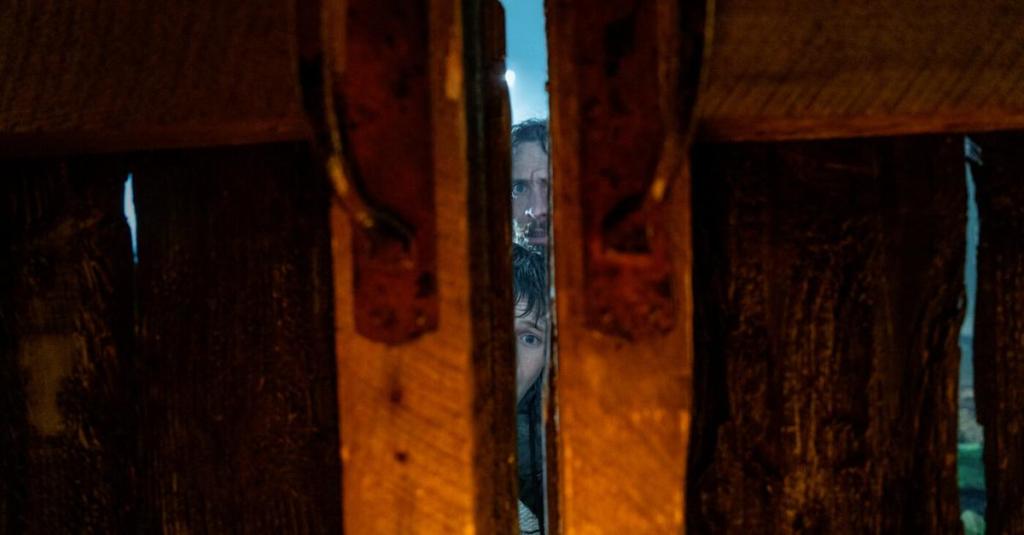
  • 28 Years Later: Leadership Lessons From a World That Just Won’t Stay Fixed

    28 Years Later: Leadership Lessons From a World That Just Won’t Stay Fixed

    I didn’t expect to walk out of 28 Years Later grinning like I’d just seen the year’s best comedy, but here we are. The movie is bleak and brutal in all the ways you’d expect from a sequel to 28 Days and 28 Weeks Later, yet every so often it throws you a lifeline: a Swedish soldier cracking deadpan jokes, or the sudden introduction of the Jimmies—the tracksuit-clad hooligans led by Jimmy himself, who was introduced in the opening scene and then gone for basically the entire film until the Jimmies dropkicked their way into the finale like they’d been promised a spin-off and were fully prepared to beat the producer with folding chair until they got one. It’s a weird, awesome blend of relentless despair and absurd comedy, the kind of tonal whiplash that makes the whole thing feel like a fever dream.

    That’s the heart of Ronald Heifetz and Marty Linsky’s theory of adaptive leadership. Their big idea is that the hardest problems we face aren’t “technical”—the kind you solve with a known fix, like calling IT when your monitor won’t turn on. The hardest problems are adaptive, where the rules themselves have changed and no one has the answer. When rage zombies overrun London, it doesn’t matter how much you know about first aid protocols or where to find bottled water. You’re making judgment calls in the fog,. trying to figure out the difference between survival skills and suicide notes dressed up as wisdom. 

    What the movie shows us—and what Heifetz & Linsky emphasize—is that leadership in these moments isn’t about heroically swooping in with the solution. It’s about holding people together long enough that solutions can emerge. That’s why the Swedish guy’s humor works as more than comic relief. He’s practicing a form of situational leadership (Hersey & Blanchard, 1969): shifting his approach based on the immediate needs of the group. Sometimes he’s lightening the mood, sometimes it’s played as dead serious. Either way, he’s paying attention to what the team needs in that exact moment.

    It’s easy to dismiss comic relief as just nonsense, but think about your own life. In the middle of a tense family dinner, there’s always that one relative who cracks a joke about the mashed potatoes being weaponized. In a D&D session, it’s the bard who pipes up with a one-liner when the dragon’s about to eat the cleric. At work, it’s the person who points out that the coffee is strong enough to strip paint. You roll your eyes, but everyone relaxes just enough to keep going. That’s adaptive. Humor buys the group another five minutes of cooperation before somebody snaps.

    And then there’s Jimmy. He starts by losing everything—family, friends, any shot at normal—and then ghosts the movie for what feels like forever. Just when you’ve forgotten him, he blasts into the last scene with the narrative subtlety of a golf club through a plate-glass window. It’s ridiculous and perfect. Because how many times in your own life have you seen the “forgotten” person, the one everyone assumed was out of the picture, suddenly reappear like they were hiding in the ceiling tiles, ready to drop down and steal the spotlight? The Jimmies represent the survivalist version of what a lot of groups become after too much upheaval: a stitched-together tribe of rituals, slang, and inside jokes that don’t make sense to outsiders but function as glue for insiders. They swagger like they’re in control, but under the surface, you can tell they’re improvising as much as anyone else.

    This is the piece leaders often miss. We love the myth of the solitary figure who knew the path all along. In reality, most progress comes from people stumbling forward, testing half-baked ideas, and then acting like it was intentional afterward. As Peter Northouse puts it in Leadership: Theory and Practice, adaptive leaders tolerate ambiguity and resist the urge to slap a quick fix on what’s really a systemic wound (Northouse, 2021). That’s as true for a ragtag survivor gang as it is for a PTA board that just realized their big fundraiser is scheduled for the same weekend as homecoming.

    I think back to my own experiences in warehouses and delivery networks. There were plenty of times when the corporate “solution” was nothing more than a PowerPoint full of buzzwords. But at the ground level, the only reason things kept moving was because frontline teams invented their own processes—borrowing equipment, making ad hoc spreadsheets, redesigning workflows with sticky notes and duct tape. From the outside, it looked chaotic. From the inside, it was the only way to survive. That’s adaptive leadership.

    Another thread the movie pulls on is resilience. When characters keep going after loss, or keep fighting when it’s clear they’re outmatched, that’s resilience theory in action (Luthans, 2002). You see the same thing in a burned-out sports team that still shows up to practice, or in a group of friends who keep making movie night happen even after everyone’s schedules have collapsed into chaos. The Jimmies aren’t admirable because they’re powerful; they’re admirable because they’ve found a way to keep showing up—even if it means vanishing for two hours and then reappearing like they just respawned from a glitch in the Matrix.

    And let’s not overlook psychological safety. Amy Edmondson (1999) describes it as the freedom to speak up, take risks, and fail without fear of punishment. In 28 Years Later, every group that survives does so because they’ve built just enough trust to admit fear and share ideas without instantly fracturing. That’s why you’ll never see a solo hero in this franchise succeed for long. The moment someone tries to go lone wolf, they’re either eaten, abandoned, or left clutching their ideals while the world moves on. Survival is a group project. The same is true whether you’re planning a heist, running a campaign, or trying to survive a school group project where half the team ghosts after the first meeting.

    So what does this mean if you’re not dodging infected hordes? It means that if you’re waiting for perfect information before you act, you’ll get eaten. The people who make it through adaptive challenges—whether it’s a viral outbreak, a corporate restructure, or your trivia team trying to win without a single person who knows geography and realizing too late that confidence does not, in fact, equal knowledge about state capitols—are the ones willing to experiment, pivot, and sometimes fail loudly in front of others. You don’t survive by clinging to the manual; you survive by writing the manual as you go, then tearing it up when the situation changes.

    That’s the lesson I didn’t expect from a movie where people’s faces explode in fountains of rage-blood: leadership isn’t about having the cure. It’s about helping people stumble forward together, half-blind and bleeding, like we’re all extras in someone else’s zombie movie. 


    References:

    • Heifetz, R. A., & Linsky, M. (2002). Leadership on the Line: Staying Alive Through the Dangers of Leading. Harvard Business Review Press.
    • Hersey, P., & Blanchard, K. H. (1969). Life cycle theory of leadership. Training and Development Journal.
    • Edmondson, A. (1999). Psychological safety and learning behavior in work teams. Administrative Science Quarterly, 44(2), 350–383.
    • Luthans, F. (2002). Positive organizational behavior: Developing and managing psychological strengths. Academy of Management Executive, 16(1), 57–72.
    • Northouse, P. G. (2021). Leadership: Theory and Practice (9th ed.). Sage.