

Tag: emotional intelligence

  • The Feedback That Was Actually a Trap: Weaponized Coaching and the Illusion of Development

    The Feedback That Was Actually a Trap: Weaponized Coaching and the Illusion of Development

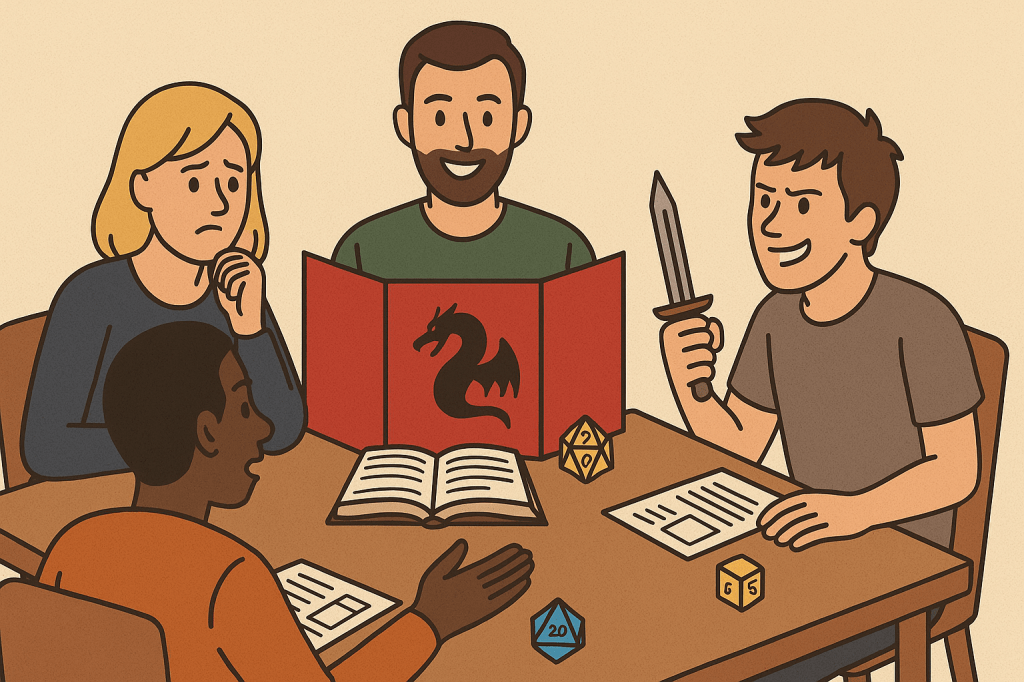
    There’s a moment in bad D&D campaigns when the GM grins too much. You know the look. The party just triggered something, maybe opened a door they weren’t supposed to, or used a clever workaround to bypass some elaborate puzzle, and the GM, instead of rolling with it, tilts their head and says, “Interesting.” That’s the moment you realize you’ve made a mistake. Not in the game. In trusting the GM. Because that smile? That’s the “this is going in the kill box” smile. And the only reason your character’s still breathing is because the plot isn’t done punishing you yet.

    That’s what fake coaching feels like in the workplace.

    It starts off warm. Encouraging. Your boss says they’re “invested in your development” and want to “help you grow.” It’s like they just pulled you aside in the tavern and offered you a side quest. You feel chosen. Important. Maybe this is it—your chance to level up, to finally get out of the hell that is middle-tier oblivion where your talents are wasted and your coffee goes cold before you remember where you left it. But instead of getting a magic item, you get assigned a “stretch project” with no guidance, no resources, and no context. And somewhere around hour fourteen of trying to decode the office spreadsheet equivalent of ancient dwarven runes, you realize: this wasn’t a gift. This was a test. And you are not supposed to pass it.

    This is what I call development theater—the illusion of mentorship with none of the substance. It’s the kind of thing that looks amazing in a quarterly report. “We’re committed to employee growth,” they’ll say, while quietly tossing people into career quicksand and blaming them for not building a ladder. And the worst part? You can’t even prove it. Because technically, they did coach you. They gave you feedback. They offered you opportunity. They gave you rope—just enough to hang yourself artistically, in the break room, next to a printout of last year’s mission statement.

    The TTRPG version of this is the GM who swears they’re “collaborative,” then turns every piece of your backstory into a trap. You tell them your character once abandoned a sibling in a burning village? Great. Now the final boss is the sibling, and no, you don’t get a redemption arc, you get stabbed with a flaming pitchfork while the GM does a bad voice and says, “This is what you deserve.” You thought you were building a narrative. Turns out, you were providing raw materials for a vengeance fantasy they’ve been workshopping since their sophomore year creative writing class.

    But let’s go back to the office. Because this isn’t just bad management—it’s a strategy. It’s called plausible deniability leadership. It’s what happens when someone wants you gone, but doesn’t want to look like the bad guy. So instead, they offer you “growth.” They suggest “areas for improvement.” They ask you to “stretch beyond your comfort zone,” while quietly collecting screenshots and calendar invites like evidence for a crime they’re planning to report after the fact. You’re not being coached. You’re being turned into a cautionary tale.

    And you start to notice it, too late. You start wondering why your emails are getting ignored. Why projects get reassigned without explanation. Why every compliment you get sounds like it came from an AI that only read the first paragraph of your résumé. You start to feel like you’re being haunted by a ghost version of your reputation. Like someone filed a secret report that says you’re “difficult to work with,” and now everyone’s treating you like a cursed item—technically useful, but risky to equip.

    Leadership theory actually has a name for the good version of this: Individualized Consideration, one of the pillars of Transformational Leadership (Bass & Riggio, 2006). That’s when leaders offer feedback and development tailored to each person’s goals, strengths, and needs. But there’s a dark mirror to this: Pseudo-Transformational Leadership (Bass & Steidlmeier, 1999), where the tools of mentorship get twisted into performance theater. It’s the difference between helping someone grow and using the language of growth to justify pushing them out. The difference between a GM saying, “Let’s explore your character’s fears,” and a GM saying, “Hey, I noticed your character’s afraid of drowning, so I made all the dungeons water now.”

    And no, it’s not just one bad boss or one bad GM. This happens in systems where psychological safety—the foundation of trust and learning on any team—is treated like a luxury add-on (Edmondson, 1999). The moment people start to feel like feedback is a setup, they stop trying. They shut down. They play it safe. They stop asking questions, stop offering ideas, stop rolling with disadvantage unless absolutely necessary. And then leadership turns around and says, “Why don’t we have more innovation around here?”

    Here’s the wild part: most of the time, the people doing this think they’re being kind. They think that by softening the truth, or sugarcoating the failure, they’re protecting you. They don’t realize that fake feedback is worse than silence. That pretending to help while secretly preparing your exit is like handing someone a parachute made of spaghetti. You’re not saving anyone. You’re just putting on a show before the impact.

    So here’s how we do it better.

    If you’re in charge of people—at a table, on a loading dock, in a customer service team in a crumbling office park built entirely out of sadness and reused drywall—then ask yourself: Is this feedback meant to help this person? Or is it meant to protect me from looking like the bad guy later? Because that’s the line. That’s the moment when you decide whether you’re going to lead with integrity or script a fake redemption arc just to cover your own plot holes.

    Be honest. Be clear. If someone’s not meeting expectations, tell them—with support, with context, with a plan. Don’t dress it up in “opportunities for growth” if what you really mean is “we’re already interviewing your replacement.” If you’re a GM and a player is being disruptive or needs to shift how they engage at the table, don’t write it into the story like some kind of Saw-style morality lesson. Talk to them. You are allowed to be direct. You are allowed to be kind without being vague. You are allowed to be uncomfortable if it means being real.

    Because people know. They always know. The party knows when the GM has it out for them. Employees know when they’ve been moved to the short bench. And when trust breaks—when the coaching turns out to be a trap, when the feedback was just foreshadowing—it doesn’t just ruin one person’s experience. It poisons the whole table. It tells everyone else that growth is conditional. That failure is fatal. That support is a trick.

    And once people believe that, you don’t get innovation. You don’t get loyalty. You get silence.

    You get a campaign where nobody tries anything bold. A job where nobody brings up new ideas. A team that’s still technically alive, but spiritually checked out, like NPCs waiting for the next cutscene.

    So if you’re going to be a leader, be one. Don’t hand people a torch just to light their fuse. Don’t offer them a side quest when you’ve already decided how the story ends. And don’t call it feedback if it’s really just foreshadowing.

    We already know the trap is coming. The only question is whether you’ll pretend it was part of our development plan all along.


    Citations:

    Bass, B. M., & Steidlmeier, P. (1999). Ethics, character, and authentic transformational leadership behavior. The Leadership Quarterly, 10(2), 181–217.

    Bass, B. M., & Riggio, R. E. (2006). Transformational Leadership (2nd ed.). Psychology Press.

    Edmondson, A. (1999). Psychological Safety and Learning Behavior in Work Teams. Administrative Science Quarterly, 44(2), 350–383.

  • You Don’t Need to Know Everything—Just Stop Faking It

    There’s a particular kind of boss that’s worse than just a micromanager. It’s the kind who micromanages badly—hovering over tasks they don’t actually understand, second-guessing decisions with no context, inserting themselves into workflows like a toddler grabbing the steering wheel from the backseat. At least a competent micromanager might know what they’re interrupting. But this flavor of leader doesn’t know the work, won’t admit it, and compensates by managing through vague questions, performative stress, and ominous calendar invites titled “Touch Base.” If you’ve never had a boss like that, congratulations on your peaceful life. The rest of us are still flinching every time someone asks if we “have a minute.”

    I’ve worked under those managers, and—cards on the table—I’ve been one, too. Not in the mustache-twirling villain sense, but in the more common and less cinematic way: I got put in charge of something I didn’t totally understand, so I backed off too far because I didn’t want to come across like a dumbass. That’s the inverse version of the same mistake. Instead of meddling, I ghosted. I figured giving people space was the respectful thing to do, when what they actually needed was presence. Not command. Not control. Just the sense that I was there, paying attention, invested, and ready to help.

    Running a team without understanding their work is like Game Mastering a system you’ve never read. You might be able to fake it for a session or two. Maybe you’ve got the vibe down—narrating like Matt Mercer on half-speed, throwing in enough “roll for initiative” moments to keep everyone entertained. But sooner or later, your players are going to do something mechanical. They’ll try to shove a goblin off a bridge, or cast a spell that interacts with a system you didn’t prep, or—God help you—start asking about grappling rules. And now you’re scrambling through the Player’s Handbook like it’s a cursed tome, bluffing your way through it while everyone quietly starts texting under the table. Because nothing kills trust like a GM who pretends to know things they clearly don’t.

    Leadership theory has a name for this balancing act: Situational Leadership. Hersey and Blanchard laid it out in the late ’60s, but the idea still hits. It says your leadership style should adapt based on how competent and confident your team is at a given task. Some people need direction. Others need support. Some just need you to get out of the way and let them work. But the only way to figure that out is to actually know where they’re at. And that requires something micromanagers and absentee leaders alike tend to skip: asking questions and listening to the answers.

    Most micromanagers don’t think they’re micromanaging. They think they’re doing due diligence. Staying informed. “Driving results.” But what they’re actually doing is disrupting Self-Determination Theory—a cornerstone of motivation research that says people thrive when they feel autonomous, competent, and connected. Micromanaging undercuts autonomy. But if you also don’t know the work, it undercuts competence too—yours and theirs. You’re not just in the way; you’re actively creating friction, the same way a GM does when they override the bard’s plan just because they didn’t understand how Bardic Inspiration stacks.

    And on the flip side, disappearing because you don’t understand the work doesn’t help either. That just makes people feel unsupported, especially when things start going sideways. It’s the equivalent of a GM saying, “Well, that’s what your character would do,” and then zoning out on their phone while the players roleplay around them. Sure, you’re not interrupting, but you’re also not engaged. You’ve become the leadership version of ambient tavern music.

    So how do you do it better?

    You get curious. You name what you don’t know. You ask your team what they need from you today, not just what they needed when the project started. You ask, “What am I doing that’s helpful?” and brace yourself for the silence that might follow. You sit with it. Then you try again.

    You stop treating questions like traps and start using them like torches. You stop assuming that being “the boss” means you have to be the expert. And you realize that your credibility doesn’t come from having all the answers—it comes from helping the people who do their best work.

    If you’re running a campaign and you don’t know every mechanic, that’s fine. But don’t fake it. Bring in a co-GM, hand off to someone more familiar with the system, or prep more next time. In the moment, the best thing you can do is own it. Say, “I don’t actually know how this rule works—can you walk me through it?” And suddenly, you’ve transformed from an authority figure faking competence into a leader modeling collaboration.

    When you’re a leader and you don’t know the work, your job isn’t to disappear. And it’s not to overcorrect by smothering your team with bad advice. Your job is to learn just enough to be useful, to ask the right questions, and to create an environment where people feel like they can do their thing without you pretending to be the expert on everything. Because when people know you’ve got their back—not their keyboard—that’s when trust actually starts to build.

    And the next time you do have to give direction, it won’t sound like interference. It’ll sound like support.


    Citations:

    Deci, E.L., & Ryan, R.M. (2000). The “what” and “why” of goal pursuits: Human needs and the self-determination of behavior. Psychological Inquiry, 11(4), 227–268.

    Hersey, P., & Blanchard, K.H. (1969). Life cycle theory of leadership. Training & Development Journal, 23(5), 26–34.

  • Why Emotional Intelligence Is Basically the GM Screen of Real Life

    Why Emotional Intelligence Is Basically the GM Screen of Real Life

    Back when I first started GMing tabletop games, I thought the little cardboard screen was mostly there to hide my dice rolls when I fudged the numbers to keep the rogue from dying in a sewer. And yes, it did that job just fine. But over time, I realized the real power of that screen wasn’t secrecy—it was stability. The GM screen lets me manage perception. It let me project confidence even when I had absolutely no idea what I was doing. When the bard decided to barter with a dragon mid-combat and the plan somehow worked, the screen let me scramble silently while saying, “Interesting choice. Give me just a moment to calculate how that would work.” Behind the cardboard? Full panic. In front of it? Implacable dungeon master. That, my friends, is Emotional Intelligence.

    If you’ve ever been in charge of anything—whether it’s coordinating a crew of overcaffeinated delivery drivers or guiding your friends through a dungeon full of murder skeletons—you already know what it’s like to look serene on the outside while your brain is breakdancing through a five-alarm crisis. Emotional Intelligence, or EQ if you’re trying to sound fancy in a meeting, isn’t about shutting off your emotions like some kind of sociopathic vending machine. It’s about mastering the subtle art of emotional stagecraft: knowing which feelings to air out, which ones to fold up and tuck behind your metaphorical GM screen, and when to pull yourself together just long enough to keep the whole table from flipping over. Because let’s be honest—if you’re leading without Emotional Intelligence, it’s not a game anymore. It’s just trauma with dice.

    aniel Goleman—the guy who basically turned Emotional Intelligence into a bestselling brand—divides it into five domains: self-awareness, self-regulation, motivation, empathy, and social skills. Sounds tidy enough to fit on a poster in a corporate hallway next to a stock photo of people high-fiving in a wheat field. But here’s what most leadership books don’t tell you: nobody can see you doing any of this. There’s no glittery badge that lights up when you regulate your emotions or empathize correctly in a staff meeting. These skills operate in stealth mode. They live in the five-second pause after someone screws up and you’re deciding whether to guide them through the wreckage or launch into a “what the hell is wrong with you” monologue. Emotional Intelligence is like a hidden dice roll behind the GM screen—no one at the table sees the number, but they all feel whether you rolled a nat 20 or a critical fail based on what happens next.

    One of the coolest things Emotional Intelligence gives you is the ability to pause the movie before your brain hits the “yell and break things” button. It lets you choose your reaction instead of letting it choose you like some rage-filled claw machine. Back when I was still new to management and clinging to my systems like they were ancient scrolls of forbidden knowledge, one of my team members absolutely annihilated a process I’d spent weeks building. Not out of spite—just out of panic, pressure, and possibly a complete misunderstanding of how calendars work. The whole thing imploded and we lost an entire day’s worth of work. My gut reaction was the usual greatest hits: jaw clench, pulse spike, and a deep internal scream that translated to, “How?! Why?! What is wrong with you?!”

    But this is where EQ stepped in like the friend who quietly takes your drink away before you do something you’ll regret. I took a walk, breathed like a Buddhist monk who just sat on a Lego, and reminded myself that throwing a tantrum wouldn’t magically fix the inventory or make the team smarter. So I came back and said—calmly, somehow—“Walk me through this. I want to make sure we set you up better next time so this doesn’t feel like your only option.” That moment of controlled response didn’t just fix the process. It built trust. It said, “Yeah, you screwed up—but I’m not gonna throw you into the volcano for it.” And that quiet, invisible choice right there? That’s the kind of leadership that keeps the party from turning on each other and flipping the whole damn table.

    Now, some people hear “Emotional Intelligence” and think it’s just a fancy word for not showing weakness. The toxic version of that idea turns into the blank-faced, corporate manager archetype who says things like “Let’s circle back” and “Appreciate your candor” while privately fantasizing about rage-punching the break room fridge. But EQ isn’t about bottling everything up and sealing it with a smile. It’s about using emotion with intention. If someone drops the ball and you don’t feel even a flicker of frustration, congratulations—you’ve officially detached from reality. But the moment you let that frustration blast out like a busted fire hydrant, you’re not leading anymore. It’s not cathartic. It’s damaging. And once your players—sorry, I mean employees—realize your screen has holes, they start making decisions based on your volatility rather than your vision.

    This is the fork in the road where Emotional Intelligence separates actual leaders from people who just have the bigger desk. Because here’s the thing, your team isn’t a set of problems to be fixed—they’re a party of weird, unpredictable adventurers, each hauling around their own unique stats and baggage. You don’t get loyalty by being louder or squeezing harder. You don’t get trust by demanding it like a toddler screaming for snacks. You have to earn those things the hard way—by listening when it’s inconvenient, by managing your own emotional mess before cleaning up someone else’s, and by realizing that just because you feel something doesn’t mean it gets to grab the wheel. Feelings are passengers. You’re the one supposed to be steering.

    I once had a player who treated failure like a personal insult from the universe. If a plan fell apart, he’d slump in his chair, glare at the dice like they owed him money, and spend the next hour passive-aggressively dismantling the vibe. I had every excuse to boot him from the table or call him out in front of the group, but that would’ve been leadership in the same way a fire extinguisher is interior design. Instead, I remembered something from a leadership book that actually stuck: Emotional Intelligence lets you guide people without turning everything into a power struggle. So I pulled him aside and said, “Look, the dice aren’t out to get you. They’re just throwing curveballs. This is improv, not a performance review. Let’s figure out how to make the twist part of the story.” He didn’t suddenly become a model player, but he did start seeing the GM screen as a boundary—not a battleground. That’s the job. Leadership isn’t about proving how right you are. It’s about steering the ship through the storm without convincing the crew they’re all going to drown.

    And make no mistake: your plan will fall apart. Leadership is improv. It’s crisis management. It’s trying to guide a group of people toward a shared goal when everyone has a different idea of what that goal should look like—and someone keeps trying to seduce the dragon. Emotional Intelligence doesn’t make you immune to stress, it just keeps you from turning that stress into shrapnel.

    So if you’re in charge and find yourself saying, “I’m just being real,” or “They need to toughen up,” take a second and ask: who’s actually behind the screen right now—the leader who sees the group’s needs and responds accordingly or the panicked goblin in your head that’s slapping at the controls, trying not to lose control? 

    Because the screen isn’t there to block out your humanity—it’s there to keep you from flinging it around like a live grenade.

  • The Most Toxic Alignment at the Table: Chaotic Selfish

    The Most Toxic Alignment at the Table: Chaotic Selfish

    There’s a certain kind of player who shows up to your game table and, within five minutes, makes it clear that they’re “Chaotic Neutral.” Not just in character sheet alignment, but in the very marrow of their bones. You can smell it on them like Axe body spray and misplaced confidence. They say it with a grin, usually while licking a dagger or attempting to steal from the party’s healer. They believe this gives them permission to act entirely on impulse, with no consideration for the rest of the group or the broader story. They will gleefully derail entire plot arcs, antagonize NPCs for no reason, betray the party for a shiny trinket, and defend it all with one sacred phrase: “I’m just playing my character.”

    And if you’re lucky, they’ll do it before you’ve printed everyone’s Session Zero handouts.

    Now, let’s not misunderstand the assignment. Chaotic Neutral as an alignment isn’t inherently broken. In fact, when played with nuance, it can be one of the most textured roles at the table. These characters are wild cards, but they should still have values—they might reject laws, but not consequences; they might be unpredictable, but not purposeless. The problem is that, more often than not, what we’re dealing with isn’t Chaotic Neutral. It’s something much worse: Chaotic Selfish. It’s a player who confuses impulsiveness with entitlement. A player who believes that because they have chosen to act like a gremlin, the group is now obligated to revolve around that behavior or risk “ruining the fun.” It’s not a character flaw they’ve built into their backstory—it’s a leadership vacuum they’ve dragged in from real life.

    This is where the leadership lesson kicks in with a steel-toed boot. Every GM is a de facto leader, whether they asked for it or not. You’re not just managing a story—you’re managing a group of people, each of whom has different motivations, energy levels, social cues, and expectations about what a “fun” game night looks like. And one of the most insidious leadership traps you’ll fall into is thinking that everyone in the group is here to play the same game. They’re not. One player might want a deep character arc and emotional growth. Another is here to unwind after work by punching ghosts. A third thinks they’re auditioning for Critical Role, and a fourth just wants to do math with fireballs. If your Chaotic Selfish player isn’t corrected early, they will fracture that group like a bad manager who mistakes “disruption” for innovation.

    Because here’s the uncomfortable truth most leadership books won’t tell you: not all conflict is healthy. Yes, diversity of thought is valuable. Yes, challenging the status quo can drive innovation. But when someone insists on setting fires inside the team dynamic just to watch what happens, they’re not challenging assumptions—they’re demanding attention. And when leaders tolerate that behavior under the banner of “freedom,” they’re not being inclusive; they’re abandoning the rest of the team to fend for themselves. If you’ve ever worked with someone who constantly interrupts meetings with off-topic jokes, undercuts colleagues with passive-aggressive remarks, or ignores deadlines because they “work best under pressure,” you’ve already met this person. You just called them Carl from marketing instead of Zorkas the Knife-Licker.

    The problem gets worse because many GMs, like many new managers, are conflict-avoidant. They don’t want to “ruin the vibe.” They want to be liked. And so they let the behavior slide, justifying it as flavor or roleplay. After all, isn’t the point of a tabletop RPG to allow people to do things they can’t do in real life? Sure. But there’s a difference between a fantasy of power and a fantasy of lack of consequences. One is healthy escapism; the other is what you get when you let someone live out their worst impulses in a sandbox with no boundaries. You don’t have to let it slide. You shouldn’t. Good leadership doesn’t mean letting everyone do whatever they want. It means setting a culture where everyone can thrive, not just the loudest person with a backstory written in blood.

    If you need a scholarly anchor to hang your GM screen on, let’s talk about transformational leadership, the kind that focuses on inspiring and guiding individuals toward a shared vision. Bernard Bass (1990) outlined the four components: idealized influence, inspirational motivation, intellectual stimulation, and individualized consideration. If your “chaotic” player is stifling any one of those pillars, your leadership mandate is clear—they need coaching, redirection, or, in some rare cases, a one-way ticket out of the campaign. When someone makes the game unplayable for others, that is a leadership problem, not a roleplay quirk. Letting it fester because “that’s just how they are” is the same as letting a team member steamroll meetings because “they’re just passionate.” No—they’re just inconsiderate. And inconsiderate people don’t improve by being enabled.

    There’s a reason most TTRPG safety tools—like The X-Card—exist in the first place: because the social contract of the table is fragile. Most of us are awkward nerds with damage and anxiety and jobs we’re trying to escape for three hours on a Thursday. The emotional risk of collaborative storytelling is real. So when someone shows up determined to be the unpredictable gremlin who pees in the soup and blames the character sheet, what they’re really doing is violating that social contract—and trusting you, the GM, not to call them on it.

    So call them on it.

    Do it early, do it privately, and do it with the same calm confidence you’d use to tell someone they forgot deodorant. Be direct: “I want to make sure this game is fun for everyone, and I’ve noticed that some of your character’s actions are making that harder. Can we talk about ways to channel that chaotic energy without disrupting the table?” That’s not confrontation. That’s leadership. That’s you refusing to let one person ruin a shared experience because they don’t know the difference between playing a complex character and throwing a tantrum with dice.

    Look, no group is perfect. And no GM is either. You’re going to make mistakes. You’re going to let stuff slide that you shouldn’t, or come down hard when you should’ve asked a question instead. That’s the job. That’s why they call it “running” a game—you’re always in motion, always responding, always adjusting. But you don’t have to do it with a party member standing on the roof of the tavern, throwing Molotov cocktails into your narrative because they thought it would be funny. You don’t have to let selfishness wear the mask of alignment.

    Chaotic Neutral doesn’t have to mean chaos without care. It can mean unpredictability with purpose. It can mean wildness tempered by curiosity. And most importantly, it can mean a table where everyone—not just the loudest—gets to be the main character in their own little story.

  • If You Think Leadership Is About Having All the Answers, You’re Probably the Problem

    If You Think Leadership Is About Having All the Answers, You’re Probably the Problem

    One of the first things I tell every new hire class is that they should ask as many questions as they want, and they should never feel weird about it. I explain that when they do, one of three things is going to happen. The first is that I’ll just give them the answer. I’ve been doing this long enough that sometimes I know the thing they’re asking about, and I’ll just give it to them straight. The second is that I’ll give them my best guess. I’ll say something like, In my experience, usually the best practice is this…” or “Here’s what most people in the industry do.” And the third is that I’ll tell them who else to talk to–because sometimes I’m not the right person to answer it. Maybe it’s a technical question with the app or some strange behavior with the hardware, in which case, a seasoned veteran out there actually doing the job in the wild is the best resource. But I’m never going to bluff or fake it. Not because I’m some sort of saint, but because I’ve worked under those kinds of people before. The ones who fake their way through every question, who have to be right all the time, who treat leadership like it’s just being the biggest brain in the room. And I’ve seen how much damage that mindset causes. 

    For some reason, a lot of us go into leadership thinking our job is to have all the answers. That’s the myth we’ve been sold. That the leader is the one who knows everything, who sees further than the rest of us, who walks into the meeting like a prophet and drops solutions on the table. It’s a comforting fantasy, especially when the stakes are high. But in practice, this kind of leader becomes a bottleneck. They kill collaboration. They build teams that are afraid to speak up, afraid to ask questions, and worst of all, afraid to think. The moment people on your team start believing that their value lies in saying nothing and deferring to the person in charge, you’ve lost. 

    I used to feel that pressure too, like my credibility depended on always having the one right answer locked and loaded at all times. But pretending to know everything doesn’t make you more credible. It makes you brittle. And brittle things tend to break when real pressure hits. Overconfidence in leadership, according to Entrepreneur, especially during crises, “can cross the line into the danger zone,” where authenticity gives way to ego and collaboration goes to die. 

    Over time, I’ve come to believe that one of the most important things a leader can say is, “I don’t know, but let’s find out.” Not as an escape hatch, but as an invitation. It tells the team that they’re allowed not to know either. It invites curiosity. It tells people that we’re here to learn together, and that finding the right answer is a shared responsibility, not a solo act for the boss. And weirdly enough, research backs this up. A recent meta-analysis found that when leaders express uncertainty instead of faking confidence, people actually trust them more and think they’re more competent. It’s one of those satisfying little paradoxes: the moment you stop pretending you’ve got it all figured out is the moment people start believing in you. 

    But if your default mode is always to have the answer, whether you actually do or not, you’re going to train your team into silence. And worse, you’re going to stop learning. One of the easiest traps to fall into is mistaking your authority for omniscience. But leadership isn’t about being the smartest person in the room. It’s about making sure the smartest ideas in the room have space to be heard. In my case, that often means handing the question off to someone who’s seen more edge cases, who’s driven more miles, who’s figured out a solution to that weird glitch I’ve never seen. I’d rather point someone to the best resource than try to impress them with some half-informed answer. That’s not humility for its own sake–it’s efficiency. 

    There’s a popular quote from Google’s Project Aristotle research that’s showing up in a lot of leadership seminars lately: the single most important factor in high-performing teams is psychological safety, which is the basic idea that people do their best work when they know they won’t be shut down, shamed, or penalized for speaking honestly, taking risks, or owning up to mistakes. And nothing destroys psychological safety faster than a leader who punishes questions, shuts down feedback, or reacts defensively to being challenged. Those leaders don’t build strong teams. They build echo chambers. And echo chambers can be quiet, not because everything’s working, but because no one’s talking anymore. 

    I’ve seen both kinds of leadership up close. I’ve had bosses who responded to every issue with a kind of rehearsed confidence. I even had one boss whose philosophy was, “Never let them see you sweat.” And I’ve had leaders who said, “That’s a great question. Let’s think through it.” The difference in team culture was night and day. One team was rigid and anxious, always waiting to be told what to do. The other was flexible, collaborative, and surprisingly resilient under pressure. The second team didn’t succeed because the leader had all the answers. We succeeded because the leader made space for us to ask the right questions. 

    That’s how I try to approach my own leadership now. I still prepare. I still try to be informed. But I don’t cling to the illusion that I’m supposed to know everything. I tell people what I know, I share what I’ve seen, and I point them to better experts when needed. I treat questions not as tests of my competence, but as chances to model how we figure things out. And when someone brings something to my attention that I hadn’t thought of? I thank them. Because that’s what we’re here to do–build something smarter than any one person could build on their own. 

    Leadership isn’t about having all the answers. It’s about guiding people through complexity without pretending the path is always obvious. It’s about saying “Let’s figure this out together” and meaning it. Because the moment you stop pretending to be the answer key is the moment your team finally gets permission to start solving problems with you.

  • Sorry, We’re All Out of Suckers to Promote

    Sorry, We’re All Out of Suckers to Promote

    There’s a quiet panic in a lot of middle management circles right now, and it’s not about job security–it’s about succession. Business Insider recently ran a piece titled “Gen Z doesn’t want to be the boss, and it’s creating a succession crisis,” and the headline alone tells you everything you need to know. Managers across industries are looking around and realizing the next wave of workers isn’t lining up to be promoted–and for once, it isn’t being blamed on laziness. It’s clarity. 

    Gen Z watched the previous generation get sold a bill of goods. “Put in your time, go the extra mile, and you’ll climb the ladder!” was the pitch. But what did they actually see? Their parents and mentors burned out, underpaid, micromanaged, and tossed aside the moment they became “too expensive.” In a world where salary data is public and people share horror stories about middle managers crying in their cars during lunch breaks, you can’t sell a promotion as a reward anymore. It’s just…more work for a little more money and a whole lot more stress. 

    As someone who’s held leadership roles across multiple blue-collar environments–warehouses, delivery hubs, bike shops, you name it–I’ve lived that exact transition. That moment when you’re no longer “part of the team”  but not really upper management either. You’re stuck in the awkward middle, trying to protect your people from decisions you had no say in, while getting scolded from above for not “driving results.” I once had a boss who called me into his office to say I wasn’t “being inspirational enough.” I was running on five hours of sleep, conducting a bunch of new-hire training, covering a sick call-out, and rebuilding a spreadsheet that someone decided to delete while I was gone over the weekend. But sure, let me whip up a TED Talk real quick to inspire the team. 

    So yeah, Gen Z is opting out And that’s not a sign of laziness–it’s a sign of intelligence. They’re demanding clearer boundaries, more support, and actual authority to make decisions if they’re going to be held accountable for outcomes. They want leadership with teeth, not just titles. 

    What many companies are experiencing now isn’t a leadership vacuum. It’s a backlash. A generation is finally asking, “Why would I take on the stress of management when you’ve made it clear you don’t value the people doing that work?” If you want to fill the leadership pipeline, you don’t need to offer more free pizza or cute job titles. You need to rebuild trust. And that starts with listening. 

    Because here’s the secret no one wants to say out loud: You can’t guilt people into being passionate about a broken system. Not anymore. 

    And that’s not a crisis. That’s an opportunity. 

    It’s an opportunity to redefine what leadership actually is. To stop treating it like a punishment for doing well at your job. To make mentorship part of the job instead of an unpaid side hustle. To give new leaders room to breathe, grow, and–this is important–fail safely. It’s a chance to let go of the myth that the loudest of busiest person in the room is the best candidate and start rewarding people for emotional intelligence, clarity of vision, and actual people skills. 

    In other words, if no one wants to be the kind of boss we’ve had, maybe it’s time to create the kind of bosses we’ve always needed. 

    Let Gen Z say “no thanks” to the old system. Then build a new one that’s actually worth saying yes to.

  • Most People Don’t Quit Because of the Work. They Quit Because of the Bullshit.

    Most People Don’t Quit Because of the Work. They Quit Because of the Bullshit.

    There’s this idea some managers have that if someone quits, it’s because they “couldn’t handle the job.”

    Nah. 

    Most people don’t leave because the job is hard. 

    They leave because it’s unnecessarily hard.

    The work is fine. The bullshit is what breaks them. 

    It’s the unclear expectations.

    The last-minute policy changes.

    The meetings that accomplish nothing except making you late for the part of your job that matters. 

    It’s watching your boss walk past the overflowing trash can for the third time like it’s invisible. 

    It’s being praised for going “above and beyond” instead of just being given the time and resources to do the job right the first time. 

    It’s when the most difficult person on the team gets babied because “that’s just how they are.” 

    It’s when you ask a question and get treated like you committed treason. 

    People will lift boxes, sweat through 12-hour shifts, drive across the country, or sit through soul-crushing spreadsheets for yearsif they feel like someone has their back

    But if you make them feel stupid, replaceable, or ignored?

    Then they’re gone. Even if their body is still clocking in. 

    Nobody’s quitting because they had to work hard. 

    They’re quitting because every time they tried to make it better, they got shut down or shrugged off. 

    And eventually, they realize they’re not burned out from the work.They’re burned out from caring in a place that doesn’t care back.

  • Most TTRPG Groups Don’t Fail Because of Bad Rules. They Fail Because Nobody Talks About What They Want.

    Most TTRPG Groups Don’t Fail Because of Bad Rules. They Fail Because Nobody Talks About What They Want.

    If you’ve ever watched a tabletop RPG group implode halfway through a campaign, odds are it didn’t happen because the rogue broke the stealth rules or someone forgot how grappling works. 

    It happened because the group never agreed on what kind of story they were telling. 

    That’s the real killer. Not bad dice rolls, not min-maxing, not even a toxic player (although that’ll do it too.) It’s mismatched expectations. One player wants a deep, interesting story where their backstory matters. Another just wants to vibe and roll for soup. A third is out here trying to trigger every combat encounter because they thought it was going to be dungeon-crawl heavy. 

    Nobody’s wrong. 

    But when nobody talks about it ahead of time, the group ends up playing three different games on the same night. And resenting each other for it. 

    A while back, I ran a Star Wars campaign set aboard a derelict research vessel in deep space. The tone I was going for was budget Event Horizon but everyone’s tired and no one trusts each other. No heroes. No clean uniforms. Just scavengers trying not to get pulled apart by a haunted ship with bad wiring and worse intentions. 

    The first character to show up was perfect. A burned-out salvager with a busted EVA suit and a cybernetic eye that twitched when the humidity got too high. Total grunge vibes. Paranoia baked into the character sheet. We were locked in. 

    Then came the next player.

    They introduced a rogue Jedi who was–how do I put this?–absolutely unhinged. 

    Imagine if Charlie Day got knighted by accident and now he has a lightsaber and a working knowledge of Force Push. He talked a mile a minute, stole rations from NPCs for “training,” and once used his telekinesis to hurl a toilet at a hallway camera for reasons I still don’t understand. His entire backstory hinged on being kicked out of multiple Jedi temples for “philosophical differences.”

    Now, this wasn’t a bad character. It just didn’t belong in this game. 

    By the third session, the tone was wrecked. One moment we were crawling through vent shafts trying to avoid a sentient virus, the next he was trying to telepathically convince the ship’s AI to adopt him. The salvager’s player pulled me aside, asking if I could “get things back on track.” The Jedi’s player thought they were keeping things fun

    Neither of them was wrong.
    But we never had the conversation.
    And by the time we tried, the tone whiplash had already torn the party apart.

    The game died a couple of sessions later. 

    It’s the same in leadership, by the way. 

    Small teams don’t fall apart because the spreadsheet formatting was wrong. They fall apart because no one agreed on what success looked like. No one clarified how they wanted to work together. Everyone just assumed their way was the default. 

    You have to talk about it. 

    You have to talk about tone, pacing, player buy-in, safety tools, table culture–all the boring stuff that keeps your game from catching fire three weeks in. It’s not exciting, but it’s essential. 

    Same goes for coaching.
    Same goes for management.
    Same goes for any environment where human beings are expected to collaborate and make something together. 

    If you’re leading a game–or a team–you are responsible for helping people articulate what they want. And then you’re responsible for guiding the group toward a shared direction that honors as much of that as possible. 

    Because if you don’t?

    You’ll end up with a group of well-meaning, creative, passionate people–who can’t stand playing together.

  • Your “Open-Door Policy” Isn’t Working

    Your “Open-Door Policy” Isn’t Working

    Every toxic workplace has at least one thing in common. Someone in charge who proudly says, “My door is always open.” 

    They love saying it.
    They say it to new hires, to seasoned employees, to anyone brave or naïve enough to raise a concern. 

    And on paper it sounds great. An open-door policy! Transparent! Supportive! Efficient!

    Except it’s not. 

    Becaus here’s what never gets said out loud:

    If the room is full of tension, no one wants to walk through the door. 

    I’ve worked in environments where the person saying “my door is always open” was the same person we all tried to avoid. Where people kept mental tallies of how many days they could go without speaking to upper management. Where the only think “open” about the door was how wide your ass would get handed to you if you walked through it with a complaint. 

    That’s not access. That’s a trap. 

    An open-door policy doesn’t work if the culture around it tells people

    • You’re soft for speaking up.
    • You’re disloyal for involving HR. 
    • You’d better fix your attitude before you bring anything to leadership.

    That’s not leadership. That’s control with a smiley face sticker on it. 

    If you want people to actually talk to you, if you want to be the kind of leader people trust, you have to earn it with more than a catchphrase. You need to create an environment where people believe they’ll be heard, not punished. Where they know the risk of speaking up won’t outweigh the benefit of staying quiet. 

    That starts small. 

    It starts with how you react the first time someone tells you something uncomfortable. 

    It starts with how you treat the person who brings you bad news. 

    It starts with who you listen to, and who you dismiss. 

    I’ve seen “open-door policies” weaponized by managers who just wanted to avoid union pressure. I’ve seen leaders say “come to me with anything” and then roll their eyes in the breakroom when someone actually does. And I’ve seen great ideas die in silence because nobody wanted to be the one who “made it weird.” 

    You don’t need a policy. You need a presence. 

    And if you’re not getting feedback, it’s not because everyone’s happy. It’s because the door may be open, but nobody feels safe walking through it.

  • You don’t Have to Be the Fastest Rider to Lead the Group

    You don’t Have to Be the Fastest Rider to Lead the Group

    When people picture a group ride, they usually imagine the leader pulling at the front. Setting the pace. Cutting the wind. Hammering away while everyone else hangs on for dear life. 

    But the longer you ride, and the longer you lead, you realize that’s not always where the real leadership is happening. 

    Some of the best ride leaders I’ve seen weren’t the fastest. They weren’t even at the front most of the time. They were mid-pack, floating. Or sweeping the back, making sure no one got dropped. Calling out potholes. Offering a spare tube. Saying, “You good?” when someone looked like they were about to blow.

    That’s leadership, too

    There’s a myth in both sport and work that the leader is supposed to be the strongest. The fastest. The most dominant force. And yeah, sure, sometimes the situation calls for someone to pull. But other times, leadership means watching the group and adjusting. Slowing down when someone’s hurting. Speaking up when someone’s too gassed to advocate for themselves. Setting a tone that says, “We’re doing this together.”

    I’ve ridden with people who could crush me without breaking a sweat, but they couldn’t lead a group to save their lives. No awareness. No communication. Just tunnel vision and watts. And I’ve led rides where I was out of shape, fighting just to stay on, but still managed to guide the group because I knew what people needed

    It’s not about being in front.
    It’s about being in tune.

    If you coach athletes, train workers, GM players, or even just try to keep your family calendar from collapsing under its own weight, you’ve felt this. Leadership isn’t about outperforming everyone. It’s about knowing when to push, when to wait, and when to say, “Let’s stop for a second and make sure we’re all still here.” 

    The best ride leaders know this.
    The best coaches live it.
    And the best leaders don’t always look like leaders from the outside. 

    But ask anyone who was on that ride, who didn’t get dropped, who found their rhythm, who felt like they belonged, and they’ll tell you who was really in charge.