
Tag: gm advice

  • The Rules Changed, But We Just Forgot to Tell You

    The Rules Changed, But We Just Forgot to Tell You

    Nothing makes people question your leadership faster than realizing the finish line they’ve been running toward just got picked up and moved. This is the organizational version of telling a kid they can have dessert if they finish their vegetables, then halfway through the broccoli deciding they also need to clean the garage and mow the lawn first. The dessert was never the point. The goal was to keep them occupied until you could figure out how to get out of your own chores.

    In corporate life, this usually shows up when leadership makes a promise they didn’t fully think through. The intent might have even been noble at first — “Hey, we’ll make sure everyone gets a fair shot at promotion.” But when the sign-up sheet fills faster than expected and the people who actually have to conduct those evaluations start sweating about their workload, suddenly there’s a brand-new hoop to jump through. A leadership assessment. A timed test. An extra round of manager sign-off. And here’s the kicker: fail that extra hoop and you don’t just miss your shot — you don’t even get told what you did wrong, so you can fix it next time.

    From the outside, this reads less like “streamlining the process” and more like “we realized how much work this would be for us, so we invented a filter to thin the herd.” There’s no transparency, no feedback, and no sense that the people in charge remember they promised you something in the first place. Which brings us to the real damage: it’s not the inconvenience that kills morale. It’s the unspoken message that your leadership’s word is provisional. Conditional. Entirely dependent on whether it still suits them to keep it.

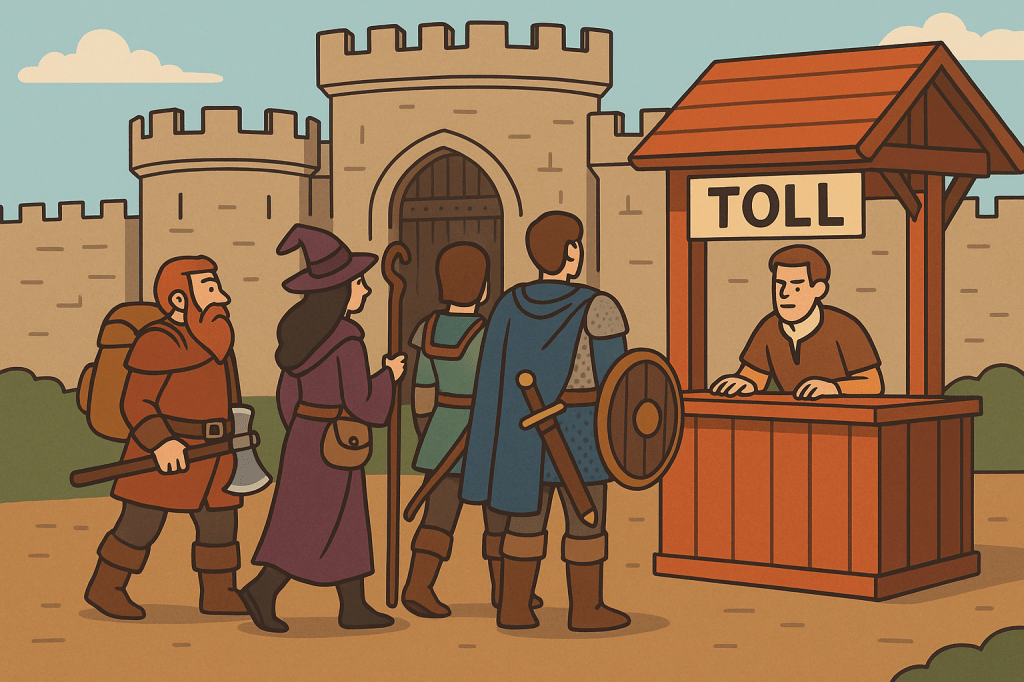
    If you’ve ever run a game of D&D, you know exactly how this plays out. You tell your group that if they defeat the Big Bad Evil Guy, they’ll hit Level 10. This is the campaign’s driving goal. Every plan, every detour, every questionable alliance with shady NPCs is about gearing up for that final fight. Then, right before the big showdown, you say, “Actually, before you can fight him, you’ll need to pass this riddle challenge. Fail, and you can’t try again until next year. Oh, and I won’t tell you what answers you got wrong.” At best, the players feel blindsided. At worst, they start suspecting you never really wanted them to succeed in the first place. And once players stop trusting their GM, the game stops being fun. They’ll still show up — sunk-cost fallacy is a hell of a drug — but the spark’s gone.

    And here’s where leadership theory has been screaming warnings for decades. In transformational leadership, one of the core jobs of a leader is to inspire people toward a shared vision through consistency, trust, and integrity (Bass, 1990). If the vision changes, you bring your team along for the why, the how, and the what’s-next. But if you just quietly rewrite the playbook mid-season without telling anyone, you’ve broken what Rousseau (1995) calls the psychological contract — that unspoken agreement between leader and team about what each side owes the other. Once that’s broken, even the most committed, high-performing people start conserving their energy. Not out of spite, but out of survival. They’ve learned the rules can change without warning, so why go all-in?

    There’s a way to fix this without torching morale, but it requires humility and a little bit of courage. If you truly can’t honor the original path you laid out — whether because of volume, budget, or your own failure to anticipate demand — transparency is your only way out. Spell out what’s changing, why it’s changing, and how people can still succeed under the new system. Give feedback, even if it’s just “You scored lower on decision-making under time pressure — here’s where to practice.” If you have to thin the candidate pool, do it in a way that still respects the original promise, even if it means spreading things out over a longer timeline. Otherwise, you’re just selecting for the people most willing to tolerate frustration, which is not the same as selecting for the people most capable of leading.

    The rules can change — life’s unpredictable, and leadership is about adapting. But if you want your people to keep showing up with full effort, the one rule that can’t change is this: when you say something matters, it has to keep mattering, even when it’s inconvenient for you.

    References:

    Bass, B. M. (1990). From transactional to transformational leadership: Learning to share the vision. Organizational Dynamics, 18(3), 19–31.

    Rousseau, D. M. (1995). Psychological contracts in organizations: Understanding written and unwritten agreements. Sage Publications.

  • The Feedback That Was Actually a Trap: Weaponized Coaching and the Illusion of Development

    The Feedback That Was Actually a Trap: Weaponized Coaching and the Illusion of Development

    There’s a moment in bad D&D campaigns when the GM grins too much. You know the look. The party just triggered something, maybe opened a door they weren’t supposed to, or used a clever workaround to bypass some elaborate puzzle, and the GM, instead of rolling with it, tilts their head and says, “Interesting.” That’s the moment you realize you’ve made a mistake. Not in the game. In trusting the GM. Because that smile? That’s the “this is going in the kill box” smile. And the only reason your character’s still breathing is because the plot isn’t done punishing you yet.

    That’s what fake coaching feels like in the workplace.

    It starts off warm. Encouraging. Your boss says they’re “invested in your development” and want to “help you grow.” It’s like they just pulled you aside in the tavern and offered you a side quest. You feel chosen. Important. Maybe this is it—your chance to level up, to finally get out of the hell that is middle-tier oblivion where your talents are wasted and your coffee goes cold before you remember where you left it. But instead of getting a magic item, you get assigned a “stretch project” with no guidance, no resources, and no context. And somewhere around hour fourteen of trying to decode the office spreadsheet equivalent of ancient dwarven runes, you realize: this wasn’t a gift. This was a test. And you are not supposed to pass it.

    This is what I call development theater—the illusion of mentorship with none of the substance. It’s the kind of thing that looks amazing in a quarterly report. “We’re committed to employee growth,” they’ll say, while quietly tossing people into career quicksand and blaming them for not building a ladder. And the worst part? You can’t even prove it. Because technically, they did coach you. They gave you feedback. They offered you opportunity. They gave you rope—just enough to hang yourself artistically, in the break room, next to a printout of last year’s mission statement.

    The TTRPG version of this is the GM who swears they’re “collaborative,” then turns every piece of your backstory into a trap. You tell them your character once abandoned a sibling in a burning village? Great. Now the final boss is the sibling, and no, you don’t get a redemption arc, you get stabbed with a flaming pitchfork while the GM does a bad voice and says, “This is what you deserve.” You thought you were building a narrative. Turns out, you were providing raw materials for a vengeance fantasy they’ve been workshopping since their sophomore year creative writing class.

    But let’s go back to the office. Because this isn’t just bad management—it’s a strategy. It’s called plausible deniability leadership. It’s what happens when someone wants you gone, but doesn’t want to look like the bad guy. So instead, they offer you “growth.” They suggest “areas for improvement.” They ask you to “stretch beyond your comfort zone,” while quietly collecting screenshots and calendar invites like evidence for a crime they’re planning to report after the fact. You’re not being coached. You’re being turned into a cautionary tale.

    And you start to notice it, too late. You start wondering why your emails are getting ignored. Why projects get reassigned without explanation. Why every compliment you get sounds like it came from an AI that only read the first paragraph of your résumé. You start to feel like you’re being haunted by a ghost version of your reputation. Like someone filed a secret report that says you’re “difficult to work with,” and now everyone’s treating you like a cursed item—technically useful, but risky to equip.

    Leadership theory actually has a name for the good version of this: Individualized Consideration, one of the pillars of Transformational Leadership (Bass & Riggio, 2006). That’s when leaders offer feedback and development tailored to each person’s goals, strengths, and needs. But there’s a dark mirror to this: Pseudo-Transformational Leadership (Bass & Steidlmeier, 1999), where the tools of mentorship get twisted into performance theater. It’s the difference between helping someone grow and using the language of growth to justify pushing them out. The difference between a GM saying, “Let’s explore your character’s fears,” and a GM saying, “Hey, I noticed your character’s afraid of drowning, so I made all the dungeons water now.”

    And no, it’s not just one bad boss or one bad GM. This happens in systems where psychological safety—the foundation of trust and learning on any team—is treated like a luxury add-on (Edmondson, 1999). The moment people start to feel like feedback is a setup, they stop trying. They shut down. They play it safe. They stop asking questions, stop offering ideas, stop rolling with disadvantage unless absolutely necessary. And then leadership turns around and says, “Why don’t we have more innovation around here?”

    Here’s the wild part: most of the time, the people doing this think they’re being kind. They think that by softening the truth, or sugarcoating the failure, they’re protecting you. They don’t realize that fake feedback is worse than silence. That pretending to help while secretly preparing your exit is like handing someone a parachute made of spaghetti. You’re not saving anyone. You’re just putting on a show before the impact.

    So here’s how we do it better.

    If you’re in charge of people—at a table, on a loading dock, in a customer service team in a crumbling office park built entirely out of sadness and reused drywall—then ask yourself: Is this feedback meant to help this person? Or is it meant to protect me from looking like the bad guy later? Because that’s the line. That’s the moment when you decide whether you’re going to lead with integrity or script a fake redemption arc just to cover your own plot holes.

    Be honest. Be clear. If someone’s not meeting expectations, tell them—with support, with context, with a plan. Don’t dress it up in “opportunities for growth” if what you really mean is “we’re already interviewing your replacement.” If you’re a GM and a player is being disruptive or needs to shift how they engage at the table, don’t write it into the story like some kind of Saw-style morality lesson. Talk to them. You are allowed to be direct. You are allowed to be kind without being vague. You are allowed to be uncomfortable if it means being real.

    Because people know. They always know. The party knows when the GM has it out for them. Employees know when they’ve been moved to the short bench. And when trust breaks—when the coaching turns out to be a trap, when the feedback was just foreshadowing—it doesn’t just ruin one person’s experience. It poisons the whole table. It tells everyone else that growth is conditional. That failure is fatal. That support is a trick.

    And once people believe that, you don’t get innovation. You don’t get loyalty. You get silence.

    You get a campaign where nobody tries anything bold. A job where nobody brings up new ideas. A team that’s still technically alive, but spiritually checked out, like NPCs waiting for the next cutscene.

    So if you’re going to be a leader, be one. Don’t hand people a torch just to light their fuse. Don’t offer them a side quest when you’ve already decided how the story ends. And don’t call it feedback if it’s really just foreshadowing.

    We already know the trap is coming. The only question is whether you’ll pretend it was part of our development plan all along.


    Citations:

    Bass, B. M., & Steidlmeier, P. (1999). Ethics, character, and authentic transformational leadership behavior. The Leadership Quarterly, 10(2), 181–217.

    Bass, B. M., & Riggio, R. E. (2006). Transformational Leadership (2nd ed.). Psychology Press.

    Edmondson, A. (1999). Psychological Safety and Learning Behavior in Work Teams. Administrative Science Quarterly, 44(2), 350–383.