
Tag: Management

  • Leadership Lessons From The Toxic Avenger (2025): The Grossest Training Video Ever Made

    Leadership Lessons From The Toxic Avenger (2025): The Grossest Training Video Ever Made

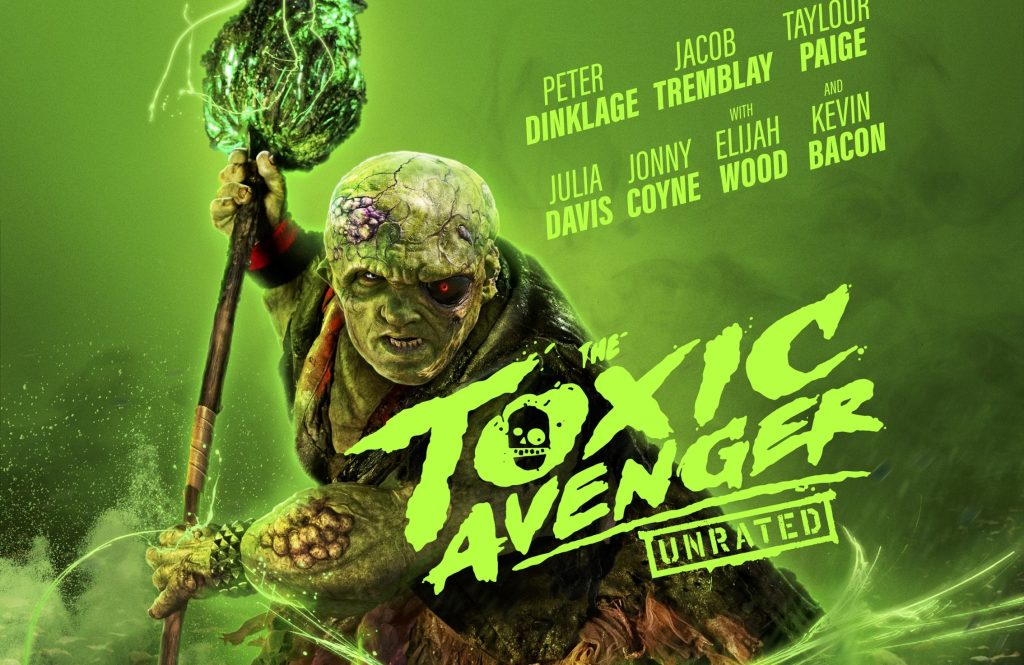
    The new Toxic Avenger is gross, hilarious, and surprisingly sharp. It’s the kind of movie that sprays you in the face with radioactive sludge, then slips a genuine insight into your open mouth before you realize what’s happening. Beneath the gore and fart jokes is a strange but undeniable lesson in leadership, the sort of thing that sneaks up on you while you’re trying not to gag. It makes sense, really—leadership often comes out of the most uncomfortable circumstances. Few people ask to be in charge. Sometimes you just fall into the vat.

    Our unlikely hero is Winston Gooze, a janitor stuck at the bottom of the ladder, ignored by his employers, crushed under the weight of medical bills, and dismissed by nearly everyone around him. His life is a quiet humiliation until one day, fate dunks him headfirst into toxic waste. When he emerges, he’s mutated beyond recognition, but more importantly, he’s transformed into someone who refuses to be stepped on again. That’s the thing about leadership—it doesn’t always sprout from ambition. More often, it comes from necessity, when the alternative is to remain voiceless while everything collapses. James MacGregor Burns built the foundation of transformational leadership theory on this idea: leaders and followers rise together in moments of crisis, elevating each other to a higher level of motivation and morality. Winston doesn’t want power, but suddenly the people around him need someone who can stand up to forces too big for them. Leadership in that moment isn’t a choice; it’s survival.

    The villains in this story are bigger than a single person. Sure, Bob Garbinger is a cackling pharmaceutical CEO who checks every box on the “corporate monster” list, but the real enemy is the system he represents. This is leadership as resistance, where the role isn’t to fine-tune what exists but to smash it and rebuild something better. That aligns with Robert Greenleaf’s Servant Leadership, which puts the focus not on authority but on serving the most vulnerable. Winston’s mutated strength doesn’t make him a leader; his willingness to wield it for others does. Servant leadership isn’t soft. It looks soft right up until it swings a mop through the chest of systemic exploitation. It’s the same principle every decent Game Master eventually learns at the table: you don’t step in to hog the spotlight. You step in when one player’s antics are drowning everyone else, because your responsibility is to keep the game fun for the whole group. Winston’s grotesque vigilante justice is the same move, except with higher stakes and way more exploding heads.

    Winston’s fight isn’t driven solely by rage against corporate cruelty. At the core of his transformation is Wade, his stepson. That personal connection grounds his choices and gives his violence a direction. This is where Bill George’s Authentic Leadership comes into play: true leaders act out of self-awareness and purpose, not just raw instinct. Winston knows who he’s fighting for, and that clarity shapes his every grotesque decision. In leadership, authenticity doesn’t always look polished. Sometimes it looks angry, messy, and inconvenient. But people rally to it because it’s real. That’s the same shift every new supervisor goes through when they stop imitating their last boss and start trusting their own instincts. It’s the same shift GMs make when they finally drop the Matt Mercer impersonation and start leaning into their own strange rhythm. People respond to honesty, even when it comes wrapped in boils.

    The film itself plays out like an ode to Situational Leadership. There’s no clean progression, no consistent tone, no adherence to the rules of superhero storytelling. One moment it’s gore, the next it’s satire, the next it’s slapstick. Winston doesn’t lead with a five-year plan; he leads by improvising in chaos. Paul Hersey and Ken Blanchard argued that leaders have to adjust their style based on the situation and the readiness of their followers. That’s exactly what’s happening here. Winston doesn’t get to stick to one mode of leadership. He mutates with the circumstances, whether that means bashing through enemies or offering a moment of protection to Wade. Anyone who’s ever tried to run a D&D campaign where the players ignore your plot hooks, bribe the villain instead of fighting him, and then insist on adopting the dragon knows this feeling. Sometimes leadership is just keeping the story moving when everything goes sideways.

    By the end, Winston becomes more than just a mutated janitor with a vendetta. He turns into a symbol, whether he likes it or not. People rally around him not because he’s perfect, but because he embodies what they’ve been too powerless to say out loud. That’s culture-building leadership, where a person stops being just an individual and starts representing a larger identity. Organizations do this all the time, spinning origin myths and rallying stories to keep people connected. Tabletop groups do it too. Every party has a “remember when” story—the botched heist, the critical fail that almost wiped the team, the one perfect joke that still gets repeated years later. Those stories weld people together, even if the moment itself was a disaster. Winston becomes that story for the people around him, a reminder that resistance is possible even when the odds are grotesquely stacked.

    What makes The Toxic Avenger stick isn’t that it offers a neat leadership model wrapped up with a bow. It’s that it acknowledges leadership doesn’t come from clean, comfortable places. It comes from desperation, from injustice, from pain. The leaders who matter most are rarely the ones who set out to be in charge. They’re the ones who decided they couldn’t keep going the way things were. Winston Gooze becomes a leader not because he wanted glory, but because he couldn’t bear to see his stepson’s future swallowed by corporate rot. And in that messy, chaotic decision, he finds a kind of power no boardroom seminar could manufacture.

    So maybe leadership isn’t about polished presentations or carefully curated strategies. Maybe it’s about what you do when you’ve been shoved into the sludge. The question isn’t whether you come out clean—nobody does. The question is whether you come out willing to fight for the people who need you most.

  • Cecil Stedman: The Adaptive Bureaucrat Nobody Wants to Be (But Somebody Has To)

    When I was writing about Omni-Man, I kept circling back to Cecil Stedman, the director of the Global Defense Agency. If Omni-Man is the worst-case scenario of charisma without ethics—the guy who can make mass murder sound like a pep talk—then Cecil is the polar opposite. He doesn’t inspire anyone. Nobody’s getting a Cecil tattoo. He looks perpetually hungover, like a guidance counselor who gave up on wearing ties sometime in the early 90s. But when the world is coming apart, he’s the one you actually want making the calls.

    Because Cecil isn’t about vision or inspiration. He’s about survival. He embodies what Ronald Heifetz and Marty Linsky call adaptive leadership—stepping into situations where there is no playbook, no technical fix, no “right answer” that saves the day. Omni-Man flexes, and cities crumble. Cecil grimaces, makes a decision that guarantees everyone will hate him, and then pours another drink. That’s actually the more realistic version of leadership.

    You can see it in how he operates: sending rookies into fights he knows they’ll lose, lying to Mark about how bad things really are until he absolutely has to tell him, constantly calculating which disaster leaves fewer bodies on the floor. He doesn’t pretend there’s a win waiting at the end. He just picks the path where the damage is survivable. That’s the entire premise of adaptive leadership—there’s no fixing the storm, only steering through it.

    This is why I can’t shake Cecil as the real counterpoint to Omni-Man. Charisma makes you believe in someone before you know what they stand for. Cecil makes you distrust him immediately, and yet, through sheer blunt honesty, he earns something more durable than admiration: grudging trust. He never tells you it’ll be fine. He tells you it’s going to be terrible, but here’s how we’ll get through it anyway. That’s a very different kind of authority than Omni-Man wielding his mustache like a badge of destiny.

    It also makes Cecil a pretty good metaphor for what happens once you’ve been leading people long enough to lose your illusions. Anyone who’s ever managed a warehouse crew, or run a hospital shift, or tried to GM a tabletop campaign knows what this feels like. You start bright-eyed, promising people big visions and meaningful work. Then reality sets in. The order backlog is impossible, the patients keep piling in, the party has just set fire to the only inn in town because someone thought a bar brawl would be “character-driven roleplay.” Suddenly, you’re not the inspirational Omni-Man figure anymore. You’re Cecil, making exhausted calculations about which choice leaves the fewest scars.

    That’s the unglamorous reality of adaptive leadership. Heifetz and Linsky talk about it as “living in the disequilibrium.” You can’t let things get so calm that people won’t adapt, but you also can’t let them get so chaotic that people panic or break. It’s this awful tightrope of tension management. Cecil lives on that rope. He knows if he underplays a threat, people die. If he overplays it, people revolt. So he does what real leaders do: he accepts that everyone will be angry with him, and then he does it anyway.

    Of course, there’s a cost. Cecil always looks one bad day away from collapsing into his whiskey glass. Adaptive leadership isn’t the kind of thing that makes you a beloved icon. It burns you out, leaves you scarred, and makes your victories invisible. No one celebrates the catastrophe you prevented. They only complain about the compromises you made. That’s why so many real-life leaders retreat into the comfort of technical fixes—new checklists, new policies—because at least those come with the illusion of control.

    But when you’re really in it—when you’re leading people through situations with no clean answers—charisma won’t save you. Vision won’t save you. The only thing that keeps people moving is knowing you’re willing to stand there with them in the middle of the wreckage, taking the heat and making the call. That’s Cecil. He doesn’t inspire. He endures. And in the long run, that’s what makes him the most honest kind of leader.

    Omni-Man showed us the dangers of charisma unmoored from ethics. Cecil shows us the price of leadership rooted in pragmatism. Between the two, Cecil’s the one you can actually trust to keep the world spinning, even if you hate him for how he does it. And if you’ve ever found yourself in a role where every option looked terrible but someone had to choose, congratulations: you’ve already had your own Cecil moment. You probably didn’t look good doing it. You definitely didn’t get applause. But you kept things alive long enough to fight another day. And that, grim as it sounds, is leadership.


    References

    • Heifetz, R. A., & Linsky, M. (2002). Leadership on the Line: Staying Alive Through the Dangers of Leading. Harvard Business Review Press.
    • Northouse, P. G. (2021). Leadership: Theory and Practice (8th ed.). Sage Publications.

  • The Rules Changed, But We Just Forgot to Tell You

    The Rules Changed, But We Just Forgot to Tell You

    Nothing makes people question your leadership faster than realizing the finish line they’ve been running toward just got picked up and moved. This is the organizational version of telling a kid they can have dessert if they finish their vegetables, then halfway through the broccoli deciding they also need to clean the garage and mow the lawn first. The dessert was never the point. The goal was to keep them occupied until you could figure out how to get out of your own chores.

    In corporate life, this usually shows up when leadership makes a promise they didn’t fully think through. The intent might have even been noble at first — “Hey, we’ll make sure everyone gets a fair shot at promotion.” But when the sign-up sheet fills faster than expected and the people who actually have to conduct those evaluations start sweating about their workload, suddenly there’s a brand-new hoop to jump through. A leadership assessment. A timed test. An extra round of manager sign-off. And here’s the kicker: fail that extra hoop and you don’t just miss your shot — you don’t even get told what you did wrong, so you can fix it next time.

    From the outside, this reads less like “streamlining the process” and more like “we realized how much work this would be for us, so we invented a filter to thin the herd.” There’s no transparency, no feedback, and no sense that the people in charge remember they promised you something in the first place. Which brings us to the real damage: it’s not the inconvenience that kills morale. It’s the unspoken message that your leadership’s word is provisional. Conditional. Entirely dependent on whether it still suits them to keep it.

    If you’ve ever run a game of D&D, you know exactly how this plays out. You tell your group that if they defeat the Big Bad Evil Guy, they’ll hit Level 10. This is the campaign’s driving goal. Every plan, every detour, every questionable alliance with shady NPCs is about gearing up for that final fight. Then, right before the big showdown, you say, “Actually, before you can fight him, you’ll need to pass this riddle challenge. Fail, and you can’t try again until next year. Oh, and I won’t tell you what answers you got wrong.” At best, the players feel blindsided. At worst, they start suspecting you never really wanted them to succeed in the first place. And once players stop trusting their GM, the game stops being fun. They’ll still show up — sunk-cost fallacy is a hell of a drug — but the spark’s gone.

    And here’s where leadership theory has been screaming warnings for decades. In transformational leadership, one of the core jobs of a leader is to inspire people toward a shared vision through consistency, trust, and integrity (Bass, 1990). If the vision changes, you bring your team along for the why, the how, and the what’s-next. But if you just quietly rewrite the playbook mid-season without telling anyone, you’ve broken what Rousseau (1995) calls the psychological contract — that unspoken agreement between leader and team about what each side owes the other. Once that’s broken, even the most committed, high-performing people start conserving their energy. Not out of spite, but out of survival. They’ve learned the rules can change without warning, so why go all-in?

    There’s a way to fix this without torching morale, but it requires humility and a little bit of courage. If you truly can’t honor the original path you laid out — whether because of volume, budget, or your own failure to anticipate demand — transparency is your only way out. Spell out what’s changing, why it’s changing, and how people can still succeed under the new system. Give feedback, even if it’s just “You scored lower on decision-making under time pressure — here’s where to practice.” If you have to thin the candidate pool, do it in a way that still respects the original promise, even if it means spreading things out over a longer timeline. Otherwise, you’re just selecting for the people most willing to tolerate frustration, which is not the same as selecting for the people most capable of leading.

    The rules can change — life’s unpredictable, and leadership is about adapting. But if you want your people to keep showing up with full effort, the one rule that can’t change is this: when you say something matters, it has to keep mattering, even when it’s inconvenient for you.

    References:

    Bass, B. M. (1990). From transactional to transformational leadership: Learning to share the vision. Organizational Dynamics, 18(3), 19–31.

    Rousseau, D. M. (1995). Psychological contracts in organizations: Understanding written and unwritten agreements. Sage Publications.

  • If You Think Leadership Is About Having All the Answers, You’re Probably the Problem

    If You Think Leadership Is About Having All the Answers, You’re Probably the Problem

    One of the first things I tell every new hire class is that they should ask as many questions as they want, and they should never feel weird about it. I explain that when they do, one of three things is going to happen. The first is that I’ll just give them the answer. I’ve been doing this long enough that sometimes I know the thing they’re asking about, and I’ll just give it to them straight. The second is that I’ll give them my best guess. I’ll say something like, In my experience, usually the best practice is this…” or “Here’s what most people in the industry do.” And the third is that I’ll tell them who else to talk to–because sometimes I’m not the right person to answer it. Maybe it’s a technical question with the app or some strange behavior with the hardware, in which case, a seasoned veteran out there actually doing the job in the wild is the best resource. But I’m never going to bluff or fake it. Not because I’m some sort of saint, but because I’ve worked under those kinds of people before. The ones who fake their way through every question, who have to be right all the time, who treat leadership like it’s just being the biggest brain in the room. And I’ve seen how much damage that mindset causes. 

    For some reason, a lot of us go into leadership thinking our job is to have all the answers. That’s the myth we’ve been sold. That the leader is the one who knows everything, who sees further than the rest of us, who walks into the meeting like a prophet and drops solutions on the table. It’s a comforting fantasy, especially when the stakes are high. But in practice, this kind of leader becomes a bottleneck. They kill collaboration. They build teams that are afraid to speak up, afraid to ask questions, and worst of all, afraid to think. The moment people on your team start believing that their value lies in saying nothing and deferring to the person in charge, you’ve lost. 

    I used to feel that pressure too, like my credibility depended on always having the one right answer locked and loaded at all times. But pretending to know everything doesn’t make you more credible. It makes you brittle. And brittle things tend to break when real pressure hits. Overconfidence in leadership, according to Entrepreneur, especially during crises, “can cross the line into the danger zone,” where authenticity gives way to ego and collaboration goes to die. 

    Over time, I’ve come to believe that one of the most important things a leader can say is, “I don’t know, but let’s find out.” Not as an escape hatch, but as an invitation. It tells the team that they’re allowed not to know either. It invites curiosity. It tells people that we’re here to learn together, and that finding the right answer is a shared responsibility, not a solo act for the boss. And weirdly enough, research backs this up. A recent meta-analysis found that when leaders express uncertainty instead of faking confidence, people actually trust them more and think they’re more competent. It’s one of those satisfying little paradoxes: the moment you stop pretending you’ve got it all figured out is the moment people start believing in you. 

    But if your default mode is always to have the answer, whether you actually do or not, you’re going to train your team into silence. And worse, you’re going to stop learning. One of the easiest traps to fall into is mistaking your authority for omniscience. But leadership isn’t about being the smartest person in the room. It’s about making sure the smartest ideas in the room have space to be heard. In my case, that often means handing the question off to someone who’s seen more edge cases, who’s driven more miles, who’s figured out a solution to that weird glitch I’ve never seen. I’d rather point someone to the best resource than try to impress them with some half-informed answer. That’s not humility for its own sake–it’s efficiency. 

    There’s a popular quote from Google’s Project Aristotle research that’s showing up in a lot of leadership seminars lately: the single most important factor in high-performing teams is psychological safety, which is the basic idea that people do their best work when they know they won’t be shut down, shamed, or penalized for speaking honestly, taking risks, or owning up to mistakes. And nothing destroys psychological safety faster than a leader who punishes questions, shuts down feedback, or reacts defensively to being challenged. Those leaders don’t build strong teams. They build echo chambers. And echo chambers can be quiet, not because everything’s working, but because no one’s talking anymore. 

    I’ve seen both kinds of leadership up close. I’ve had bosses who responded to every issue with a kind of rehearsed confidence. I even had one boss whose philosophy was, “Never let them see you sweat.” And I’ve had leaders who said, “That’s a great question. Let’s think through it.” The difference in team culture was night and day. One team was rigid and anxious, always waiting to be told what to do. The other was flexible, collaborative, and surprisingly resilient under pressure. The second team didn’t succeed because the leader had all the answers. We succeeded because the leader made space for us to ask the right questions. 

    That’s how I try to approach my own leadership now. I still prepare. I still try to be informed. But I don’t cling to the illusion that I’m supposed to know everything. I tell people what I know, I share what I’ve seen, and I point them to better experts when needed. I treat questions not as tests of my competence, but as chances to model how we figure things out. And when someone brings something to my attention that I hadn’t thought of? I thank them. Because that’s what we’re here to do–build something smarter than any one person could build on their own. 

    Leadership isn’t about having all the answers. It’s about guiding people through complexity without pretending the path is always obvious. It’s about saying “Let’s figure this out together” and meaning it. Because the moment you stop pretending to be the answer key is the moment your team finally gets permission to start solving problems with you.

  • Radical Honesty Sounds Great Until You Actually Try It

    Radical Honesty Sounds Great Until You Actually Try It

    You’ve probably seen the phrase “radical honesty” floating around in TED Talks, thought leader newsletters, or stitched onto decorative pillows sold by entrepreneurs who post five-minute clips of themselves walking through their neighborhoods at 6 a.m. It sounds brave. Disruptive. Empowering. 

    But here’s the thing. Radical honesty feels great when you’re the one saying it. It’s a lot less fun when you have to live with it. 

    Because honesty isn’t just about blurting out whatever you think. That’s not honesty. That’s social arson. Leadership honesty–the kind that actually works–is about being accountable to the truth, even when it’s inconvenient, even when it costs you something, and even when you really want to dodge it with a little strategic word salad. 

    When I Ran a Bike Shop, Honesty Wasn’t a Brand. It Was a Liability.

    Back when I owned a bike shop, I couldn’t bring myself to lie to a customer. Not about the quality of a product, not about how much they needed something, not even about their cracked carbon frame that definitely wasn’t “just like that when I got it.”

    This wasn’t because I’m especially noble. It was just because I’d rather lose a sale than lose sleep over it. I turned down commissions. I steered people toward cheaper items that worked just as well. I never pushed brands I didn’t believe in, even when reps dangled incentives in front of me like a meatball sub in front of a hungry dog. 

    That got me a reputation for being “honest but blunt,” a few angry internet reviews from people who didn’t like hearing the truth, and a lot of customers who kept coming back because they knew I wasn’t full of it. 

    There’s research backing this up. A University of Chicago Booth School of Business study found that individuals consistently underestimated how positively others respond to honesty, especially when delivering truths that are hard to hear. Across experiments, asking participants to speak honestly for a few days or give blunt feedback, the findings showed that honesty was far more pleasant and socially connective than people had predicted. 

    That doesn’t mean that honesty always feels good in the moment. But it does build trust

    What It Looks Like in Leadership–and In RPGs

    Let’s take a break from the workplace for a second and talk about tabletop roleplaying games. If you’ve ever been a Game Master, you already understand leadership in its purest, least compensated form. You are the final authority on what’s true in that world. 

    When your players ask, “Does the guard look nervous?” they aren’t just testing your improvisational skills–they’re testing whether the world reacts in a way that feels real. If everything always breaks in their favor, they’ll know the fix is in. If nothing ever does, they’ll stop trying.

    Good GMs–and good leaders–understand that the job isn’t about making things easy. It’s about making things clear. Clarity creates trust. Consistency builds momentum. Honesty creates a space where people can actually do something useful instead of wasting all their energy trying to decode your mixed signals. 

    That applies whether you’re managing three warehouse employees who treat the breakroom microwave like a performance art piece or running a team of elven rogues and bard college dropouts. 

    Honesty Isn’t a Hammer–It’s a Compass

    One of the most common misuses of honesty in leadership is treating it like a hammer. “I’m just being honest,” says the manager as they whack a team member with a barely filtered complaint. That’s not honesty. That’s emotional outsourcing. 

    Real honesty is a compass. It keeps you oriented, even when the terrain sucks. 

    It’s saying, “I missed something during planning, and that’s why we’re behind schedule,” instead of, “We’ve had to make some pivots to align with evolving priorities.” It’s acknowledging when someone’s right, even if you feel insecure. It’s telling someone they’re falling short and offering them a path to improvement, dropping that truth bomb and moonwalking out the door. 

    This is the principle behind Kim Scott’s concept of Radical Candor, which encourages leaders to “care personally while challenging directly.” It’s a balance between honesty and empathy–between clarity and cruelty. 

    And it works because it’s sustainable. People can tell the difference between a leader who’s being transparent to avoid manipulation and one who’s just looking for an excuse to say whatever’s on their mind without consequences. 

    Honesty Means Letting the Bad News Be Real

    One of the hardest parts about being honest as a leader is accepting that sometimes, the bad news just sucks. There’s no silver lining, no spin, no nifty metaphor that’s going to make the metrics look better or the budget any less wrecked. 

    And in those moments, people don’t need you to inspire them. They need you to acknowledge reality. They need to see you take responsibility.

    For another take on why avoiding clarity isn’t kindness, check out this Forbes piece, “Why Leaders Are Ditching the ‘Nice Boss’ Approach,” which argues that stepping away from vague reassurance toward honest communication actually builds stronger, more engaged teams. 

    Here’s the Real Trick: They’ll Start Doing It Too

    Once people see you modeling this kind of honesty–not performative honesty, but the kind that actually costs you something–they start to feel safe doing it, too. They admit when they’re confused. They speak up sooner. They stop hiding behind half-truths and start engaging like they’re actually on the same team. 

    That’s how culture changes. Not through posters in the hallway or all-hands pep talks. Through consistent, exhausting, thankless moments of being honest when it would be so much easier not to be. 

    You don’t need to tell everyone everything all the time. But if you’re not telling the truth, they’ll know. And once that trust is gone, it doesn’t come back with a company picnic.

    Whether you’re rolling dice behind a screen or making calls on the warehouse floor, honesty isn’t a luxury. It’s your north star. And following it isn’t always comfortable. But it’s the only way anyone gets anywhere worth going.

  • “One Hop at a Time” Is a Leadership Strategy, Not Just a Survival Tactic

    “One Hop at a Time” Is a Leadership Strategy, Not Just a Survival Tactic

    As I’m working on a research project right now, I’m revisiting The Leadership Challenge by Kouzes and Posner, which is considered one of the staples in leadership literature. You know the type–corporate workshop bait, stuffed with stories meant to inspire you to “ignite the leader within.” And sure, some of it hits. A few of the ideas even spark something. But I also find myself grinding my teeth through some of the examples, especially the ones that seem to equate good leadership with getting your people to work late for free. 

    There’s a story in the book that really stood out, though, in a good way. It’s about a guy who climbed Mount Rainier as an amputee. Someone asked how he did it, and he said, “One hop at a time.” That’s it. That’s the whole strategy. One hop, then another, until he was on top of the mountain. 

    Now I’ve never climbed a mountain–unless you’re talking about the kind made out of failed delivery metrics and climbs on a mountain bike trail that turn your quads into haunted meat–but the lesson rang true. Not because it was revolutionary, but because it confirmed something I already deeply knew from coaching, working and just generally trying to keep the wheels on the ground while moving forward. 

    There’s no magic—just movement.

    Every meaningful transformation comes from a thousand micro-decisions that add up over time. Or, as James Clear puts it, it’s about making tiny gains every day, compounding into something that looks impressive only once you zoom out far enough.

    As a cycling coach, one of the first things I learned was quadrant analysis. You basically take a piece of paper, draw a big plus sign splitting it into four sections. In one box you write where the athlete is now–their current fitness level, often including FTP (Functional Threshold Power), endurance capacity, maybe some recent performances. In another, you define the demands of the event they want to do–how long it is, what kind of terrain it’s on, what kind of energy system it’s going to tax. The third is the timeline–how much time do we have to prepare? And the fourth is the destination. What are their goals? Finishing on the podium? A personal record? What fitness level or skillset do they need to realistically develop to do it?

    That’s how you build the map. You don’t just hope for greatness. You break down the path between today and the event and you work backward from the finish line to structure the steps. Week by week. Ride by ride. It’s not flashy. It’s not magic. But it works.

    And I’ve found that model applies far beyond bikes

    Let’s say you’re managing a team of forklift drivers. Or DMing a group full of creative agents of chaos. Or trying to write a book while also raising a child, working full time, and keeping your sanity wired together with cold coffee and grim determination. The principle still holds. Big goals are built out of small, repeatable actions. You just need to know what to repeat. 

    The amputee climber didn’t conjure his way up the mountain. He didn’t pull out a TED Talk and inspire the snow into melting. He took one step, then another. He broke down the impossibility into micro-goals. From here to there. That’s it. 

    Same for the leader who wants to change a toxic work culture. You don’t fix the entire system in one keynote speech. But you might start by not rewarding the people who burn themselves out and punishing the ones who set healthy boundaries. You start by showing your team what matters through what you pay attention to. Then you do it again. Then you do it when nobody’s watching. Then you keep doing it even when you’re frustrated when it’s not moving fast enough. 

    The alternative is paralysis. 

    Too many people get stuck at the base of the mountain, looking at the summit the way a cat looks at a closed door–like something must be wrong with the universe if that’s where you’re supposed to go. I get it. I’ve stood there myself more times than I’d like to admit. Whether it was trying to build a business from scratch, dealing with toxic workplace nonsense, or trying to hold a half-shattered D&D group together after an emotional meltdown, it’s easy to feel like you’re supposed to fix everything or fix nothing. That’s the trap.

    So what does this mean for you as a leader, coach, or GM?

    It means you need to get comfortable with slow progress. You need to train yourself–and your team, or your players–to look for the landing spot for those hops. To recognize that mastery, growth, and even healing aren’t events. They’re practices. A good leader breaks down the mountain into legible steps. They don’t throw their team at the wall and see who sticks. 

    Here’s a quick framework you can actually use, whether you’re writing a campaign, leading a team, or building a new training plan:

    1. Define the summit – What’s the actual goal? Don’t say “be a better team.” Say “improve order accuracy by 20% in 90 days.” Or “get our bard to stop derailing every plotline with jokes about magical ass tattoos.”
    2. Evaluate your terrain – Where are we starting? What resources do we have? How much buy-in? What are the known obstacles?
    3. Estimate your hops – Break it down into manageable steps. Something you can do this week. Then next week. Then the one after that. Keep it visible.
    4. Adjust as needed – Don’t marry the plan. Marry the goal. Sometimes a hop turns out to be a skip or a backslide. That’s fine. Adjust. Keep moving. 

    Leadership isn’t about grandeur. It’s about momentum. And momentum comes from clarity and consistency. 

    And if you’re thinking, “Yeah, but my situation’s different,” you’re not wrong.

    Everyone thinks their mountain is the most unclimbable. Everyone thinks they’re the only one dealing with a team that’s checked out, a player who keeps trying to solo the boss fight, or a workplace that quietly celebrates burnout like it’s a personality trait. But the core strategy still applies. 

    You figure out what the next hop is. Then you take it. You stay honest about where you are, you respect the human limits involved, and you keep showing up. 

    That’s leadership. One hop at a time.