

Tag: Pop Culture

  • Alien: Romulus and the Horror of Accidental Leadership

    Alien: Romulus and the Horror of Accidental Leadership

    The thing about the Alien franchise is that it keeps reminding us of the same workplace lesson: you are never as far away from a facehugger as you think you are. You can be minding your own business, fixing a leaky pipe, and suddenly you’ve got HR’s nightmare octopus trying to forcibly promote you into a parent. Alien: Romulus doubles down on this idea. Instead of seasoned veterans like Ripley or Marines who at least pretend to know what they’re doing, we get young, mostly unprepared characters who find themselves in a leadership vacuum. It’s not a story about heroes rising to the occasion—it’s about what happens when authority collapses and people who barely know how to pay rent have to improvise strategy while monsters are literally chewing through the walls.

    And that’s where the leadership lesson lives. Because most of us, at some point, get shoved into the “Congratulations, you’re in charge now” moment without training, guidance, or even a clean job description. It doesn’t feel like a promotion; it feels like something clawing its way out of your ribcage.

    Imagine you’re suddenly asked to run a restaurant, but nobody gave you keys, half the staff doesn’t speak the same language, the fryer’s on fire, and the health inspector is already seated in the corner, writing down notes like “severe violation: cook being eaten alive by kitchen monster.” That’s Alien: Romulus in leadership form—crisis with no map, no mentor, and no time to Google “how to manage people.”

    Hersey and Blanchard’s Situational Leadership theory becomes uncomfortably relevant here. The model argues that leaders need to flex their style depending on the competence and commitment of their followers. If someone has no skill but lots of enthusiasm, you direct. If they have skill but no confidence, you support. Easy to say in a classroom. Harder when the follower in question is holding a flamethrower backwards and screaming about acid blood. Romulus shows how clumsy this gets when young people are thrust into command roles—they don’t have the flexibility because they don’t even know the base settings yet.

    Then there’s authentic leadership, as described by Bill George. Authentic leaders win trust by being consistent, transparent, and rooted in values. The problem is, if you’re nineteen years old and have never even managed a car payment, you don’t have a leadership philosophy yet. Some of the Romulus crew try to fake it—raising their voice, giving orders, posturing like someone who knows how to run a horror movie. And the movie punishes them for it, because authenticity can’t be faked. You can trick your friends into thinking you’re cool, but you can’t trick a xenomorph into believing you’re in charge.

    And if we’re talking about punishment, Barbara Kellerman’s work on negative leadership fits right in. She breaks bad leaders into categories: incompetent, rigid, callous, corrupt, insular, and evil. Romulus gives us a buffet of those. You see incompetence in people who freeze under pressure, rigidity in those who can’t adapt when the plan falls apart, and callousness when survival turns into betrayal. And the result is predictable: higher casualty rate than a team-building ropes course supervised by velociraptors.

    Here’s the uncomfortable real-world echo: Alien: Romulus feels familiar because many of us have lived some version of it. Maybe not the acid-blood monsters, but the promotion you weren’t ready for, the absent boss who left you holding the bag, the chaotic project where everyone’s improvising until it collapses. The film makes it literal, but the truth is that leadership vacuums don’t stay empty. Someone always steps up. Sometimes they grow into the role. Sometimes they get eaten.

    Surviving your first leadership role won’t burn holes through the floor plating, but the scars last just the same. The question isn’t whether you’ll be terrified or unprepared—that part is guaranteed. The real question is whether you’ll figure out how to flex, to be authentic, and to avoid turning into the kind of rigid disaster that costs lives. In space, no one can hear you scream. But in the office, everyone can hear you panic. And it smells just as bad.


    References

    Northouse, P. G. (2021). Leadership: Theory and Practice. Sage.
    Hersey, P., & Blanchard, K. H. (1969). Life cycle theory of leadership. Training and Development Journal.
    George, B. (2003). Authentic Leadership. Jossey-Bass.
    Kellerman, B. (2004). Bad Leadership: What It Is, How It Happens, Why It Matters. Harvard Business School Press.
  • Leadership Lessons From The Toxic Avenger (2025): The Grossest Training Video Ever Made

    Leadership Lessons From The Toxic Avenger (2025): The Grossest Training Video Ever Made

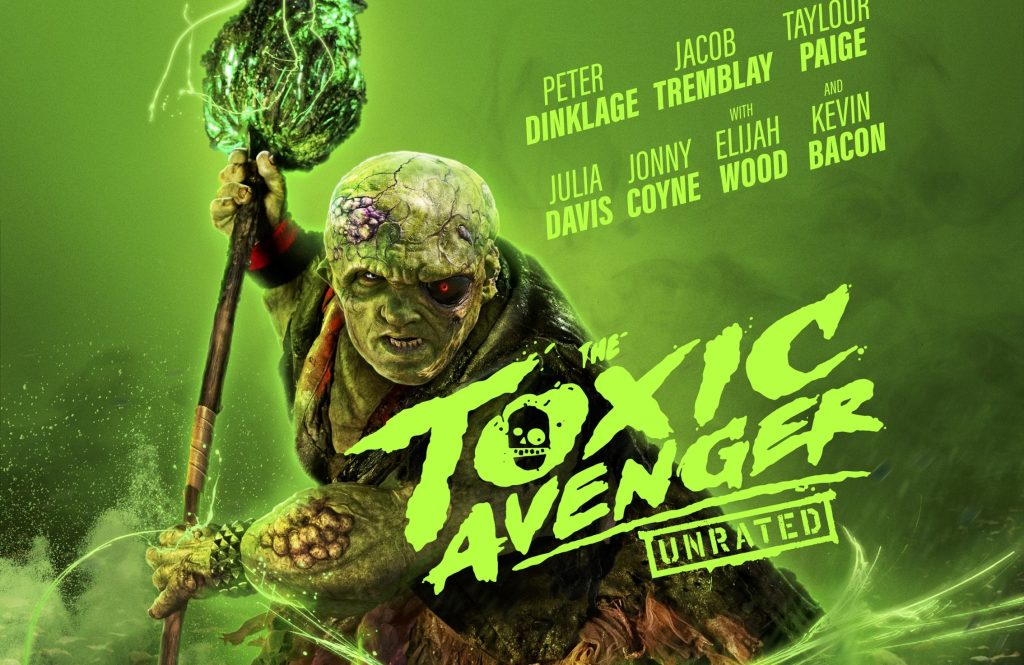
    The new Toxic Avenger is gross, hilarious, and surprisingly sharp. It’s the kind of movie that sprays you in the face with radioactive sludge, then slips a genuine insight into your open mouth before you realize what’s happening. Beneath the gore and fart jokes is a strange but undeniable lesson in leadership, the sort of thing that sneaks up on you while you’re trying not to gag. It makes sense, really—leadership often comes out of the most uncomfortable circumstances. Few people ask to be in charge. Sometimes you just fall into the vat.

    Our unlikely hero is Winston Gooze, a janitor stuck at the bottom of the ladder, ignored by his employers, crushed under the weight of medical bills, and dismissed by nearly everyone around him. His life is a quiet humiliation until one day, fate dunks him headfirst into toxic waste. When he emerges, he’s mutated beyond recognition, but more importantly, he’s transformed into someone who refuses to be stepped on again. That’s the thing about leadership—it doesn’t always sprout from ambition. More often, it comes from necessity, when the alternative is to remain voiceless while everything collapses. James MacGregor Burns built the foundation of transformational leadership theory on this idea: leaders and followers rise together in moments of crisis, elevating each other to a higher level of motivation and morality. Winston doesn’t want power, but suddenly the people around him need someone who can stand up to forces too big for them. Leadership in that moment isn’t a choice; it’s survival.

    The villains in this story are bigger than a single person. Sure, Bob Garbinger is a cackling pharmaceutical CEO who checks every box on the “corporate monster” list, but the real enemy is the system he represents. This is leadership as resistance, where the role isn’t to fine-tune what exists but to smash it and rebuild something better. That aligns with Robert Greenleaf’s Servant Leadership, which puts the focus not on authority but on serving the most vulnerable. Winston’s mutated strength doesn’t make him a leader; his willingness to wield it for others does. Servant leadership isn’t soft. It looks soft right up until it swings a mop through the chest of systemic exploitation. It’s the same principle every decent Game Master eventually learns at the table: you don’t step in to hog the spotlight. You step in when one player’s antics are drowning everyone else, because your responsibility is to keep the game fun for the whole group. Winston’s grotesque vigilante justice is the same move, except with higher stakes and way more exploding heads.

    Winston’s fight isn’t driven solely by rage against corporate cruelty. At the core of his transformation is Wade, his stepson. That personal connection grounds his choices and gives his violence a direction. This is where Bill George’s Authentic Leadership comes into play: true leaders act out of self-awareness and purpose, not just raw instinct. Winston knows who he’s fighting for, and that clarity shapes his every grotesque decision. In leadership, authenticity doesn’t always look polished. Sometimes it looks angry, messy, and inconvenient. But people rally to it because it’s real. That’s the same shift every new supervisor goes through when they stop imitating their last boss and start trusting their own instincts. It’s the same shift GMs make when they finally drop the Matt Mercer impersonation and start leaning into their own strange rhythm. People respond to honesty, even when it comes wrapped in boils.

    The film itself plays out like an ode to Situational Leadership. There’s no clean progression, no consistent tone, no adherence to the rules of superhero storytelling. One moment it’s gore, the next it’s satire, the next it’s slapstick. Winston doesn’t lead with a five-year plan; he leads by improvising in chaos. Paul Hersey and Ken Blanchard argued that leaders have to adjust their style based on the situation and the readiness of their followers. That’s exactly what’s happening here. Winston doesn’t get to stick to one mode of leadership. He mutates with the circumstances, whether that means bashing through enemies or offering a moment of protection to Wade. Anyone who’s ever tried to run a D&D campaign where the players ignore your plot hooks, bribe the villain instead of fighting him, and then insist on adopting the dragon knows this feeling. Sometimes leadership is just keeping the story moving when everything goes sideways.

    By the end, Winston becomes more than just a mutated janitor with a vendetta. He turns into a symbol, whether he likes it or not. People rally around him not because he’s perfect, but because he embodies what they’ve been too powerless to say out loud. That’s culture-building leadership, where a person stops being just an individual and starts representing a larger identity. Organizations do this all the time, spinning origin myths and rallying stories to keep people connected. Tabletop groups do it too. Every party has a “remember when” story—the botched heist, the critical fail that almost wiped the team, the one perfect joke that still gets repeated years later. Those stories weld people together, even if the moment itself was a disaster. Winston becomes that story for the people around him, a reminder that resistance is possible even when the odds are grotesquely stacked.

    What makes The Toxic Avenger stick isn’t that it offers a neat leadership model wrapped up with a bow. It’s that it acknowledges leadership doesn’t come from clean, comfortable places. It comes from desperation, from injustice, from pain. The leaders who matter most are rarely the ones who set out to be in charge. They’re the ones who decided they couldn’t keep going the way things were. Winston Gooze becomes a leader not because he wanted glory, but because he couldn’t bear to see his stepson’s future swallowed by corporate rot. And in that messy, chaotic decision, he finds a kind of power no boardroom seminar could manufacture.

    So maybe leadership isn’t about polished presentations or carefully curated strategies. Maybe it’s about what you do when you’ve been shoved into the sludge. The question isn’t whether you come out clean—nobody does. The question is whether you come out willing to fight for the people who need you most.