Tag: team dynamics

  • Your Alignment Doesn’t Excuse Your Behavior

    Your Alignment Doesn’t Excuse Your Behavior

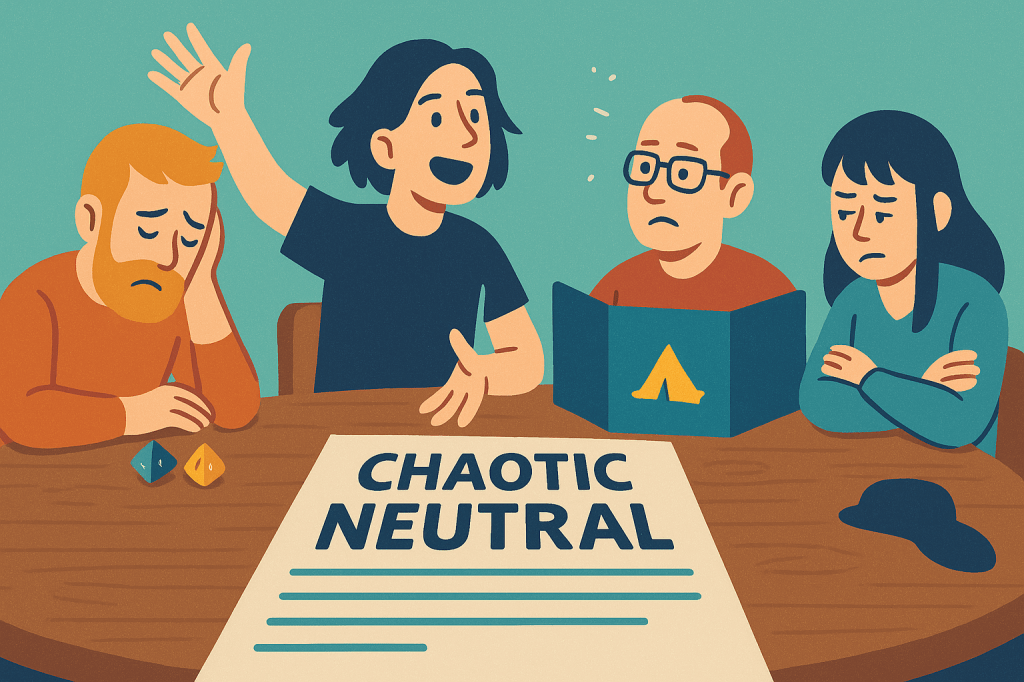
    If you’ve ever GM’d for more than five minutes, you’ve probably heard a player say, “Hey, it’s not me doing that, it’s just what my character would do.”

    And nine times out of ten, they say it right after doing something that completely derails the game. 

    It’s the alignment excuse. “I’m Chaotic Neutral.” “I’m Lawful Evil.” “I’m just playing my character.” Like putting it on a character sheet gives them permission to act like a tornado made of red flags and questionable decisions. 

    The same thing happens in the real world. 

    People use labels like personality types, star signs, Enneagram numbers, job titles, and even trauma to explain behavior they don’t want to be accountable for. “I’m just direct.” “I have no filter.” “I’m a disruptor.” “That’s just my leadership style.” As if naming the behavior makes it untouchable. 

    But here’s the thing.
    You don’t get to avoid responsibility just because your chaos is labeled. 

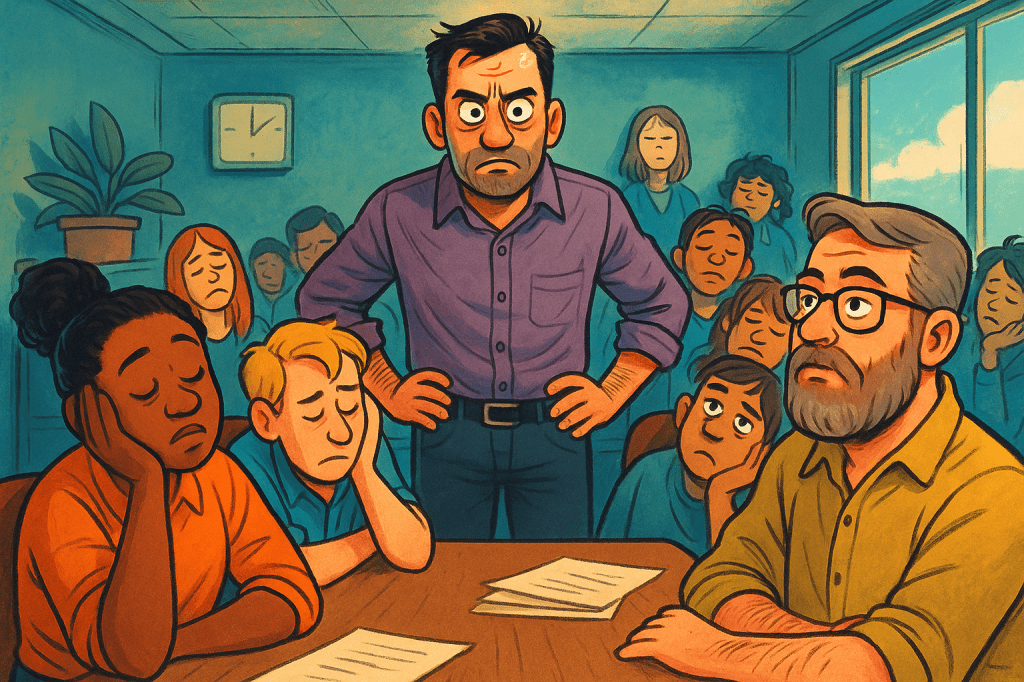
    I’ve seen players blow up a session and then shrug it off because “that’s what a Chaotic Good rogue would do.” I’ve seen people in meetings steamroll their coworkers because “they’re just super Type A.” At some point, it’s not about the label. It’s about the impact. 

    And let’s be honest. Alignment is supposed to be a guide, not a get-out-of-jail-free card. 

    Your character can be Chaotic Good and still care about how their actions affect the party. Your work personality can be “bold and assertive” without making your coworkers feel like they’re in a hostage negotiation. You can be a survivor of something awful and still be expected to grow, reflect, and not inflict that same chaos on others. 

    One table I played at, a character was labeled as evil, but what they really seemed to mean was that they didn’t operate with the same moral compas as the rest of the group. They weren’t villainous, just unpredictable. Not cruel, but hard to trust. It made for some interesting dynamics, but only because the rest of the group was constantly adjusting to avoid conflict. And over time, that gets exhausting. 

    Because it’s not just about how we behave. It’s about how we expect others to bend around our behavior. Some people hid behind “chaos” because it feels safer than vulnerability. Some people lean into a villain role because it’s easier than letting the group count on them. And some people avoid being called “good” because they associate that word with people who didn’t earn it. 

    But none of that erases impact. 

    Whether you’re at the table, in a workplace, or out in the world, you don’t get to throw your hands up and say, “Well, that’s just how I am.” Not if you’re playing with others. Not if you’re leading. Not if you’re showing up in a community with real people who are trying to make things better. 

    Alignment is just a compass.

    It’s not a defense strategy.

  • You Can’t Coach Effort, But You Can Sure Kill It

    You Can’t Coach Effort, But You Can Sure Kill It

    One of the biggest lies people tell in leadership is that you “can’t teach work ethic.”

    And sure, effort isn’t something you can program into someone. You can’t flip a switch and make someone care, but what most people miss is this.

    You can kill effort.

    You can take someone who shows up motivated, who wants to do a good job, who takes pride in their work, and you can snuff that fire out with the right combination of disregard and betrayal.

    I once worked a job for a company that said they ran their business like “one big family.” The job was pitched as “just like running your own business.” They made it sound entrepreneurial. Empowering.

    Spoiler alert. It was not. 

    I was running a route, managing deliveries, and dealing with customers. One day, I got a call from a client who ran a grimy little bar-and-grill in a small town. The kind of place where the floor is sticky before it opens and the menu is mostly deep-fried regret. He was furious about a bathroom supply listed on his invoice. It was something that was billed weekly but only replaced monthly. Standard stuff. But this guy lost it. 

    I was nowhere near his town that day, but I explained that I’d make it right the next time I was out there. That wasn’t enough. He wanted immediate resolution, even though there was no actual problem beyond his inability to read a billing cycle. 

    What did the company do? 

    They sent someone out immediately. Not because it made sense. Not because it solved a real issue. But because the guy yelled loud enough. Just like that, my plan, not to mention my credibility, got tossed out the window. 

    By the time I showed up the next week, the guy was emboldened. He treated me like I owed him something beyond the service I already promised to deliver. I do work for my customers. That’s always been my mindset. But I also expect to be treated like a human being. What he expected was submission.

    I drew a line. I told him that whatever game he was playing with other vendors wasn’t going to fly with me. I called my manager and said I was done with the stop. The customer was harassing me, and I wasn’t going to tolerate it. 

    At first, they said all the right things. “We’ve got your back.”
    Then a few days later, my manager wanted to “talk it out.”
    Then came the plan. We’d all meet together.
    I siad fine, but the guy needed to apologize to my face. That was my line. 

    Cue to the next week. I show up at the stop. No manager. I call him.

    “Oh, we handled it already,” he says. “Everything’s good.”

    Everything wasn’t good.

    I was standing outside a business where I’d been treated like garbage, expecting support, expecting a boundary to be honored. Instead, I got, “We talked it out without you.”

    That was the moment the job broke for me. 

    I kept working there for a while, but the switch had flipped. I stopped going above and beyond. I stopped trusting leadership. They’d proven that a customer’s comfort mattered more than my dignity. And no amount of company slogans or empty praise could put that fire back in me. 

    That’s what people forget about effort.
    It’s not a resource you extract.
    It’s a gift people give. Until they realize you’re not worth giving it to.

    So yeah, you can coach effort. But if you’re careless, you can absolutely kill it. And when you do, don’t act surprised when your best people start looking for the door.

  • Your Team Isn’t “Difficult.” You Just Haven’t Actually Led Them Yet.

    Your Team Isn’t “Difficult.” You Just Haven’t Actually Led Them Yet.

    I’ve worked for people who thought leadership was about standing at the front of the room and being the loudest voice. People who believed that if someone didn’t fall in line, it was because they were lazy, disrespectful, or “not a good fit for the culture.”

    They didn’t see any of it as a reflection of their leadership.
    Because in their mind, they weren’t the variable.
    They were the constant. The standard. The boss. 

    Here’s the truth. 

    If you think your team is difficult, but you’ve never take time to learn wat matters to them, what motivates them, what stresses them out, what they actually need from you, then they’re not the problem.

    You are. 

    I’ve seen it more than once. A new program gets introduced. A new role is added. The person in charge resists it from day one. Not because it’s a bad idea, but because it wasn’t their idea. They don’t want to learn what it does, why it’s needed, or how it fits into the bigger picture. And when the person in that role doesn’t thrive immediately, because, surprise, they’re getting zero support, the response is, “See? Told you it wouldn’t work.”

    That’s not leadership. That’s sabotage with a name badge.

    But here’s the kicker. Those people? When they finally get a leader who gets it, someone who pays attention, listens without judgement, and adapts their approach, they become unstoppable. 

    The “difficult” ones are often the most loyal, the most effective, and the most creative members of the team once they feel seen and trusted. But they don’t respond to positional authority. They respond to earned respect. 

    If your go-to move is to write people off because they don’t immediately jump when you say jump, you’re not leading. You’re just managing compliance and calling it culture. Leadership is not a personality contest. It’s a relationship. And relationships take work. So the next time you catch yourself muttering that your team is difficult, stop and ask:

    Have I actually tried to understand them?

    Have I given them the support I expect them to give me?

    Have I adjusted my style to match the needs of the people I’m supposed to be guiding?

    If the answer is no, then you haven’t led them yet. 

    You’ve just been standing near them while stuff happens.

  • Rebuilding Sucks, But So Did Being Out of Shape

    Rebuilding Sucks, But So Did Being Out of Shape

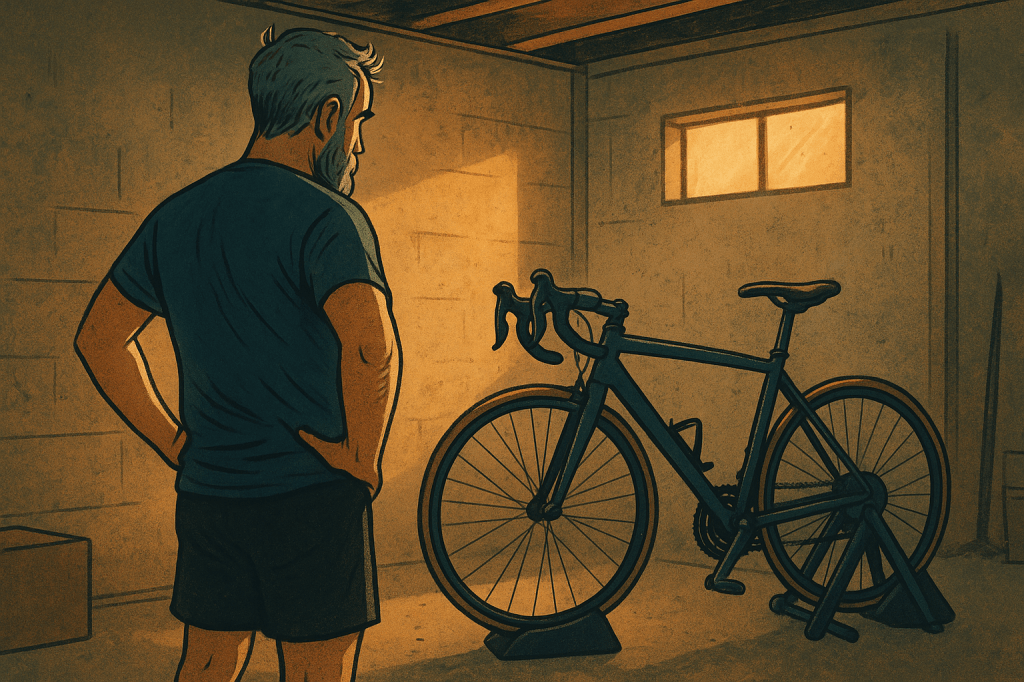
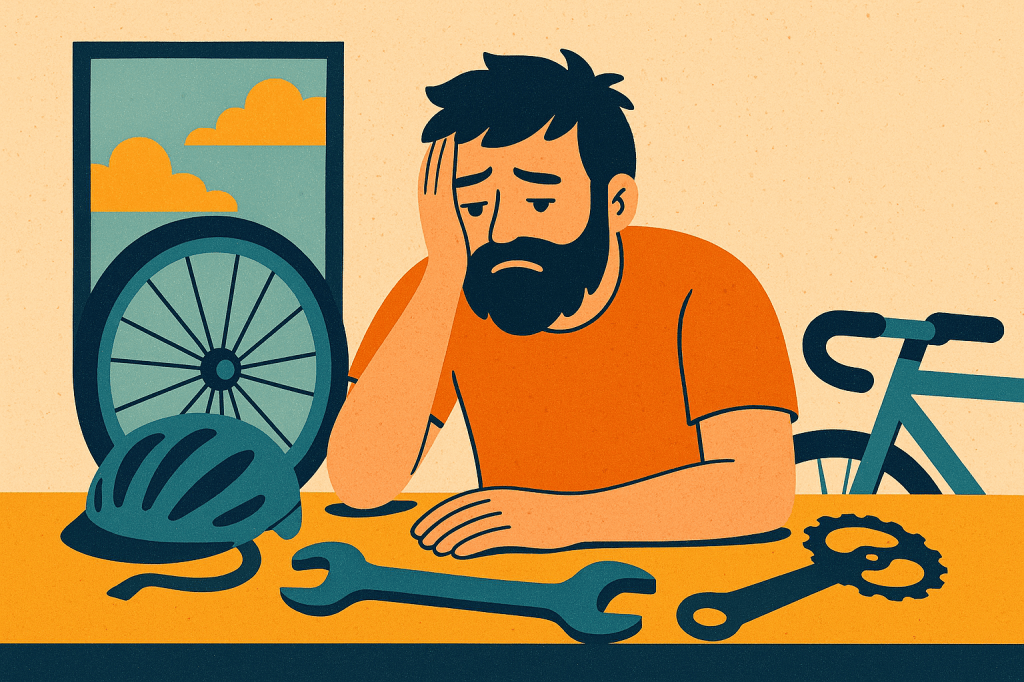
    There’s no poetic way to say this. Coming back to the bike after a long time off sucks. 

    It sucks when your lungs start burning during a warm-up.
    It sucks when you used to crush climbs and now you’re watching your heart rate spike just trying to hold an endurance pace. 
    It sucks when your body feels like a stranger. 

    For a long time, I told myself I was just busy. I had work, school, family. I was getting things done. But the truth is, I’d burned out. Hard. And once I stopped riding, it was easy to stay stopped. The idea of coming back felt overwhelming. I wasn’t just worried about losing fitness. I was worried about what it would feel like to face that loss head-on

    I’ve always had a tendency to go all-in on things. It’s part of who I am. Focused to the point of obsession, until the fuel runs out. Then I crash. I’ve never had a diagnosis, but if you drew a Venn diagram of ADHD, burnout cycles, and perfectionist tendencies, I’d be standing right in the middle waving. 

    So when I finally decided to get back on the trainer and rebuild, I thought I knew what to expect. Soreness, sure. Loss of power, fine. But I wasn’t prepared for the identity crisis. 

    I couldn’t even think of myself as the same rider anymore. That guy? He was long gone. That guy had an FTP that didn’t want to make him cry. That guy did events. That guy had a training calendar full of colors. This new guy? He was struggling to get through a Zone 2 ride without negotiating with his legs like they were on a union strike. 

    You don’t just return to cycling after time off. You reframe yourself. You rebuild a relationship with a sport that used to define you. And sometimes, that means giving up the fantasy of being “back to normal” and deciding what your new normal is going to look like.

    I had to stop thinking in terms of comparison.
    No more “I used to…”
    No more chasing ghosts on the leaderboard. 
    No more measuring today against the version of me who didn’t have a kid, a degree, and a whole catalog of professional baggage. 

    Now, I ride to feel strong again. Not fast. Not competitive. Just strong. Grounded. Connected to myself. 

    It’s not heroic. It’s not inspirational. It’s just honest.

    And honestly? Rebuilding sucks. 
    But being out of shape sucked more. 

    So if you’re staring at your bike right now, trying to psyche yourself up for a comeback, do it. But don’t expect to become your old self again. 

    You’re building someone new.

    And that version of you?
    They might not ride the same. 

    But they’ll ride for better reasons.

  • Leadership would be a dream job if it weren’t for all the humans involved.

    Leadership would be a dream job if it weren’t for all the humans involved.

    I’m half-joking. But only half. Maybe a quarter. 

    You can read every leadership book. Build a color-coded calendar. Learn about accountability systems, emotional intelligence, conflict resolution, and process optimization. You can even implement all of it with care, clarity, and just the right balance of empathy and authority. 

    And still, someone will misinterpret a message, blow up a group chat, refuse to follow a simple instruction, show up late, get in a passive-aggressive turf war over pallet space or lose their mind because you rearranged the whiteboard. 

    Why? Because humans are unpredictable. Messy. Emotional. 

    And they don’t always act in their own best interest

    Which is a real buzzkill when you’re trying to hit your KPIs. 

    I’ve led in environments where the plans made sense. The systems were solid. The logic was airtight. And it all fell apart anyway, because someone woke up  in a bad mood and decided today was going to be the day they were going to die on the hill of “we’ve always done it this way.” 

    That’s the part leadership books don’t usually prep you for. 

    They’ll teach you how to create structure. 

    They won’t teach you how to explain the same thing for the fifth time without sounding like an asshole. 

    They’ll show you how to build a motivational framework. 

    They won’t tell you how to handle a team member who’s mad that their buddy got moved to a different shift and now they “just don’t feel like trying.”

    They’ll preach servant leadership, strategic thinking, and communication theory. 

    They won’t prepare you for the moment someone walks into your office unannounced and says, “Can we talk about something weird that happened two weeks ago that I haven’t stopped thinking about?

    Leadership isn’t hard because the systems are complicated. 

    It’s hard because people are people. And people bring everything with them, their stress, their insecurities, their childhood trauma, their bad lunch, their loud opinions, their calendar confusion, and the fact that someone looked at them wrong in the parking lot that morning. 

    And here’s the catch.

    You don’t get to opt out of that.

    You don’t get to say, “Let’s just stick to the work.”

     Because the work is the people. And the people are never just the job they do. 

    So yeah, leadership would be easier if people weren’t involved.
    But then it wouldn’t be leadership.

    It would be inventory management.

    If you’re in it for real, get used to the mess. 

    That’s where the good stuff happens anyway.

  • Well, That Meeting Could’ve Been an Email, and That Email Could’ve Been Nothing

    Well, That Meeting Could’ve Been an Email, and That Email Could’ve Been Nothing

    I’ve been in a lot of meetings. Most of them shouldn’t have happened. 

    I’m not talking about the rare, focused kind where problems get solved and decisions get made. I’m talking about the meetings that exist purely because someone, usually someone with a title, has it on their calendar every Tuesday at 9 a.m. and they don’t know what else to do with that slot. 

    The “check-in.”

    The “touch base.”

    The “round table” that isn’t round and doesn’t lead anywhere. 

    I once had a standing daily meeting where department heads were supposed to share updates about production flow. In theory, this was useful. In practice, it was a shouting match between people trying to deflect blame for missed numbers. Every day was a new version of “Your team is holding us up.” Followed by “Well maybe if your team didn’t hog all the resources…” It was like watching territorial raccoons fight over trash labeled “Process Improvement.” 

    Nothing got solved. But it kept happening every morning because “communication is important.”

    Sure. But bad communication isn’t neutral. It’s negative value. It doesn’t just waste time. It actively wears people down. 

    The worst part is that no one actually wants to be there. You can feel it in the room. People zoning out. Fake-laughing at unfunny jokes. Checking the time. Wondering if there’s a polite way to vanish. But they still show up, because that’s what we’ve all been trained to do. Keep showing up, even when the thing we’re doing has long since stopped being useful. 

    And then there are meetings where people show up just to complain about things no one in the room has the power to fix. 

    I’ve been in so many of those. Third-party contractors yelling about the same issues week after week, even though they’ve already been told a hundred times that the solution has to come from someone four pay grades above us. They know that. They keep bringing it up like we’re just going to break protocol and reprogram the entire logistics network out of spite. 

    That kind of meeting doesn’t just waste time. It creates conflict. It breeds resentment. People vent because they’re frustrated, but no one leaves feeling better. Nothing changes. It’s just a group therapy session run by someone with a clipboard and no authority. 

    Eventually, you realize the meeting isn’t about solving anything. 

    It’s about being seen having a meeting. 

    It’s about proving you care. Proving that you’re doing something. Proving to some invisible metric that you’re engaged. And that’s how you get a room full of adults sitting around a whiteboard every week pretending not to be actively dissociating. 

    Here’s what I’ve learned the hard way:

    If the meeting doesn’t have a purpose, cancel it. 

    If the meeting’s only purpose is to vent, call it what it is and bring snacks. 

    If people are just repeating the same complaints from last week, it’s time to figure out why they don’t just escalate it, or accept htat they just like the sound of their own outrage. 

    Most importantly, if you find yourself running one of these meetings, don’t take the silence as agreement. People aren’t quiet because they’re content. They’re quiet because they’re trying to disappear. 

    Sometimes, the best leadership move you can make is to say, “You know what? We don’t need to do this.”

    Then let everyone go back to doing something that actually matters.

  • So I Tried Being a Good Leader and Now Everyone’s Mad at Me

    So I Tried Being a Good Leader and Now Everyone’s Mad at Me

    At some point in your leadership journey, you will try to make things better. And people will hate you for it. 

    I learned that the hard way. I had just put the finishing touches on a new training process that had been causing problems for months. Packages were going missing. Damaged items weren’t getting documented properly. Everyone was stressed, and no one could tell me where things were breaking down. So I sat down and did the work. Rewrote the steps and double-checked everything against the actual day-to-day flow. 

    It wasn’t perfect, but it was better. 

    Then I rolled it out and the backlash was immediate. 

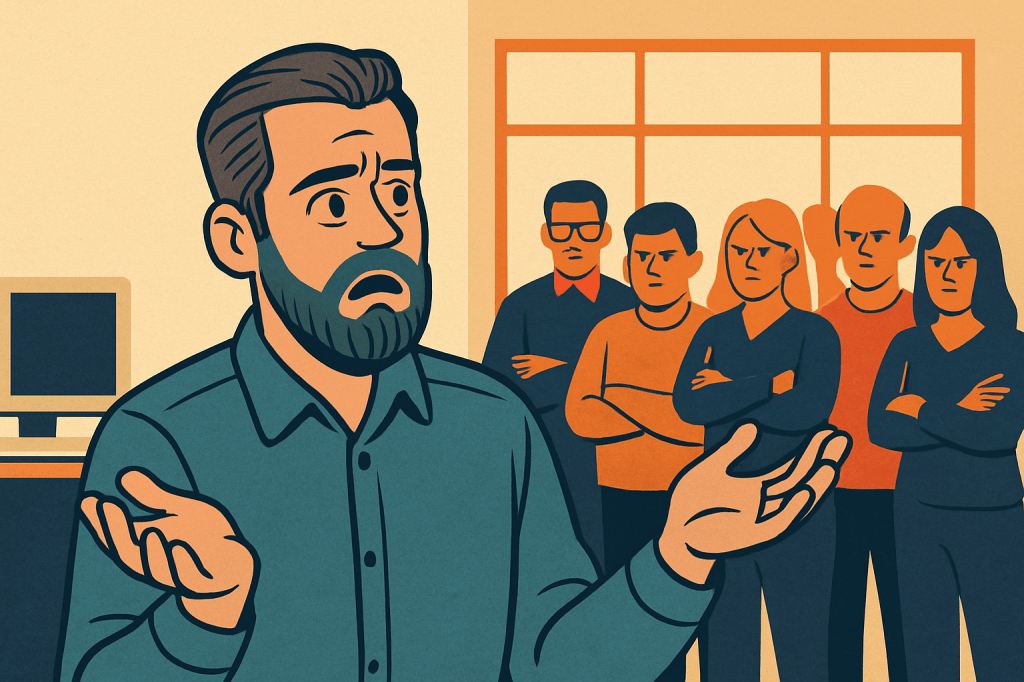
    Suddenly I was “micromanaging.” People said I was “changing too much.”  One guy flat out told me I was making things harder on purpose. Never mind that we’d been talking about these exact issues in meetings for weeks. Never mind that I built the changes based on feedback they gave me. 

    They were mad. Because it was different. 

    That’s the thing no one tells you about trying to lead for real.

    When you challenge the way things have always been,  even with the best intentions, you don’t get applause. You get suspicion. Frustration. Eye rolls. People assume you have a hidden agenda, or that you’re trying to prove something, or that you’re just flexing. 

    I used to take it personally. 

    Now, I just see it as part of the job. 

    When you try to improve things, you’re sending a message, whether you mean to or not, that the old way wasn’t working. And if people built a sense of competence or pride around the old way? That feels like a threat.

    Even if you’re right.

    Especially if you’re right. 

    Good leadership will piss people off. Not because you’re cruel. Because you care enough to push through the part where everyone’s uncomfortable. You’re willing to stand in that storm, knowing the other side is a team that’s better prepared, more efficient, or less miserable. 

    But in the moment? It sucks. 

    You’ll be accused of things you didn’t do. You’ll be called controlling, arrogant, or out of touch. You’ll go home wondering if you screwed everything up. And then, slowly, the thing you changed will start to work. People will adapt. They’ll stop fighting it. They might even forget there was ever a time that it didn’t work that way. 

    And they won’t thank you.

    That’s fine. That’s not why you’re doing it. 

    So yeah, I tried being a good leader. I got yelled at. I got side-eyed. I got called things I won’t repeat here. 

    But the process worked. The problems got fixed. And eventually, the team stopped bleeding out time and energy on avoidable mistakes. 

    That’s leadership. It’s not pretty. But if you can handle the part where people get mad at you for caring, you might actually be onto something.

  • Coaching Isn’t Telling People What to Do. It’s Getting Them to Want to Do It.

    Coaching Isn’t Telling People What to Do. It’s Getting Them to Want to Do It.

    There’s a moment every coach hits, whether you’re working with a cyclist, a new trainee at the warehouse, or a kid learning to ride for the first time, where you realize that telling people what to do doesn’t actually work.

    You can write the perfect training play. You can explain the science. You can point to the numbers. But if they don’t want to do it, none of it matters. And if they do want to do it, half the time you could’ve said anything and they still would’ve figured it out. 

    Coaching isn’t about commands. It’s about buy-in. 

    I’ve seen it in cycling. I’ve worked with riders who had all the gear, all the tech, all the data, and none of the fire. They’d show up. They’d half-commit. They’d blame the plan, or the weather, or their FTP not climbing fast enough. And I’ve also coached riders who had old gear, chaotic schedules, and a million excuses not to try, but they wanted it. And they got better because they chose to. 

    I see the same thing at work.

    You can walk someone through the process a dozen times. You can demonstrate. Quiz them. Repeat yourself. But until they understand why it matters, and until they decide to care, you’re just noise in the background of their day. On the other hand, if you make them feel like their success is their own? Like they’re growing, not just following directions? They lean in. They start driving the process instead of being dragged by it. 

    Motivation doesn’t come from authority. It comes from belief.

    Belief in the task. Belief in the outcome. Belief in themselves

    That’s the difference between managing and coaching. 

    Managing is making sure boxes get checked. 

    Coaching is building the kind of mindset where people start looking for boxes you didn’t even ask about. 

    I’ve coached riders who hated intervals until they realized how strong it made them feel at the top of a climb. I’ve trained employees who didn’t care about safe loading procedures until it was tied to making sure they got home uninjured to their kids. You have to connect the task to something that matters. 

    Coaching isn’t “Do it because I said so.” 

    It’s “Do it because now you want to see how far you can go.”

    And sometimes that’s the most humbling part. Because when you coach well, they don’t need you forever. They get stronger. Smarter. More confident. And eventually, they start coaching someone else. 

    That’s not failure. That’s the goal.

  • The Rules Lawyer at Your Table Is Probably You at Work

    The Rules Lawyer at Your Table Is Probably You at Work

    There’s a particular kind of player that shows up at RPG tables. You know the one. They bring a color-coded character sheet, a stack of sourcebooks, and the burning need to explain why what you just did violates page 247, paragraph three. 

    We call them the Rules Lawyer. 

    And odds are, if you’ve ever led a team, you’ve probably been one. 

    Rules lawyers aren’t villains. They usually think they’re helping. Their logic is sound. The rules exist to create fairness, structure, and consistency. And they’re not wrong. The trouble starts when the rules become more important than the people following them. 

    I’ve seen it in games, and I’ve seen it on loading docks. 

    One of my early leadership gigs involved quality assurance and package flow at a major distribution center. The systems were built around procedures. You do things a certain way because someone ten years ago made a binder that says so. But the real world doesn’t care about binders. Trucks come early. Labels peel off. People get hurt. And somewhere between step four and five, the actual problem is already moving onto the next trailer. 

    At first, I tried to do everything “by the book.” I’d stop the line to double-check a damaged box procedure. I’d recite the process for how a missed package should be re-routed. I thought I was leading by example. 

    What I was really doing was slowing everything down. 

    It hit me during one shift where a new hire, a smart, capable guy, bypassed a clunky workaround to solve a problem faster. I corrected him in front of the team, because technically, he hadn’t followed the process. And I watched his shoulders drop. He did the job right. He got results. But I made him feel wrong because he didn’t follow the script. 

    And that’s when I realized something brutal.

    I was the Rules Lawyer. 

    Not at the table this time. On the floor. 

    It’s the same pattern I’ve seen in games. A player derails a fast-paced moment to argue that blaster rules don’t allow for dual-wielding with that specific character class. Not because they’re trying to wreck the session. They’re trying to keep it “correct.” But they miss the point of wha the group is trying to do. 

    Same with teams. 

    You can be technically right and still kill the momentum. You can follow the procedure and still alienate the person trying to help. You can enforce the rules and still miss the moment where leadership actually mattered. 

    So if you’ve ever rolled your eyes at the guy derailing a game over a line-of-sight rule, ask yourself:

    What workflow did you cling to last week that kept your team from solving a real problem faster?

    Rules exist for a reason. But leadership isn’t about enforcement. It’s about knowing when the moment calls for flexibility. Sometimes the best thing you can do for your team is close the binder, trust the human in front of you, and let the damn speeder chase happen.

  • Burnout Looks a Lot Like Ambition From the Outside

    Burnout Looks a Lot Like Ambition From the Outside

    There’s a scene in the show Black Books where a customer is knocking on the door of the bookshop and Bernard, the owner, panics. He says something like, “Oh god, what do they want?” and his assistant, Manny, says, “They want to buy a book.” Bernard, with dead eyes, responds, “But why me? Why do they come to me?”

    That was me, running a bike shop.

    People would walk in, smiling, friendly, talking about the weather, and I would feel this simmering internal scream build in my chest because I knew they were about to ask me something I’d been asked five hundred times before. Something I had answered every summer for two decades, And I’d have to smile. And I’d have to sound helpful. And I’d have to be this guy who loved his job. 

    Because from the outside, I was living the dream.

    Own a bike shop, they said. Do what you love. Spend your days around bikes, talking about bikes, fixing bikes. Sounds incredible. 

    And it was incredible. For a while. Until it wasn’t. 

    Burnout doesn’t always look like collapse. Sometimes it looks like success. Sometimes it’s doing everything you set out to do and discovering that you hate every minute of it. Sometimes it’s being so tired and angry and broke that you start resenting the very people who are trying to keep your lights on. 

    I couldn’t show it. If I looked miserable, I might lose a customer. And if I lost too many customers, I couldn’t pay the bills, So I kept the act going. I was two people. The smiling mechanic with grease on his hands, and the guy silently asking, Why the hell are you coming to me? 

    The same thing happened in racing.

    I’m not built like a cyclist. I’m 6’5”, and even at my most fit, I was over 200 pounds. I looked like I should be guarding the paint in the NBA, not trying to climb up switchbacks with guys built like greyhounds. But I kept showing up. I kept grinding. I kept doing the training, even when the payoff was, at best, finishing mid-pack and feeling like I was going to throw up the rest of the weekend. 

    People thought it was impressive. Look at you, balancing work, racing, life. They saw ambition. What they didn’t see was the exhaustion. The resentment. The part of me that knew I wasn’t going to win but kept showing up anyway because I didn’t know how to stop without feeling like a failure. 

    Burnout and ambition wear the same clothes. They look like commitment. They look like hard work. But one of them fuels you and the other hollowed me out from the inside until I didn’t recognize the guy standing in my own shop. 

    Here’s the hard truth I learned too late: 

    No matter what you do, it eventually becomes your pain-in-the-ass job. 

    Even the things you love.

    Especially the things you love. 

    And the people who succeed? Half the time, they’re jus the ones who were too stubborn or too stupid to quit. I’ve been both. It works. Until it doesn’t. 

    If you’re out there grinding through your own “dream,” feeling miserable and confused about why it feels so wrong, maybe it’s not you. Maybe you’re just burned out and no one noticed because you still look productive. 

    I don’t have a perfect answer, but I do know this. If it feels like you’re drowning while everyone around you thinks you’re surfing, it’s okay to stop and ask whether the ocean you’re in still belongs to you.