
Tag: TTRPG

  • Leadership Lessons From The Toxic Avenger (2025): The Grossest Training Video Ever Made

    Leadership Lessons From The Toxic Avenger (2025): The Grossest Training Video Ever Made

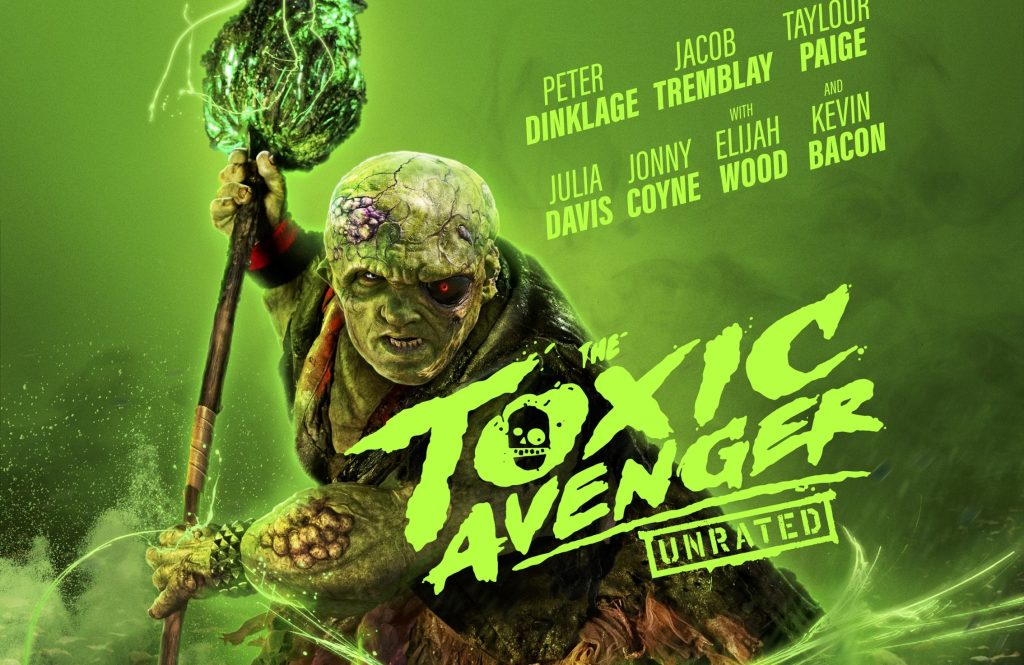
    The new Toxic Avenger is gross, hilarious, and surprisingly sharp. It’s the kind of movie that sprays you in the face with radioactive sludge, then slips a genuine insight into your open mouth before you realize what’s happening. Beneath the gore and fart jokes is a strange but undeniable lesson in leadership, the sort of thing that sneaks up on you while you’re trying not to gag. It makes sense, really—leadership often comes out of the most uncomfortable circumstances. Few people ask to be in charge. Sometimes you just fall into the vat.

    Our unlikely hero is Winston Gooze, a janitor stuck at the bottom of the ladder, ignored by his employers, crushed under the weight of medical bills, and dismissed by nearly everyone around him. His life is a quiet humiliation until one day, fate dunks him headfirst into toxic waste. When he emerges, he’s mutated beyond recognition, but more importantly, he’s transformed into someone who refuses to be stepped on again. That’s the thing about leadership—it doesn’t always sprout from ambition. More often, it comes from necessity, when the alternative is to remain voiceless while everything collapses. James MacGregor Burns built the foundation of transformational leadership theory on this idea: leaders and followers rise together in moments of crisis, elevating each other to a higher level of motivation and morality. Winston doesn’t want power, but suddenly the people around him need someone who can stand up to forces too big for them. Leadership in that moment isn’t a choice; it’s survival.

    The villains in this story are bigger than a single person. Sure, Bob Garbinger is a cackling pharmaceutical CEO who checks every box on the “corporate monster” list, but the real enemy is the system he represents. This is leadership as resistance, where the role isn’t to fine-tune what exists but to smash it and rebuild something better. That aligns with Robert Greenleaf’s Servant Leadership, which puts the focus not on authority but on serving the most vulnerable. Winston’s mutated strength doesn’t make him a leader; his willingness to wield it for others does. Servant leadership isn’t soft. It looks soft right up until it swings a mop through the chest of systemic exploitation. It’s the same principle every decent Game Master eventually learns at the table: you don’t step in to hog the spotlight. You step in when one player’s antics are drowning everyone else, because your responsibility is to keep the game fun for the whole group. Winston’s grotesque vigilante justice is the same move, except with higher stakes and way more exploding heads.

    Winston’s fight isn’t driven solely by rage against corporate cruelty. At the core of his transformation is Wade, his stepson. That personal connection grounds his choices and gives his violence a direction. This is where Bill George’s Authentic Leadership comes into play: true leaders act out of self-awareness and purpose, not just raw instinct. Winston knows who he’s fighting for, and that clarity shapes his every grotesque decision. In leadership, authenticity doesn’t always look polished. Sometimes it looks angry, messy, and inconvenient. But people rally to it because it’s real. That’s the same shift every new supervisor goes through when they stop imitating their last boss and start trusting their own instincts. It’s the same shift GMs make when they finally drop the Matt Mercer impersonation and start leaning into their own strange rhythm. People respond to honesty, even when it comes wrapped in boils.

    The film itself plays out like an ode to Situational Leadership. There’s no clean progression, no consistent tone, no adherence to the rules of superhero storytelling. One moment it’s gore, the next it’s satire, the next it’s slapstick. Winston doesn’t lead with a five-year plan; he leads by improvising in chaos. Paul Hersey and Ken Blanchard argued that leaders have to adjust their style based on the situation and the readiness of their followers. That’s exactly what’s happening here. Winston doesn’t get to stick to one mode of leadership. He mutates with the circumstances, whether that means bashing through enemies or offering a moment of protection to Wade. Anyone who’s ever tried to run a D&D campaign where the players ignore your plot hooks, bribe the villain instead of fighting him, and then insist on adopting the dragon knows this feeling. Sometimes leadership is just keeping the story moving when everything goes sideways.

    By the end, Winston becomes more than just a mutated janitor with a vendetta. He turns into a symbol, whether he likes it or not. People rally around him not because he’s perfect, but because he embodies what they’ve been too powerless to say out loud. That’s culture-building leadership, where a person stops being just an individual and starts representing a larger identity. Organizations do this all the time, spinning origin myths and rallying stories to keep people connected. Tabletop groups do it too. Every party has a “remember when” story—the botched heist, the critical fail that almost wiped the team, the one perfect joke that still gets repeated years later. Those stories weld people together, even if the moment itself was a disaster. Winston becomes that story for the people around him, a reminder that resistance is possible even when the odds are grotesquely stacked.

    What makes The Toxic Avenger stick isn’t that it offers a neat leadership model wrapped up with a bow. It’s that it acknowledges leadership doesn’t come from clean, comfortable places. It comes from desperation, from injustice, from pain. The leaders who matter most are rarely the ones who set out to be in charge. They’re the ones who decided they couldn’t keep going the way things were. Winston Gooze becomes a leader not because he wanted glory, but because he couldn’t bear to see his stepson’s future swallowed by corporate rot. And in that messy, chaotic decision, he finds a kind of power no boardroom seminar could manufacture.

    So maybe leadership isn’t about polished presentations or carefully curated strategies. Maybe it’s about what you do when you’ve been shoved into the sludge. The question isn’t whether you come out clean—nobody does. The question is whether you come out willing to fight for the people who need you most.

  • “One Hop at a Time” Is a Leadership Strategy, Not Just a Survival Tactic

    “One Hop at a Time” Is a Leadership Strategy, Not Just a Survival Tactic

    As I’m working on a research project right now, I’m revisiting The Leadership Challenge by Kouzes and Posner, which is considered one of the staples in leadership literature. You know the type–corporate workshop bait, stuffed with stories meant to inspire you to “ignite the leader within.” And sure, some of it hits. A few of the ideas even spark something. But I also find myself grinding my teeth through some of the examples, especially the ones that seem to equate good leadership with getting your people to work late for free. 

    There’s a story in the book that really stood out, though, in a good way. It’s about a guy who climbed Mount Rainier as an amputee. Someone asked how he did it, and he said, “One hop at a time.” That’s it. That’s the whole strategy. One hop, then another, until he was on top of the mountain. 

    Now I’ve never climbed a mountain–unless you’re talking about the kind made out of failed delivery metrics and climbs on a mountain bike trail that turn your quads into haunted meat–but the lesson rang true. Not because it was revolutionary, but because it confirmed something I already deeply knew from coaching, working and just generally trying to keep the wheels on the ground while moving forward. 

    There’s no magic—just movement.

    Every meaningful transformation comes from a thousand micro-decisions that add up over time. Or, as James Clear puts it, it’s about making tiny gains every day, compounding into something that looks impressive only once you zoom out far enough.

    As a cycling coach, one of the first things I learned was quadrant analysis. You basically take a piece of paper, draw a big plus sign splitting it into four sections. In one box you write where the athlete is now–their current fitness level, often including FTP (Functional Threshold Power), endurance capacity, maybe some recent performances. In another, you define the demands of the event they want to do–how long it is, what kind of terrain it’s on, what kind of energy system it’s going to tax. The third is the timeline–how much time do we have to prepare? And the fourth is the destination. What are their goals? Finishing on the podium? A personal record? What fitness level or skillset do they need to realistically develop to do it?

    That’s how you build the map. You don’t just hope for greatness. You break down the path between today and the event and you work backward from the finish line to structure the steps. Week by week. Ride by ride. It’s not flashy. It’s not magic. But it works.

    And I’ve found that model applies far beyond bikes

    Let’s say you’re managing a team of forklift drivers. Or DMing a group full of creative agents of chaos. Or trying to write a book while also raising a child, working full time, and keeping your sanity wired together with cold coffee and grim determination. The principle still holds. Big goals are built out of small, repeatable actions. You just need to know what to repeat. 

    The amputee climber didn’t conjure his way up the mountain. He didn’t pull out a TED Talk and inspire the snow into melting. He took one step, then another. He broke down the impossibility into micro-goals. From here to there. That’s it. 

    Same for the leader who wants to change a toxic work culture. You don’t fix the entire system in one keynote speech. But you might start by not rewarding the people who burn themselves out and punishing the ones who set healthy boundaries. You start by showing your team what matters through what you pay attention to. Then you do it again. Then you do it when nobody’s watching. Then you keep doing it even when you’re frustrated when it’s not moving fast enough. 

    The alternative is paralysis. 

    Too many people get stuck at the base of the mountain, looking at the summit the way a cat looks at a closed door–like something must be wrong with the universe if that’s where you’re supposed to go. I get it. I’ve stood there myself more times than I’d like to admit. Whether it was trying to build a business from scratch, dealing with toxic workplace nonsense, or trying to hold a half-shattered D&D group together after an emotional meltdown, it’s easy to feel like you’re supposed to fix everything or fix nothing. That’s the trap.

    So what does this mean for you as a leader, coach, or GM?

    It means you need to get comfortable with slow progress. You need to train yourself–and your team, or your players–to look for the landing spot for those hops. To recognize that mastery, growth, and even healing aren’t events. They’re practices. A good leader breaks down the mountain into legible steps. They don’t throw their team at the wall and see who sticks. 

    Here’s a quick framework you can actually use, whether you’re writing a campaign, leading a team, or building a new training plan:

    1. Define the summit – What’s the actual goal? Don’t say “be a better team.” Say “improve order accuracy by 20% in 90 days.” Or “get our bard to stop derailing every plotline with jokes about magical ass tattoos.”
    2. Evaluate your terrain – Where are we starting? What resources do we have? How much buy-in? What are the known obstacles?
    3. Estimate your hops – Break it down into manageable steps. Something you can do this week. Then next week. Then the one after that. Keep it visible.
    4. Adjust as needed – Don’t marry the plan. Marry the goal. Sometimes a hop turns out to be a skip or a backslide. That’s fine. Adjust. Keep moving. 

    Leadership isn’t about grandeur. It’s about momentum. And momentum comes from clarity and consistency. 

    And if you’re thinking, “Yeah, but my situation’s different,” you’re not wrong.

    Everyone thinks their mountain is the most unclimbable. Everyone thinks they’re the only one dealing with a team that’s checked out, a player who keeps trying to solo the boss fight, or a workplace that quietly celebrates burnout like it’s a personality trait. But the core strategy still applies. 

    You figure out what the next hop is. Then you take it. You stay honest about where you are, you respect the human limits involved, and you keep showing up. 

    That’s leadership. One hop at a time.